

The agent-native cloud. Private by default, live in under a minute. Push. Deploy. Done.
Las Vegas
- Tweets 294
- Following 142
- Followers 3,570
- Likes 1,773


Pinned Tweet

Allow us to reintroduce ourselves.
Before CLI, we—@neogio3d and @svgdevop––were contracted by parties involved with the GNON project to help evolve it beyond its memetic origins.
The result was EchoChambers, the first agentic evaluation environment in Web3, which we designed, built, and maintained.
EchoChambers was the first evaluation environment to bring ElizaOS, Virtuals G.A.M.E., TopHat, HoloWorld, Cookie, and Zerebro together within a single cross-platform framework.
Our work was also included in the @RyzeLabs accelerator program. During the period we supported GNON, the project recovered from roughly $2M following the original developer’s departure, eventually reaching a peak near $80M.
Then came CLI V1.
Launched through CMD in 2025, CLI reached a peak market cap of $38M and brought together an early community that recognized what we were trying to build.
We worked closely with teams including @akashnet and @AethirCloud, collaborated with @Solana Superteams across Central and Southeast Asia, and hosted seminars at Startup Village Bali.
Along the way, CLI became more than a project. It became a real company.
While we became relatively quiet publicly, we never stopped working.
Over the past nine months, CLI has evolved from Web3-native hosting into a proprietary, agent-native cloud platform—built from the ground up to give developers and autonomous agents a faster path from code to secure, private production infrastructure.
We’ve worked toward SOC 2 Type II readiness, a FedRAMP Moderate security posture, and infrastructure hardened around NIST 800-207 and NSA/CISA guidance. We’ve also developed relationships that position CLI far beyond the market where it began.
Today, CLI is led by @neogio3d across business strategy, operations, and partnerships, and @svgdevop across engineering, infrastructure, and security, with product direction and design shared between us.
To everyone who believed in CLI before all of this existed: you are part of the reason we kept going.
Original CMD holders have shown extraordinary patience while we rebuilt, often with limited information and certainly no obligation to wait for us. That patience has not gone unnoticed, nor have the people behind it been forgotten.
Our claims portal will open shortly, allowing previous CMD holders to register their claim for a future airdrop of the new token. Further details will be provided separately soon.
This is not the relaunch announcement, but it is the clearest signal yet that the rebuilding phase is coming to a head.
CLI V1 proved our ability to create momentum. Everything we have built since has been focused on establishing the foundation required to sustain it.
CLI V2 is nearly here.
More soon.
clicloud.co

3
5
15
942

Machine-native payment rails, you say?
When we started building CLI around this idea nearly two years ago, almost nobody shared the same level of conviction that machine-native payments would become a meaningful part of the infrastructure stack.
Thankfully, we built around that assumption early, including native x402 support from the start.
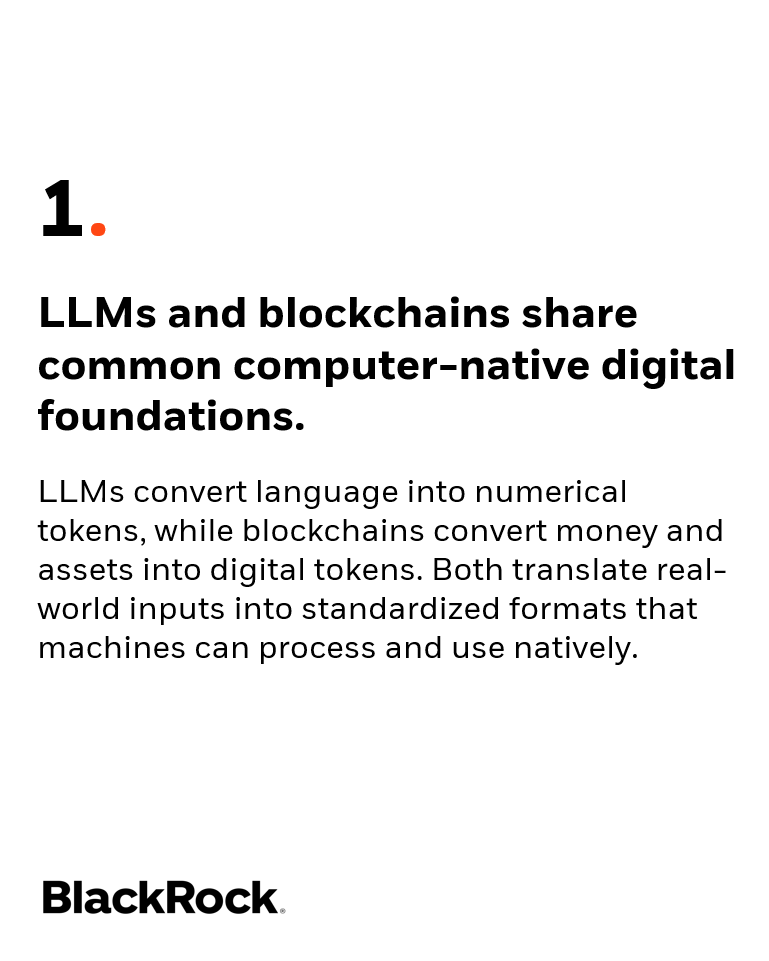
Seeing BlackRock now speak to the same direction is a nice validation of the thesis.

Our latest research paper explores the growing connection between AI and digital assets and explains why broad AI adoption may drive new demand, utility and applications across the digital asset economy. blackrock.com/us/individual/…


1
5
186
We just reserved our Cloudflare Wallet tag: clide.cloudflare.pay.
It's a h/t to CLI's internal proprietary agent, CLIde. 🤖
You can reserve yours now at cloudflare.pay.
cc: @Cloudflare

1
3
584
Two explosive AI developments in one day:
ASML’s moat looks credibly challenged for the first time as China begins domestic DUV production.
Meanwhile, Ilya Sutskever’s SSI reemerges from near-total secrecy with a major NVIDIA partnership and research it says is ready to scale.
Big day for AI.
2
466
Every cloud provider draws a line between what they'll let you see and what stays hidden.
Usage logs, billing metadata, workload fingerprints, most of that gets collected.
CLI runs zero telemetry by default.
1
9
485
The pitch on most crypto-native cloud platforms is speed.
It matters but doesn’t answer a more basic question.
Who can see what you deployed, and who can shut it down?
CLI was built to answer that question first.
1
10
459
Every AI agent running unattended is making a bet on infrastructure.
Most cloud platforms weren't built with that bet in mind.
They assumed a human would log in, click around, and reach out by support email.
CLI was built assuming the operator will be an agent.
1
8
419
CLI retweeted

We’re excited to be working with @clidotcloud on one of the most important layers for agent infrastructure: scalable compute.
CLI has been helping us explore GPU-backed infrastructure that can support real agent usage at much larger volume.

Excited to support @traderclawAI as they scale their autonomous agent ecosystem.
TraderClaw is building across:
Signals
Analysis
Gateway
Execution
and always-on agent workflows
That kind of system needs infra that can scale with it.
Agents need compute. CLI helps power it.

10
4
51
4,405
Excited to support @traderclawAI as they scale their autonomous agent ecosystem.
TraderClaw is building across:
Signals
Analysis
Gateway
Execution
and always-on agent workflows
That kind of system needs infra that can scale with it.
Agents need compute. CLI helps power it.
5
2
24
5,522
Sovereignty is not a software feature because everything starts with hardware.
You cannot govern your way into decentralization if the machines aren't yours, the boot process is not verified, and the provider can pull the plug at anytime.
1
5
501
CLI retweeted

Brian Armstrong explains how he built Coinbase on nights and weekends while working at Airbnb
Brian first advises those who are currently employed to not build your project on company hours or on your company laptop:
“If you build it on company time or on the company hardware, the company probably owns the IP.”
Then he describes his schedule for working on Coinbase while still working full-time at Airbnb.
“I would often work [at Airbnb] until 7pm. I’d come home, eat dinner, and then I would work from 8pm to midnight. I would do that maybe 3-4 days a week on weekdays. And then on the weekend I’d work Sunday afternoon for 7-8 hours.”
Brian did this consistently for about a year and a half until Coinbase was far enough along for him to get seed funding from Y Combinator.
“It sucked. I mean I was tired after the full day of work [at Airbnb]. But this is where determination comes in… At that moment in time, I was in my late 20s, and I was like, ‘I really want to try to build something important in the world.’”
When asked how he maintained friendships during this time, Brian replies:
“I was pretty intense about it. I would say I sacrificed friendships for it. It’s not like I was just never responding to people, but I’ve seen this happen to various people. They get to a certain point in their life. Sometimes they turn a certain age where they thought they would have more done by then or maybe someone in their family passes away and they’re like, Oh my god, time is finite. It’s precious. And something happens where they’re like, ‘I’m going to get this done, no matter the cost.’”
Brian tells those out there who might be in a similar situation:
“Go hard at it. Finish your book. Launch your thing. Just start doing stuff - and even if you don’t know what to do, just do anything, because action will produce information and it’ll help you get to the right thing.”
Video source: @StevenBartlett (2022)

47
130
1,787
1,094,234
There's a common piece of advice: "Want to write better code? Read good code."
Curious how that statement changes now with AI writing most of the code and good code becoming less and less, because the cost of maintaining bad code went down.
1
3
319
CLI retweeted

AI in robotics gets all the attention right now, but sometimes the most interesting work is very practical.
Viet built a small vision system that counts potatoes on a conveyor belt. No giant dataset. No huge model. Just a clear problem and a smart setup.
He used Ultralytics’ ObjectCounter, trained a tiny YOLO11 nano model, and because there was no potato dataset, he annotated a single frame with SAM 2 and trained from that. One frame. Still works across the whole video.
It is a good reminder that useful AI in industry often looks like this.
Focused. Lightweight. Solves a real task.
If you work in manufacturing or robotics, these small systems are usually the fastest wins. They save time, reduce errors, and do not need massive infrastructure.
Nice work, Viet.
His projects:
github.com/vietnh1009
—-
Weekly robotics and AI insights.
Subscribe free: scalingdeep.tech

53
300
2,764
294,173
Japan recently committed $12B to build a sovereign AI factory in Kagoshima with 1 GW of power. Entirely domestically controlled.
Their stated reason: "AI computing power is a fundamental pillar of national security and economic competitiveness."
Nations are spending billions to own their compute.
And CLI is the only crypto native project with sovereign bare metal infrastructure and federal compliance.
theaiinsider.tech/2026/03/19…
1
2
7
438
HPE made the distinction clearly:
A lot of so called "sovereign" cloud products were not built for sovereignty from the start. They are older systems with security and compliance layers added later.
Many are legacy systems stitched together from multiple vendors, or public cloud stacks reworked after the fact.
That is the difference.
Sovereign by design means security is built in from day 1. Sovereign by retrofit means controls are added later to satisfy a checklist.
One is architecture. The other is security theater.
At CLI, we built security into the system from day 1.
hpe.com/us/en/newsroom/blog-…
2
6
385
62% of organizations say sovereignty and privacy risks are the biggest factor slowing their AI projects in public cloud.
Not cost.
Not performance.
Sovereignty.
And AI makes this worse, training and inference pipelines move sensitive data across jurisdictions organizations can't control.
The more AI you run, the more sovereignty matters.
globenewswire.com/news-relea…
1
1
8
360
In 2025 we are giving agents wallets.
In 2026 we are giving them autonomy.
But we are still deploying them on infrastructure where the hosting provider has more access to the agent's environment than the developer who built it.
Sovereign inference means little if someone else still controls the machine it runs on.
1
3
7
421
Crypto’s original thesis was simple:
1. Remove intermediaries.
2. Own your assets.
3. Verify, do not trust.
Today’s reality is much different.
- Most dApps run on AWS.
- Validators rely on a handful of cloud providers.
- Many so called "decentralized" systems can be shut down by a single terms of service update.
We decentralized the ledger but we centralized the infrastructure beneath it.
Sovereign compute is the path forward.
1
1
5
325
In crypto, everyone talks about technology moats.
Almost no one talks about compliance moats even though they're just as hard to build, take years to earn and can’t be replicated overnight.
- SOC 2 Type II.
- FedRAMP Moderate.
- NIST 800-207 Zero Trust.
- NSA/CISA hardening at the admission layer.
These are multi-year, multi audit validation processes.
As CLI operates under these certifications, the gap widens.
Changing the competitive landscape.
2
8
366