

Visual Information Layer of Technology | TG Channel ➠ t.me/eli5definews | Substack ➠ eli5defi.substack.com | All Posts NFA + DYOR
Singapore
- Tweets 50,271
- Following 7,607
- Followers 47,781
- Likes 38,927


Okay, my cracked dev friends and I are building something on @ponsdotfamily and @RobinhoodCrypto.
Can you guess? 👀

37
1
96
9,591
This is quite big, @Ondo is partnering with @BlackRock to create Intelligent Portfolios.
Yes, the name seems boring but its very interesting, here's the TL; DR
Ondo Intelligent Portfolios packages that ongoing work into one token, using portfolio strategies developed by BlackRock.
Here’s how it works:
❶ Choose a strategy.
The first three BlackRock-based portfolios target High Income, Diversified Growth, and High Growth.
❷ Hold one token.
It provides exposure to a basket of Ondo Stocks, Ondo’s tokenized stock and ETF products backed by real securities.
❸ Let the rules rebalance.
Initial assets and target weights are predefined. Smart contracts automate allocation, fees, and scheduled rebalancing; Ondo handles implementation and execution.
❹ Mint or redeem to enter or exit exposure, subject to product terms and eligibility.
Think of a hypothetical 60/40 portfolio: if market moves push it to 65/35, scheduled rebalancing brings it back toward its target automatically.
Also, BlackRock’s involvement is meaningful, but precisely defined.
BlackRock supplies nondiscretionary portfolio models based on Ondo’s specifications. Ondo operates the products.
In short, with Intelligent Portfolio, Ondo has three potential moats:
❶ Institutional relationships.
BlackRock’s portfolio expertise and brand can help earn attention and trust. That advantage still needs to translate into sustained adoption.
❷ An integrated asset supply.
Ondo combines tokenized assets, trading infrastructure, and portfolio implementation. Recreating that operating stack is harder than copying a basket’s weights.
❸ Distribution and utility.
Transferable portfolio tokens can fit into wallets and DeFi applications. If integrations attract lasting liquidity and usage, the distribution advantage strengthens
On the other hand, BlackRock also publishes their report on AI x Blockchain which could be the natural progression of automated portfolio in the future.


Introducing Ondo Intelligent Portfolios, the first three portfolios powered by BlackRock.
Ondo Intelligent Portfolios introduces a new onchain product category: curated investment portfolios delivered as single onchain transferable tokens.
The first three portfolios are based on portfolio strategies developed by BlackRock for Ondo, marking the first time eligible onchain investors can access exposure to such strategies through a single token.
1. BLKHIon: Ondo High Income Powered by BlackRock
2. BLKDIGon: Ondo Diversified Growth Powered by BlackRock
3. BLKGRWon: Ondo High Growth Powered by BlackRock
Diversified, professionally constructed strategies have historically required brokerage accounts and traditional fund structures. Now, delivered as peer-to-peer transferable tokens from Ondo, these onchain portfolios become accessible to eligible non-US investors in permitted jurisdictions through the wallets, exchanges, and DeFi applications they already use.
“Tokenization creates new ways for portfolio strategies to be delivered through digital infrastructure. Diversified portfolio strategies can be incorporated into tokenized investment products, enabling eligible investors to access diversified allocations through a single instrument. It shows how established portfolio construction approaches can be delivered through new channels and technologies.” - Lisa O’Connor, Global Head of the Model Portfolio Solutions team and Co-CIO for Global Solutions within the Multi-Asset Strategies group at BlackRock
Ondo Intelligent Portfolios can unlock novel capabilities:
→ Programmatic rebalancing
→ Full composability with DeFi
→ Complete transparency onchain
→ Multiple asset classes in a single token
This is just the start for Ondo Intelligent Portfolios. The infrastructure is now in place for leading financial institutions to bring their asset allocation expertise onchain.

18
3
34
3,117

A year into FXRP, we’re getting a sneak peek at what @FlareNetworks could become, does Flare’s infrastructure truly turn $XRP into a future-proof asset?
But we’re going beyond the basics to delve further.
In crypto, you’re usually forced to spin up wallets, hop across bridges, and scrounge up gas tokens just to get moving.
Flare has spent the past year cutting that obstacle course down to size, and it begins with two built-in tools:
- FTSO supplies prices, while FDC verifies outside events, including XRP payments. Flare’s validators also secure these data protocols, giving its products a shared foundation.
- FAssets turns XRP into FXRP for use in DeFi. Minting requires proof of the XRP payment. Redemption agents operate under collateral, challenge and liquidation rules.
The Core Vault holds pooled XRP under a Flare-governed multisig, with escrow time locks and withdrawal controls. Agents cannot simply walk away with it.
Flare Smart Accounts make access incredibly simple.
Sign an XRPL transaction from your current wallet. FDC verifies it, and your linked smart account executes on Flare. The vault flow now needs one signature, no separate EVM key or gas token.
By July, Flare reported nearly 24,000 smart accounts and FXRP in DeFi growing from 82 million in February to 144 million.
So, what's next? It is Flare Confidential Compute (FCC)
FCC is a verifiable computation that keeps sensitive data private, plus protocol-managed wallets that can act on other chains. Songbird first, with broader deployment still ahead.
Finally, how all these changes benefits $FLR.
FIP.16 cuts annual inflation from 5% to 3%. Transaction fees burn, while FIRE collects specified protocol fees, with supply reduction as its first mandate alongside other governed uses.
---
What keeps me upbeat about Flare is how coherently the pieces fit together.
FXRP expands what XRP can do, Smart Accounts remove friction for users, and confidential compute opens the door to privacy sensitive apps, while the value flow ultimately routes back to FLR.
None of this is starting from zero. Each layer builds on real progress already in place, which makes the Flare faces almost competition and more scalable.
That said, activity still has to mature into real, durable revenue over time.
Still, after a year of FXRP, there is a functioning baseline, something concrete to iterate on, and a clearer runway toward wider adoption.
You are still not bullish enough.

14
15
78
4,928

This is quite big, @Ondo is partnering with @BlackRock to create Intelligent Portfolios.
Yes, the name seems boring but its very interesting, here's the TL; DR
Ondo Intelligent Portfolios packages that ongoing work into one token, using portfolio strategies developed by BlackRock.
Here’s how it works:
❶ Choose a strategy.
The first three BlackRock-based portfolios target High Income, Diversified Growth, and High Growth.
❷ Hold one token.
It provides exposure to a basket of Ondo Stocks, Ondo’s tokenized stock and ETF products backed by real securities.
❸ Let the rules rebalance.
Initial assets and target weights are predefined. Smart contracts automate allocation, fees, and scheduled rebalancing; Ondo handles implementation and execution.
❹ Mint or redeem to enter or exit exposure, subject to product terms and eligibility.
Think of a hypothetical 60/40 portfolio: if market moves push it to 65/35, scheduled rebalancing brings it back toward its target automatically.
Also, BlackRock’s involvement is meaningful, but precisely defined.
BlackRock supplies nondiscretionary portfolio models based on Ondo’s specifications. Ondo operates the products.
In short, with Intelligent Portfolio, Ondo has three potential moats:
❶ Institutional relationships.
BlackRock’s portfolio expertise and brand can help earn attention and trust. That advantage still needs to translate into sustained adoption.
❷ An integrated asset supply.
Ondo combines tokenized assets, trading infrastructure, and portfolio implementation. Recreating that operating stack is harder than copying a basket’s weights.
❸ Distribution and utility.
Transferable portfolio tokens can fit into wallets and DeFi applications. If integrations attract lasting liquidity and usage, the distribution advantage strengthens
On the other hand, BlackRock also publishes their report on AI x Blockchain which could be the natural progression of automated portfolio in the future.
Introducing Ondo Intelligent Portfolios, the first three portfolios powered by BlackRock.
Ondo Intelligent Portfolios introduces a new onchain product category: curated investment portfolios delivered as single onchain transferable tokens.
The first three portfolios are based on portfolio strategies developed by BlackRock for Ondo, marking the first time eligible onchain investors can access exposure to such strategies through a single token.
1. BLKHIon: Ondo High Income Powered by BlackRock
2. BLKDIGon: Ondo Diversified Growth Powered by BlackRock
3. BLKGRWon: Ondo High Growth Powered by BlackRock
Diversified, professionally constructed strategies have historically required brokerage accounts and traditional fund structures. Now, delivered as peer-to-peer transferable tokens from Ondo, these onchain portfolios become accessible to eligible non-US investors in permitted jurisdictions through the wallets, exchanges, and DeFi applications they already use.
“Tokenization creates new ways for portfolio strategies to be delivered through digital infrastructure. Diversified portfolio strategies can be incorporated into tokenized investment products, enabling eligible investors to access diversified allocations through a single instrument. It shows how established portfolio construction approaches can be delivered through new channels and technologies.” - Lisa O’Connor, Global Head of the Model Portfolio Solutions team and Co-CIO for Global Solutions within the Multi-Asset Strategies group at BlackRock
Ondo Intelligent Portfolios can unlock novel capabilities:
→ Programmatic rebalancing
→ Full composability with DeFi
→ Complete transparency onchain
→ Multiple asset classes in a single token
This is just the start for Ondo Intelligent Portfolios. The infrastructure is now in place for leading financial institutions to bring their asset allocation expertise onchain.
18
3
34
3,117
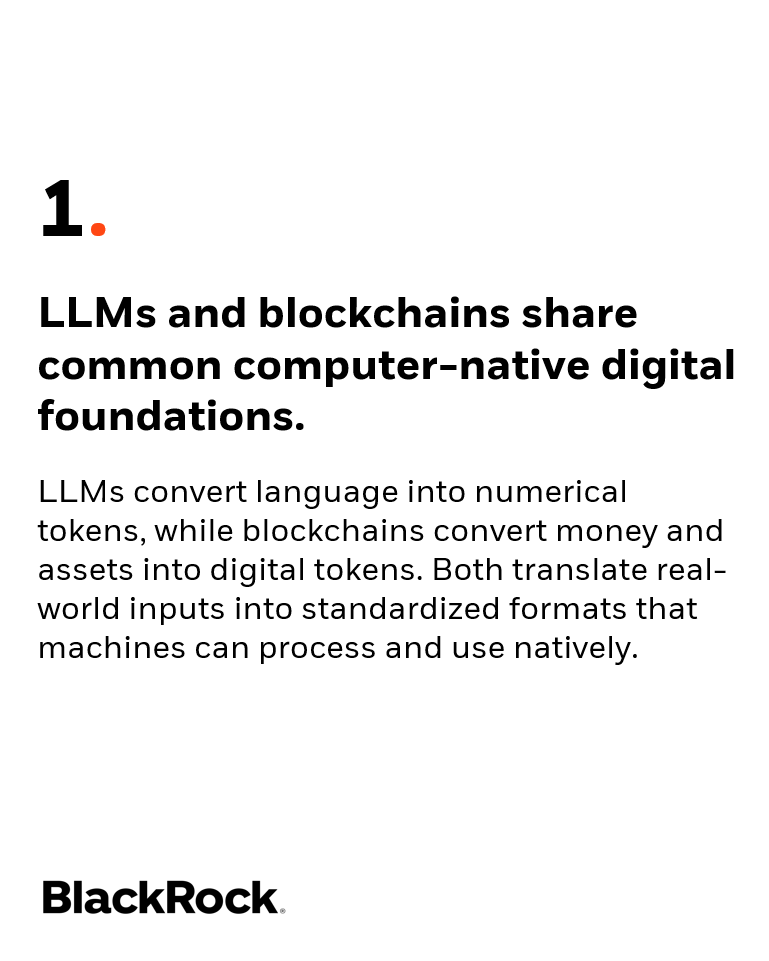
ICYMI, BlackRock also teases us about the future of AI x Blockchain here ⤵

Our latest research paper explores the growing connection between AI and digital assets and explains why broad AI adoption may drive new demand, utility and applications across the digital asset economy. blackrock.com/us/individual/…


2
293
A year into FXRP, we’re getting a sneak peek at what @FlareNetworks could become, does Flare’s infrastructure truly turn $XRP into a future-proof asset?
But we’re going beyond the basics to delve further.
In crypto, you’re usually forced to spin up wallets, hop across bridges, and scrounge up gas tokens just to get moving.
Flare has spent the past year cutting that obstacle course down to size, and it begins with two built-in tools:
- FTSO supplies prices, while FDC verifies outside events, including XRP payments. Flare’s validators also secure these data protocols, giving its products a shared foundation.
- FAssets turns XRP into FXRP for use in DeFi. Minting requires proof of the XRP payment. Redemption agents operate under collateral, challenge and liquidation rules.
The Core Vault holds pooled XRP under a Flare-governed multisig, with escrow time locks and withdrawal controls. Agents cannot simply walk away with it.
Flare Smart Accounts make access incredibly simple.
Sign an XRPL transaction from your current wallet. FDC verifies it, and your linked smart account executes on Flare. The vault flow now needs one signature, no separate EVM key or gas token.
By July, Flare reported nearly 24,000 smart accounts and FXRP in DeFi growing from 82 million in February to 144 million.
So, what's next? It is Flare Confidential Compute (FCC)
FCC is a verifiable computation that keeps sensitive data private, plus protocol-managed wallets that can act on other chains. Songbird first, with broader deployment still ahead.
Finally, how all these changes benefits $FLR.
FIP.16 cuts annual inflation from 5% to 3%. Transaction fees burn, while FIRE collects specified protocol fees, with supply reduction as its first mandate alongside other governed uses.
---
What keeps me upbeat about Flare is how coherently the pieces fit together.
FXRP expands what XRP can do, Smart Accounts remove friction for users, and confidential compute opens the door to privacy sensitive apps, while the value flow ultimately routes back to FLR.
None of this is starting from zero. Each layer builds on real progress already in place, which makes the Flare faces almost competition and more scalable.
That said, activity still has to mature into real, durable revenue over time.
Still, after a year of FXRP, there is a functioning baseline, something concrete to iterate on, and a clearer runway toward wider adoption.
You are still not bullish enough.
14
15
78
4,928
Check out more details here ⤵

A year ago today, XRP became programmable as FXRP.
What followed was a run of firsts. XRP in onchain vaults. XRP backing onchain cover. XRP in money markets on Ethereum.
Flare Smart Accounts makes it one click from XRPL.
FCC takes it to confidential computation, with proofs anyone can verify.
That is what unlocks deeper institutional use.

5
413

Activate $BUN mode.


7
7
53
3,772


Most tokens need attention to survive.
What if the trading activity during that attention could fund something that keeps working afterward?
That’s the idea behind @0xHedgehood and its new Hedgefun launchpad on @RobinhoodCrypto Chain.
Trading fees accumulate tokenized stocks. Those assets can then earn lending fees or fund a trading strategy.
Interesting premise. But there are two different mechanisms here, and buying HEDGE actually does not give you exposure to everything.
Let’s unpack it.
First, where do $HEDGE payouts come from?
Every buy and sell pays a 3.33% creator tax, alongside @ponsdotfamily’ separate 1% standard fee.
That creator tax arrives in tokenized $NVDA:
• 40% goes to eligible holders.
• 60% builds the stock-token treasury.
The payout is twice daily, proportional to balances, for wallets holding at least $10 at the snapshot.
And then, the treasury is supposed to add another income source by lending its stock and selling covered calls.
But why would someone borrow a stock token?
Imagine its reference price is $100, but weekend demand pushes the onchain token to $120 while the reference feed is frozen.
A trader could borrow the token, sell it, then buy it back if the premium closes. The lender collects a fee for supplying the inventory.
That’s the opportunity StockLend targets.
It considers both the reference price and the pool’s time-weighted price when valuing debt, with a ceiling to limit manipulation.
But collateral protection has limits. If prices move beyond those limits and stay there, lenders can also lose money.
And finally, Hedgefun takes the idea further.
Here, creators launch individual tokens around fixed stock-trading strategies.
Pick a stock. Set two profit targets, a dip-buy threshold, an optional stop-loss, and how much reserve to spend on each dip.
Then the mechanism works like this:
- Token buys → buy tax primarily burns tokens.
- Token sells → stock-denominated tax funds the strategy treasury, creator, protocol and settlement tip.
- Stock reaches its targets → the strategy takes profit.
- Principal → USDG reserve for future dip purchases.
- Realized profit → strategy-token buybacks and burns, after execution incentives.
Early speculation can leave behind productive inventory. Even if token trading slows, an already-funded treasury could keep generating buybacks when its stock strategy earns profits.
And now let's talk some caveats with this strategy:
- A falling stock can leave the treasury stuck below its targets. Disabling the stop-loss doesn’t remove the loss; it leaves it unrealized.
- A strong rally creates another problem: taking profits early can underperform simply holding the stock.
Also, Hedgefun success does not automatically flow into HEDGE.
The protocol receives part of Hedgefun’s sell-tax revenue. There is currently no contractual route distributing that money to $HEDGE holders.
A discretionary buyback is possible. But so far it hasn't initiated.
My take: the strongest thesis is turning stock tokens into useful inventory and transparent trading strategies.
The proof will be income from actual borrowers and profitable execution, not just payouts funded by people trading the token. So, what do you think about HEDGE?
NFA. DYOR.

16
8
60
3,944
More details on @0xHedgehood ⤵

Everyone's trading the same thing.
Same memes. Same tickers. Same pump, same fade.
Here, your bag now runs a hedge fund.
Introducing Hedgefun Protocol: a stock-paired fund that makes its own market.
hedgefun.trade

2
848


Credit where it’s due: I’m not farming @variational_io (limited time to trade), but I’m happy with the direction here.
Here’s the TL;DR:
Variational’s $VAR TGE is now set for Q4 2026, with 32% of total supply allocated to the genesis airdrop, fully unlocked at launch.
The timeline moved back to support undisclosed strategic partnerships, which should be bullish and potentially institutional-level.
Token allocation:
- 32% Genesis: Distributed proportionally to points holders.
- 18% Ecosystem: Reserved for growth, at the Foundation’s discretion.
- 50% Team & Investors: Locked for 12 months post-TGE, then unlocking over at least three years. The team/investor split is still pending.
Points continue: 150k distributed weekly until TGE. Accounts need at least 1 point and must sign the token terms to claim. Unclaimed tokens will be burned.
Variational intends to use 100% of revenue directed to its treasury to buy and burn $VAR.


8
1
24
2,842

