

The American Museum of Natural History is one of the world's preeminent scientific and cultural institutions. This is not a monitored account.
- Tweets 25,042
- Following 866
- Followers 470,458
- Likes 14,694



ALT A photo of a spiny lumpsucker directly facing the viewer. It is pale gray in color and round in shape, with a bumpy texture covering its body.

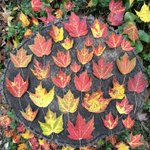
ALT A photo of many red maple leaves arranged artfully on a tree stump. The leaves vary in color from greenish to yellow to deep red.

ALT A photo of a short-beaked echidna on the forest floor. It is covered by blonde spiky protrusions. Its long snout is visible from beneath the bramble of spines.

ALT A photo of a bush cricket on a human hand. The insect is large in size and grayish in color with red eyes.

ALT A photo of a ground pangolin. The animal has a small head and slightly elongated snout. Its body is covered in pinecone-like scales. It has clawed feet.

ALT A photo of a long-tailed weasel. It is standing on its hind legs and has an extremely long and thin torso.

ALT A photo of a gold-mouth sea squirt. It is yellow in color with purple splashes throughout its oblong body. Its siphon hole is visible.

ALT A photo of the binturong. It is primarily black in color, with a gray face and long whiskers, and resembles both a cat and a bear. Its mouth is slightly open.

ALT A photo of a little pygmy gray possum held in a human hand. The animal is tiny and gray in color, with pink hands and feet. It is about the size of a human thumb.

ALT A black and white archival photo of Martha, the last-known Passenger Pigeon. She is facing away from the viewer, perched on what seems to be a branch.

ALT A photo of an Australian King Parrot perched on a branch. The greenery behind it is blurred. The parrot is primarily red, with green wings and a green tail.

ALT A photo of an aardwolf. The animal is surrounded by a dark background. It is canine in appearance, with a body covered in tannish fur and marked with dark stripes.

ALT A photo of a giant rain frog held in a human hand. The frog is bloated and round. It has a pale underbelly and a brown, speckled back.

ALT A photo of a devil’s tooth fungi surrounded by grass. It is oozing a red blood-like fluid in droplets.

ALT A photo of an Eastern mole held in a human hand. The animal has large front paws, an elongated pink snout, and a body covered in dark fur.

ALT A photo of a man standing beside the fossilized skeletons of two gigantic hadrosaurs. One is standing on all fours while the other is posed upright on its hind legs.

ALT A lowland streaked tenrec walking on leaf litter on the forest floor. It has a body shape similar to a shrew and is covered in porcupine-like quills. It has a collar of longer, yellow quills around its neck.

ALT A photo of a glass squid against a dark background. The squid is mostly transparent. It has a bulbous, nearly round body and short front tentacles.

ALT A photo of the fossilized skeleton of the Warren mastodon. It is a large, quadrupedal animal with two long, curved tusks. Its bones are brownish in color.

ALT A photo of a Nosy Hara leaf chameleon on a match. The reptile is small and brown.