Development is a leading research journal in the field of developmental biology, covering stem cells, regeneration, evodevo, epigenetics, morphogenesis and more
Issue 17 is now complete!
Cover: A wild-caught female Paryhale stained with phalloidin & DAPI, imaged by Natália Heloísa de Oliveira, Fernanda Salce & Federica Salatiello at the 2025 @DevBioQuintay, winning the Node image competition.
thenode.biologists.com/winne…
ALT Cover: A wild, female Paryhale specimen stained with phalloidin and DAPI and then imaged by light-sheet microscopy and processed using Zen software at the 2025 Quintay International Course on Developmental Biology. Students from the course collected the specimen in Quintay Bay, Chile. Natália Heloísa de Oliveira, Fernanda Salce and Federica Salatiello captured the image, which won an image competition on the Node.
Development is trusted.
Our journal has a strong reputation for publishing high-quality, robust science that is widely accepted. Development papers stand the test of time.
This means you can be proud of your Development paper.
More reasons to publish:
journals.biologists.com/dev/…
Influential articles from 2024
A subject collection compiling a selection of articles that represent the most-read and discussed publications in Development, all now free to read.
Topics range from climate change to ageing.
Browse now:
journals.biologists.com/dev/…
ALT A screenshot of the "Influential articles from 2024" Development subject collection.
AS2 keeps the #Arabidopsis leaf flat and stress-free
This Research Highlight showcases work by Ayami Nakagawa, Chiyoko Machida and colleagues.
journals.biologists.com/dev/…
ALT AS2 and TOP1α repress the KRP5/ICK3 gene to promote leaf expansion. (D) Gross morphology of as2-1 top1α-1 and as2-1 top1α-1 krp5-1. Scale bars: 10 mm (5 mm in inset of as2-1 top1α-1). Plants photographed at 22 days after sowing. (E) Frequencies of phenotypes of leaves and plant lethality at 22 DAS.
Read the Research Article 'Arabidopsis epigenetic factor AS2 mitigates nucleolar stress and promotes flat leaf development by repressing a CDK inhibitor' here.
journals.biologists.com/dev/…
Issue 17 is now complete!
Cover: A wild-caught female Paryhale stained with phalloidin & DAPI, imaged by Natália Heloísa de Oliveira, Fernanda Salce & Federica Salatiello at the 2025 @DevBioQuintay, winning the Node image competition.
thenode.biologists.com/winne…
ALT Cover: A wild, female Paryhale specimen stained with phalloidin and DAPI and then imaged by light-sheet microscopy and processed using Zen software at the 2025 Quintay International Course on Developmental Biology. Students from the course collected the specimen in Quintay Bay, Chile. Natália Heloísa de Oliveira, Fernanda Salce and Federica Salatiello captured the image, which won an image competition on the Node.
Development is at the heart of our community, created by scientists for scientists.
The leading #devbio journal for over 70 years, Development covers a broad range of in vivo research organisms and in vitro systems.
See more reasons to publish: journals.biologists.com/dev/…
Pathway to Independence – an interview with Yamini Ravichandran
In this interview, @yamini_ravichan discusses her work focusing on understanding tissue-scale processes, regeneration and morphogenesis.
doi.org/10.1242/dev.205942
Mechanical feedback coordinates elongation across the notochord
This Research Highlight showcases work by Carlos Camacho-Macorra, @Osvaldo_Chara, Benjamin Steventon and colleagues from @GeneticsCam.
journals.biologists.com/dev/…
ALT Enhanced YAP activity in vgll4b mutants increases the contribution of midline progenitors to the notochord. (A) Scheme showing the KikGR photoconversion strategy. Red dashed box highlights the photoconverted region. Red bracket indicates the displacement distance between front of the photoconverted notochord and the front of the fotoconverted floor plate. (B) Confocal images of photoconverted control and mutant embryos at different time points. Scale bars: 100 μm. 0 h post-photoconversion (hpc) corresponds to 18 hpf. Dashed lines highlight the notochord. Yellow brackets indicate displacement distance.
@Dev_journal invites you to submit your latest research to their upcoming Special Issue – Human Development. This issue will be coordinated by Guest Editor Hongmei Wang (Institute of Zoology, CAS, China) alongside their team of research-active Editors.
tinyurl.com/5n6dxhma
ALT Call for papers - Special Issue – Human Development. This issue will be coordinated by Guest Editor Hongmei Wang 王红梅 (State Key Laboratory of Organ Regeneration and Reconstruction, Institute of Zoology, Chinese Academy of Sciences, China)
Submission deadline: 1 March 2027
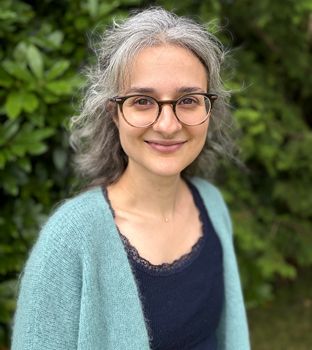
Pathway to Independence – an interview with Jessica Perochon
In this interview, Jessica discusses her research at the intersection of developmental biology and regenerative medicine, as well as her future plans.
doi.org/10.1242/dev.206026
Growing thick skins: how cellular patterns emerge in the developing plant epidermis
@pablidopsis explores preprints by @GauthierWeissb1 et al. & @RobertBellow et al., revealing how cell interactions, division & expansion shape epidermal patterning.
doi.org/10.1242/dev.205946
This article was commissioned by Gwendolyn K. Kirschner @GwenKirschner, part of our first group of Preprint Editors, responsible for handling our 'In preprints' articles.
ALT Profile card for Gwendolyn K. Kirschner, Preprint Editor (Development) at The James Hutton Institute, UK. The card includes a quote about promoting accessible science, highlighting groundbreaking work—especially in plant development—and encouraging submissions. Key topic listed is plant development. On the right, a portrait shows a person standing in a greenhouse among tall plants. The Development journal logo appears at the bottom.
Pathway to Independence – an interview with Nikhil Mishra
In this interview, @NMishra_bio discusses the evolution of his research interests from subcellular beginnings to whole-organism questions, and the pedagogical importance of scientific security.
doi.org/10.1242/dev.206049
In preprints – compression rather than loss drives duckweed miniaturisation
Dylan Jones explores how a recent #preprint by Ware, @Bishopp_Lab & co shows that duckweeds may provide a powerful model for understanding plant miniaturisation.
doi.org/10.1242/dev.205947
This article was commissioned by Gwendolyn K. Kirschner @GwenKirschner, part of our first group of Preprint Editors, responsible for handling our 'In preprints' articles.
ALT Profile card for Gwendolyn K. Kirschner, Preprint Editor (Development) at The James Hutton Institute, UK. The card includes a quote about promoting accessible science, highlighting groundbreaking work—especially in plant development—and encouraging submissions. Key topic listed is plant development. On the right, a portrait shows a person standing in a greenhouse among tall plants. The Development journal logo appears at the bottom.
"Reviewers usually provide insightful, thorough analyses that go beyond superficial comments to offer meaningful scientific dialogue."
Read this recent Editorial from Development's Editors reflecting on the value of peer review. #PRW2026doi.org/10.1242/dev.205432
ALT Editorial headline in the journal Development: "The hard truth about how hard it is to publish in Development" with a long multi-author byline and two-column introductory paragraphs discussing peer review and publication challenges.