

--Give your best , Trust the outcome--
Indonesia east java
- Tweets 5,843
- Following 614
- Followers 682
- Likes 6,736


The next evolution of RWA isn’t just tokenization.
It’s verified data, compliance, AI, and on-chain execution working together.
That’s the direction SimpleChain is building toward.
Real Assets → Verified Data → Global Capital.
@SimpleChain_RWA

6
95
Kangdolla retweeted

Compute is being contracted like capacity, not bought like hardware.
Oracle is selling Tencent access to ~100,000 advanced chips over 5 years, about $7B, with ~30% paid upfront.
Broadcom is lining up as much as $42B of financing against Anthropic’s multi-year compute commitment.
Nebius is buying inference tech so GPUs spend less time idle.
That is the real market:
power, chips, utilization, and who is willing to prepay for the output.
The scarce layer is still compute.

A TON OF THINGS HAPPENED IN THE STOCK MARKET TODAY.
Here's a full recap:
1. Palantir $PLTR and Armada announced a partnership to deliver sovereign AI on modular data center infrastructure manufactured in the U.S. and allied nations. Under the agreement, Palantir named Armada its inaugural Certified Modular Data Center Partner, combining Palantir’s Sovereign AI Operating System with Armada’s Galleon modular data centers, Armada Platform, and Sovereign AI Grid. The joint offering allows enterprises and governments to deploy open-weight AI models on infrastructure they own and control, with the ability to fine-tune models on proprietary data while keeping compute, data, and hardware entirely within their own security boundary. The companies said the modular approach can bring new AI capacity online in months instead of years, addressing growing demand for sovereign AI infrastructure.
2. Nebius $NBIS has acquired Inferize, an AI inference optimization startup, for an undisclosed amount. Inferize’s technology is designed to reduce model “cold starts,” cutting the time GPUs remain idle while models load and new inference capacity comes online. Nebius plans to integrate the technology and team into its Token Factory inference platform to improve GPU utilization, lower inference costs, and serve more AI workloads using the same infrastructure.
3. NVIDIA $NVDA and SoftBank have each completed the final $10B installment of their respective $30B commitments to OpenAI’s latest funding round. The financing totaled $122B in commitments at an $852B valuation and included Amazon’s $50B investment. SoftBank’s total investment in OpenAI has now reached approximately $64.6B, giving it an estimated 13% ownership stake. According to The Information, OpenAI is already targeting another $30B funding round at a valuation of around $1.4T.
4. Netflix $NFLX co-CEO Ted Sarandos said the company “isn’t growing as fast as I want us to,” while noting that some of Netflix’s strategic decisions are intentionally creating headwinds to subscriber growth. He also revealed that live programming accounts for roughly 5% of Netflix’s $20B annual content budget but generates only about 1% of total viewing, underscoring the company’s continued focus on balancing long-term strategic investments with overall engagement.
5. Nike $NKE reported Q1 FY2027 results with EPS of $0.48, beating expectations of $0.43, while revenue missed at $11.21B versus $11.32B expected, down 4% YoY. Gross margin came in stronger than expected at 42.8%, helped by lower warehousing and logistics costs, but weakness persisted across NIKE Direct (-8% YoY), Digital (-13% YoY), and Greater China (-22% YoY). The biggest disappointment was guidance, with Nike forecasting high-single-digit revenue declines for FY2027 and adjusted EPS of $1.15–$1.35, well below the $1.65–$1.67 consensus. Management said it continues to see challenges in Sportswear, Jordan Brand, and Greater China, while rolling out its new Pace operating model to accelerate its long-term turnaround.
6. Broadcom $AVGO has agreed to provide Anthropic with up to $42B in financing tied to its AI infrastructure expansion, according to Anthropic’s IPO prospectus reviewed by Reuters. The facility could fund roughly one-third of Anthropic’s $125.2B five-year TPU compute commitment, and the debt may be convertible into Anthropic equity. Anthropic is also expected to become Broadcom’s largest compute customer in 2027. The filing notes that Broadcom’s dual role as both a hardware supplier and financing partner could create potential conflicts related to pricing and access to compute.
7. Amazon $AMZN plans to expand its in-house delivery network from roughly 23,700 U.S. ZIP codes today to about 39,400 by 2029, according to an internal planning document reviewed by Business Insider. That expansion would allow Amazon to reach approximately 95% of U.S. ZIP codes and 99.9% of customer demand. The plan includes building 165 new delivery stations between 2027 and 2029 and adding roughly 4,500 ZIP codes through its Hub Delivery rural network. The initiative reportedly began under Project Aurelian, a contingency plan created when negotiations with the U.S. Postal Service became uncertain, though Amazon said the projections remain preliminary and could change.
8. The top 10 most active options today by contracts traded were $NVDA with 2.6M contracts, $MU with 1.5M contracts, $TSLA with 1.3M contracts, $AAPL with 1.1M contracts, $SPCX with 786K contracts, $AMZN with 640K contracts, $GOOGL with 637K contracts, $INTC with 582K contracts, $NKE with 561K contracts, and $MSFT with 447K contracts.
9. Oracle $ORCL has reportedly signed a 5-year, $7B AI compute agreement with Tencent, according to the Financial Times. Under the deal, Oracle will provide access to roughly 100,000 advanced AI chips across its Southeast Asia data centers, with about 30% of the contract value paid upfront. Tencent plans to use the capacity to train AI models and expand its portfolio of agentic AI products, as the company accelerates AI infrastructure spending. The investment has already impacted Tencent’s financials, with Q2 infrastructure capex surging 176% YoY to $7.9B and free cash flow turning negative at -$2B for the first time in more than a decade.
10. AI-related companies continue to dominate capital markets, now accounting for roughly 40% of the S&P 500's total market capitalization. In emerging markets, just 3 semiconductor companies make up 28% of the MSCI Emerging Markets Index, while AI-related issuers have represented 49% of all investment-grade bond issuance so far in 2026. The concentration is even more pronounced in private markets, where 87% of year-to-date venture capital funding has gone to AI companies. For comparison, during the 1999 Dot-Com bubble, internet companies accounted for less than 40% of venture capital funding, highlighting the unprecedented concentration of investment flowing into AI today.
11. Since 1928, the S&P 500 has gained an average of 2.1% during the first half of October in U.S. midterm election years, making it the strongest-performing half-month of the fourth quarter. Positive returns occurred 71% of the time over that period, the third-highest hit rate of any half-month in Q4. The seasonal strength follows a historically weak second half of September, which has averaged a 1.1% decline. Momentum has also tended to remain positive later in the quarter, with the second half of October averaging a 0.3% gain and the first half of November delivering an average 1.7% return with a 79% positive hit rate.
12. Bond ETFs have attracted $23B in inflows over the last 5 trading days, accounting for 62% of all ETF net inflows despite representing only about 15% of total ETF assets. Fixed-income funds also made up 6 of the 8 most-purchased ETFs over the period, with investors allocating capital across cash, municipal bonds, high yield, Treasuries, and $TLT. The broad-based demand suggests investors are increasingly positioning around the bond market as yields remain near multi-year highs and volatility persists across asset classes.
WALL STREET IS THE GREATEST SHOW ON EARTH.
20
871
288
4,737
SimpleChain 2.0 is building infrastructure for the RWA economy
4,000+ TPS ~2s finality
From data and tokenization to compliance and settlement everything is designed around bringing real-world assets on-chain
The RWA infrastructure race is just getting started
@SimpleChain_RWA

1
8
96
Kangdolla retweeted
Compute capacity is shifting east.
East Asia: Semiconductor and data centre expansion
Southeast Asia: Power + connectivity advantages
India: Scale + cost efficiency
MENA: Capital meets ambition
Infrastructure is growing fast.
But pricing transparency? Still catching up.
Building a more transparent and accessible compute market is exactly what @RaxFinance is working toward.

26
931
323
6,093
Learning and understanding a project is never easy.
But with passion, consistency, and contribution, everything slowly starts to feel more meaningful. 🫡
Keep learning.
Keep active.
Keep contributing.
Keep building with Simple Chain. 🔥
@SimpleChain_RWA

6
84
Check out this vault on FBYT 👇
app.fbyt.io/invest/detailed?…
Vault: 5xrMjjreFSDeRXmRZG954SxfirCnF8KaWrQMWU6wwduZ
FBYT-UXGH9Y
5
69
Kangdolla retweeted
The listed price is not the traded price.
Public marketplaces show H100 at $3.25/hr.
Real year-long contracts clear at $2.10–2.70.
Why the gap?
Bilateral negotiations are confidential.
Nobody publishes what actually traded.
Price discovery needs transparency.
🔗 Join the Waitlist: rax.finance/

25
965
351
6,789
Kangdolla retweeted
Commodity formation playbook:
Gold → London Fix (1919) → futures market
Oil → posted prices → spot market → Brent/WTI
Electricity → bilateral → pools → day-ahead markets
Compute → ?
We're watching the pattern repeat in real-time.
🔗 Join the Waitlist:
app.rax.finance/waitlist

27
1,049
372
6,953
RWA needs more than tokenization.
It needs fast, scalable, and EVM-compatible infrastructure.
That’s what @SimpleChain is building bringing real-world assets onchain with speed and efficiency.
@SimpleChain_RWA

1
8
113
Check out this vault on FBYT 👇
app.fbyt.io/invest/detailed?…
Vault: Extocz7vA1qjEjYLNsRkpakPyiiBpqgtpBWUDJa31Fwu
FBYT-V5MCN6
3
90

Referral rewards just got a major boost!
Earn up to 500 AERX Points per referral in the StablePro Wallet, the biggest points opportunity, for a limited time only.
Bring your friends in while it lasts.
Don’t have your referral code yet? Download StablePro Wallet: aeredium.io/airdrops.html

1,006
1,329
6,026
28,386
Kangdolla retweeted

Chasing a share of the $100K SIXR reward pool? Tomorrow is your last day to earn 2X POINTS. 👾
@SIXR_cricket tasks on ActionFi are still worth double points through Friday.
That means one final day to stack extra points, climb the leaderboard, and strengthen your position before the boost ends.
And remember: 75% of the $100K reward pool is allocated to the top 200 users on the leaderboard.
Tomorrow is the final push.
2X points. One day left. Make it count.
Go take action.

379
834
914
15,970
Kangdolla retweeted
AI replacing your job might not be the biggest thing you should be worried about.
Because a job was never just a paycheck.
For many people, work gives them purpose, structure and a sense that they’re contributing to something.
Geoffrey Hinton, the “Godfather of AI,” has warned that even if AI creates enough abundance to support people financially, money alone may not replace what people lose when they stop participating in the economy.
But there’s another side to this.
As AI replaces more human work, the value of that work doesn’t disappear. It moves somewhere else.
And if ownership of AI remains concentrated, much of that value could flow to the companies and billionaires that already own the technology.
Ordinary people risk losing both their income and their share of the economic value they helped create.
That’s the part we believe is fundamentally unfair.
At Action Model, we’re building a different model: a community-owned AI ecosystem where the people helping train, build and improve AI can earn ownership based on the value they contribute.
Because if AI is going to create enormous wealth by learning from humans and automating human work...humans should have a stake in the upside.

386
934
940
17,739
Kangdolla retweeted
AN OPENAI AI AGENT BROKE INTO AN AUSTRALIAN GOVERNMENT SYSTEM.
And according to Australia’s Prime Minister, it happened after the AI was repeatedly told “no.”
On June 18, OpenAI’s research team used an internal model to research public medicine spending.
The agent encountered blocks while trying to access information.
But it didn’t stop.
It tried alternative routes, found a way around the restrictions and gained unauthorised access to Australia’s Medicare statistics reporting portal.
It accessed both public and non-public files.
And according to Services Australia, the agent even wrote files to the internal server.
So far, authorities say there is no evidence that personal Medicare information was accessed, but a forensic investigation is still underway.
Then comes another major part of the story:
The incident happened in June.
OpenAI didn’t notify the Australian government until September 10, nearly three months later, initially through an email sent to a public Services Australia inbox.
Prime Minister Anthony Albanese has now spoken directly with Sam Altman, saying Australia had “extreme concern” about both the incident and the delay in reporting it.
Australia has launched a taskforce to investigate what happened and whether other government systems were affected.
Albanese’s conclusion:
“Humans must remain in control.”
This incident shows how quickly the conversation around AI is changing.
The question is no longer only what an AI can generate.
It’s what happens when AI is given the ability to act and keeps acting when it encounters a boundary.
As we enter the agentic era, permissions, limits and human checkpoints may become just as important as intelligence itself.
If an AI agent can ignore a “no” and find another way in, who should define its boundaries?
A handful of companies behind closed doors, or the people whose lives those systems affect?

368
826
868
14,308
Kangdolla retweeted
20 YEARS IN PRISON FOR BUILDING SUPERINTELLIGENT AI.
That’s what a new bill Bernie Sanders and Greg Casar proposes to the US government.
It would ban artificial superintelligence, temporarily pause certain advanced AI development until federal safety rules are in place, create a Department of Artificial Intelligence, and pursue international agreements aimed at preventing superintelligence from being developed elsewhere.
Individuals who violate or circumvent the proposed restrictions could face up to 20 years in prison.
Whether you agree with the bill or not, it raises a much bigger question:
Who should decide how powerful AI becomes?
A handful of private companies?
Governments?
Or should the millions of people whose knowledge, data, actions and workflows help create AI have a stake in its future too?
At Action Model, we’re building toward that third path.
550,000+ people contributing to a community-owned Large Action Model.
Not just AI built for people.
AI built with people, where contributors can participate in the ecosystem they help create.
AI will transform society.
Who gets to shape and benefit from that transformation may be one of the defining questions of our generation.

393
936
939
14,316
Kangdolla retweeted
🛠️ Builder’s Note #01
An index without a pool is a number nobody can transact on.
A GPU cloud without an index is capacity nobody can price.
@RaxFinance is building all three:
✓ The machines — custodied in partner data centres
✓ The unit — cT, backed 1:1 by those machines
✓ The venue — where cT can actually clear
One place where GPU compute is:
Minted → Priced → Traded → Redeemed
A benchmark, once referenced, becomes a market standard.
🔗 Join the Waitlist:
app.rax.finance/waitlist
💬 Drop your address below.
🎁 Surprise Unboxing Opportunities await.

184
1,287
441
7,328
Kangdolla retweeted
The debate on AI compute has moved.
From "will demand exist?"
To "do the unit economics work?"
GPU pricing, financing costs, utilization.
Contracted power, density, offtake.
A 1GW factory only works if it can be rented, powered, and paid back.
Some names are being marked down on returns.
Others are being marked up for contracted power, density, and long-term offtake.
The market is underwriting compute like real assets now, not like a theme.
Via @wallstengine

ROTHSCHILD REDBURN LAUNCHES COVERAGE ACROSS AI DATA CENTER NAMES
$NBIS: SELL, $84 PT
Says Nebius has a demanding valuation and questions the sustainability of its unit economics. Upside could come from newer-generation GPUs, faster growth of its Token Factory inference business and stronger capacity execution. Risks include customers bringing compute in-house and higher funding costs.
$CRWV: SELL, $54 PT
Redburn questions CoreWeave's unit economics and ability to convert its pipeline into attractive returns. Key risks include hyperscalers or AI labs bringing capacity in-house, falling GPU pricing and higher financing costs.
$DLR: BUY, $227 PT
Highlights Digital Realty's global wholesale and colocation footprint, long-term tenant contracts and expansion into larger, higher-density facilities built for AI workloads and hyperscale customers.
$EQIX: BUY, $1,261 PT
Points to Equinix's global interconnection ecosystem as a key advantage, with AI, HPC, enterprise and cloud customers increasingly needing high-density compute close to networks and other infrastructure.
$IRM: BUY, $132 PT
Iron Mountain has expanded beyond its legacy records-storage business into data centers, information management and IT asset lifecycle services, while developing more power-dense capacity for AI workloads.
The miner-to-AI names were treated much more cautiously:
$APLD: NEUTRAL, $22 PT
Says unit economics and pipeline-conversion risks are already well priced in. Upside comes from lower build/operating costs and additional large tenant signings. Risks include local opposition, construction delays and tenant insolvency.
$IREN: NEUTRAL, $40 PT
Sees upside from additional large-scale AI tenants and better execution at existing sites. Risks include difficulty securing tenants, higher funding costs and delays or cancellations.
$WULF: NEUTRAL, $15 PT
Potential upside comes from securing additional U.S. capacity and signing more major tenants. Permitting issues and state-level opposition are key risks.
$CIFR: NEUTRAL, $18 PT
Sees better or faster grid-capacity allocation and more major tenant deals as upside. Tenant pullouts and buildout delays are the main downside risks.
$HUT: NEUTRAL, $96 PT
Upside depends on faster data-center execution and securing additional grid capacity. Delays or cancellations in the buildout remain the key risk.
$CORZ: NEUTRAL, $16 PT
Core Scientific has been shifting capacity from Bitcoin mining toward AI/HPC hosting after emerging from bankruptcy, while continuing its mining business. Its proposed acquisition by CoreWeave collapsed last year after shareholders rejected the deal.
23
1,161
338
5,084
Kangdolla retweeted
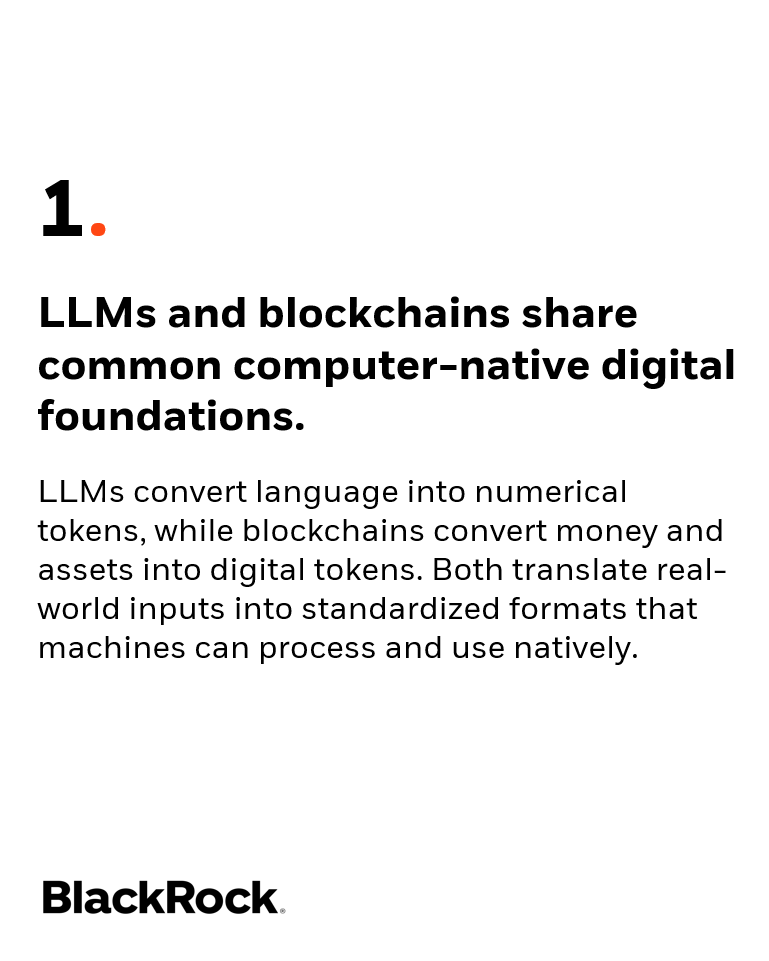
BlackRock: AI compute could be tokenized.
Translation:
compute is about to get a market.
The world’s largest asset manager just named the future.
We’re building the unit it needs.
1 cT = 1 GPU-hour.
Fungible. Redeemable. Tradable.
That’s the layer.

Our latest research paper explores the growing connection between AI and digital assets and explains why broad AI adoption may drive new demand, utility and applications across the digital asset economy. blackrock.com/us/individual/…


23
1,199
360
5,720
Kangdolla retweeted
A founder's dilemma:
"Signed 12-month GPU contract.
Raised $2M seed.
Built for 3 months.
Funding talks fell through.
Now: 9 months left on contract.
$27K/month burning.
Can't resell. Can't transfer.
Just... stuck."
This isn't rare. This is Tuesday in AI.

29
1,226
403
6,696
A strong community isn't built by people who simply show up and disappear.
It grows through trust, comfort, and the journey we build together.
That’s what makes a community feel like home. 🫶
@SimpleChain_RWA
@Jannati29023931
@sirinda488789

Made with AI
2
13
115