

Coach, Mentor, Motivator, Teacher. Master Coach, USA Baseball, SportAus, UK Coaching, Stanford Med, FSU Med School, BSAC Fellow, Proudly Nick`s Dad.
St. Catharines, Ontario
- Tweets 51,809
- Following 26,045
- Followers 33,845
- Likes 399,957


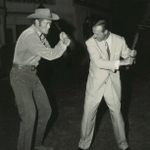


"83-year-old Lawrence Peter “Yogi” Berra, was introduced to a thunderous ovation as he walked slowly to his familiar spot behind home plate."
Yogi Berra stands in his classic Yankees uniform in front of a packed house at the final game held at old Yankee Stadium.

2
12
100
1,255
"I’d spit again at the same peopled who booed me today.
You writers are responsible for this.
The whole thing.
I’m no rock head, you know.
If it didn’t bother me, I wouldn’t be as fired up as I am now.
From 1956 on, I realized that people were for me.
The writers had written that the fans should show me they didn’t want me, and I got the biggest ovation yet."
Ted Williams looks up toward the press box, with lips puckered as if to spit, after hitting the 400th home run.
July 17, 1956, Fenway.
"The spitting incidents....
Should be judged against this background:
The left-field stands at Fenway for twenty years have held a large number of customers who have bought their way in primarily for the privilege of showering abuse on Ted Williams.
Greatness necessarily attracts debunkers, but in Williams’ case the hostility has been systematic and unappeasable."
John Updike.

1
1
11
616
"The Mets finally gave up on Nolan Ryan's wandering fastball today."
The New York Times.
"But we've had him three full years and, although he's a hell of a prospect, he hasn't done it for us.
How long can you wait?
I can't rate him in the same category with Tom Seaver, Jerry Koosman or Gary Gentry."
Mets GM Bob Scheffing.
"I always thought that there was going to be life after baseball, and so I designed that in my life I would have other interests after baseball that I would be able to step into.
And I didn't realize the grip that baseball had on me and on my family."
Nolan Ryan.
Nolan Ryan pitched for twenty-seven seasons and led the league in strikeouts eleven different times, including his twenty-fourth season when he was 43 years old.
Recorded 10 or more strikeouts in a Major League record 215 games.

2
2
29
1,679
"If Jesus Christ were to show up with his old baseball glove, some guys wouldn't vote for him.
He dropped the cross three times, didn't he?"
Dick Young on Willie Mays not receiving a unanimous Hall of Fame vote!

11
8
66
1,659
"Some pitchers are pit bulls for a batter, an inning, stretch of innings, a game, even a season.
Tom Seaver was a pit bull on every pitch, every batter, every out, every inning, every game, every season for twenty years until he retired at forty-two."
"Tom Seaver & Me."
Pat Jordan.
When the, "Warhol Exhibit" was at the "Museum of Fine Arts' in Houston,Tom Seaver stopped in while a guide was telling a group about the colors Andy Warhol selected for his screen print titled:
"Tom Seaver."
Seaver walked right up to the artwork;
Drawing zero fan response.
He was out of uniform.
He got closer.
Nothing.
Then stood next to it.
"Would you mind?" the tour guide snipped, before audience members recognized Warhol’s inspiration.

2
3
25
660
Chuck Connors was a struggling hitter for the Cubs in 1951.
He asked teammates what he should do. They all told him the same thing....
"The only guy who can save you is Stan Musial."
So Connors went to Stan Musial and asked for his help.
Stan Musial spent 30 minutes at the cage with an opposing player.
"I was a bum of a hitter just not cut out for the majors.
But I will never forget Stan’s kindness.
When he was finished watching me cut away at the ball, Stan slapped me on the back and told me to keep swinging."
Chuck Connors.
Kevin Connors ended up named "Chuck" because when he played first base he would yell at the infield"
"Chuck it to me, baby, chuck it to me!"
"Greatest break I ever got.
I'm out there right in the middle of the movie business where if a guy has anything, he's got the chance to break in.
I owe baseball all that I have and much of what I hope to have.
Baseball made my entrance to the film industry immeasurably easier than I could have made it alone.
To the greatest game in the world I shall be eternally in debt."
Chuck Connors.
After one season with the Cubs, Connors was demoted and sent to the Angels farm club in the Pacific Coast League.
One of only 12 athletes in history of American pro sports to have played for both MLB and in NBA.
Mediated the celebrated holdout by the Dodgers pitchers Drysdale and Koufax when he acted as an intermediary during their negotiations.

5
2
19
826
In 1918 twelve-year-old Satchel Paige was convicted of shoplifting, and was sentenced to five years in the:
"Alabama Reform School for Juvenile Negro Lawbreakers."
Satchel attended class, worked on the school farm, joined the school choir, and became a member of the drum and bugle corps.
Satchel Paige honed his skills as a baseball player under the direction of Coach Edward Byrd.
Coach Byrd showed Satchel how to use his physical skill and strength to become a powerful and proficient right-handed pitcher.
Most importantly, Byrd taught Satchel that he could not depend on his physical talent alone, he would also have to outwit his opponents.
By studying a batter’s stance, the placement of his feet, and the position of his bat, Satchel could determine the player’s weaknesses at the plate.
Satchel was paroled on December 31, 1923, with:
"An excellent record."
Paige later said:
"Those five and a half years there did something for me, they made a man out of me.
If I’d been left on the streets of Mobile to wander with those kids I’d been running around with, I’d of ended up as a big bum, a crook.
You might say I traded five years of freedom to learn how to pitch."
Satchel Paige's original tombstone is on display at the Negro League Museum.
Notice the "?" for his birth year!

1
29
934
"Smoky Burgess was fat.
Not baseball-fat like Micky Lolich or Early Wynn, but at-fat like the mailman or your Uncle Dwight.
In fact, I would venture to say that Smoky Burgess was probably the fattest man ever to play professional baseball.
Dressed in the white home uniform of the Pittsburgh Pirates, Smokey Burgess looks a little like a walking laundry bag."
"Sports Illustrated", 1959.
"Smoky Burgess did not possess the physique of a Greek god, nor even that of the average major leaguer.
Standing in at a pudgy 5’8”, Burgess was saddled with such unflattering descriptions as "A walking laundry bag" and "Barely fit enough to play for the "Moose Lodge" softball team."
Physical conditioning aside, nobody debates that Smoky Burgess could hit at any time, against any pitcher, in any situation."
Andy Sturgill.
"You could wake Smoky Burgess up at 3 a.m. on Christmas morning, with two inches of snow on the ground, throw him a curveball, and he’d hit a line drive."
Joe Garagiola.
"A pie-faced car mechanic with a potbelly, graying temples and a retreating hairline, scrubbing away the grease from his North Carolina gas station each March and heading to the big leagues to come off the bench cold in the ninth inning and hit line drives.
For 18 years."
Smoky Burgess told Chicago White Sox G.M. Eddie Short that he wouldn't be summering at Comiskey Park in 1965 because Baptist services in the Windy City ran from 11 a.m. to noon, making it impossible to reach the ballpark in time for Sunday-afternoon games.
Eddie Short found a suburban Baptist service that began at 9 a.m., and kept his .295 lifetime hitter around for three seasons more.
Legend!!!!

3
4
39
1,179
"I think there's something wrong with him.
Physically wrong, I mean.
I don't know what it is.
But I am satisfied that it goes far beyond his ball-playing.
I have seen ballplayers "Go" overnight, as Lou Gehrig seems to have done.
But they were simply washed up as ballplayers.
It's something deeper than that in this case, though.
He is meeting the ball, time after time and it isn't going anywhere."
James Kahn, "New York Sun", 1938.
This is the house where Lou Gehrig passed in 1941.
5204 Delafield Avenue.
New York.

11
868
"Marilyn Monroe was apprehensive about having dinner with a sports star, as she was worried he would be arrogant and celebrity-like, but she was pleasantly surprised by his down-to-earth manner, and they soon started dating.
Two years later they tied the knot, but the marriage was to last only 9 months.
Joe DiMaggio soon began clashing with Monroe over her career and became extremely jealous.
Monroe wanted a traditional kind of marriage where she cooked for her husband and had lots of children, but she also wanted her career and she wasn't about to leave it.
When Monroe was filming the famous scene where her dress blows up over the subway grate, DiMaggio stormed off the set in a rage and beat her after she came home from work.
Monroe quickly divorced him despite him begging her to take him back.
Years later, Monroe had been involuntarily admitted to a mental hospital and was desperate to be freed.
When no one else could get her out, she contacted DiMaggio, who arrived at the hospital threatening to tear it down brick by brick if they didn't release her.
They soon rekindled a friendship, with Joe telling Marilyn that she had saved his life by encouraging him to see a therapist.
It was around this time that Joe wrote this personal note, (found in his belongings after he died):
"Don’t ever be critical.
Forget ego and pride.
Talk from the heart.
Be warm, affectionate and love.
Don’t be a ??
Be patient – no matter what.
No jealousy.
Remember this is not your wife.
She is a fine girl and remember how unhappy you made her Happiness is what you strive for:
For HER!!!!
Don’t talk about her business or her friends.
Be friendly towards her friends.
Don’t forget how lonesome and unhappy you are:
Especially without her."
The two soon began dating again, however despite Monroe telling him in a telegram:
"I love you I think, more than ever."
It stayed an open relationship.
No one knows why, but it seems likely that it was due to apprehension from Monroe due to the way things had ended before.
Just over a year later, Monroe took her life.
At the request of her sister, DiMaggio helped organize the funeral.
At a local florist he placed the following order:
"Six fresh long-stemmed red roses, three times a week, forever."
20 years later he cancelled the order, as the story of the roses had become famous and people were taking them from her grave as keepsakes.
He never remarried.
Joe DiMaggio at Marilyn Monroe's funeral, 1962.

8
35
1,814
"Don’t tell me about Babe Ruth, I’ve seen what he did to people.
I’ve seen them, fans, driving miles in open wagons through the prairies of Oklahoma to see him in exhibition games as we headed north in the spring.
I’ve seen them:
Kids, men, women, worshippers all, hoping to get his name on a torn, dirty piece of paper, or hoping for a grunt of recognition when they said:
"Hi ya, Babe."
He never let them down;
Not once.
He was the greatest crowd pleaser of them all."
"Schoolboy" Waite Hoyt.

5
1
105
1,876
"Black Betsy" was the primary baseball bat of "Shoeless Joe" Jackson.
It was hand made by a fan of his in 1903 when Jackson was still only 15 years old.
The bat was hand made by a local fan of the South Carolina mill teams, Charlie Ferguson, out of a bunk from the northern side of a hickory tree.
It was 36 inches long and weighed 48 ounces.
Knowing that Joe Jackson liked blacked bats, Fergurson darkened the bat with tobacco juice.
Jackson took the bat to the minor leagues, where the fans often chanted "Give 'em Black Betsy" when Jackson came to bat.
"Shoeless Joe" Jackson used the bat for the rest of his major league career.
"Shoeless Joe" died on December 5, 1951 just 10 days before he was scheduled to appear on Ed Sullivan's show, "Talk of the Town", in an effort to clear his name.
"Even when Jackson’s trying to throw a World Series, Shoeless Joe Jackson can still hit .375."
Damon Runyon.
"I have no axe to grind, that I’m not asking anybody for anything.
It’s all water over the dam as far as I am concerned.
I can say that my conscience is clear and that I’ll stand on my record in that World Series.
I’m not what you call a good Christian, but I believe in the "Good Book", particularly where it says:
"What you sow, so shall you reap."
I have asked the Lord for guidance before, and I am sure He gave it to me.
I’m willing to let the Lord be my judge."
"Shoeless Joe" Jackson.
In my HOF!!!

2
3
36
1,055
"It was Tuesday, July 18, 1967, at 10:25 a.m. Central Standard Time.
I know because it was one of the turning moments of my life.
It was about 105 degrees that day, and as I walked into our locker room, my Cubs teammates were really worn down.
But I was feeling so great.
So lucky.
I was getting paid to do something I loved.
So I walked in the locker room and I said:
"Boy's.....
It’s a beautiful day....
Let’s play two!"
Everybody kind of raised up and looked at me.
They were saying to themselves:
"This guy is crazy. . . ."
I wanted to finish my career with one team, one city, one park, one owner.
I did that.
We played all of our home games at Wrigley Field during the daytime.
So my career was very unique, and I am proud of it."
Ernie Banks.
"Ernie Banks played with joy at the beginning, when he was a raw-boned kid out of the Negro leagues and the future was seemingly filled with pennants and World Series rings;
And he played with joy at the end, when his career had become a symbol for greatness amidst futility.
Banks was a power hitter, but in contrast to many sluggers, he was not a big man, nor did he swing from the heels.
Like Hank Aaron, his contemporary and friend, his pop came from his wrists.
He stood in the batter’s box, looking out at the pitcher with equanimity, his energy betrayed only by his fingers, which drummed against the bat.
His swing was waist high and steady, snapping across the plate with a final break of the wrist that made all the difference.
Ernie Banks hit 512 home runs and once held the record for shortstops, but few of those shots were of the towering God-ball variety.
Like Banks himself, they were remarkable for their persistence."
Rich Cohen on Ernie Banks.
"Ernie Banks"
Art by Graig Kreindler.

2
2
15
721
"Baseball is like an ivy-covered wall of Wrigley, when you run into it, you discover bricks underneath.
We’re dealing with groups of men who aren’t much different than others we’ve all run into over years, except they wear neckties instead of hoods."
Hank Aaron.
"Baseball Game"
Art by Marina Stewart.

1
6
515
"Do you want to know what Jackie’s impact was?
Well, let Martin Luther King tell you.
In 1968, Martin had dinner in my house with my family.
This was 28 days before he was assassinated.
He said to me:
"Don, I don’t know what I would have done without you guys setting up the minds for people for change.
You, Jackie and Roy will never know how easy you made it for me to do my job."
Can you imagine that?
How easy we made it for Martin Luther King?"
Don Newcombe.
"Grace."
Art by Don Hobrecht.
"Jackie Robinson was a pilgrim that walked in the lonesome byways toward the high road of Freedom.
He was a sit-inner before sit-ins, a freedom rider before freedom rides."
Martin Luther King Jr.
MLK Jr., Jackie Robinson, Don Newcombe, Roy Campanella.
This artwork owned by Dodger legend Orel Hershiser.
Housed in the Negro League Museum, Kansas City.
"If I cannot do great things, I can do small things in a great way."
Martin Luther King, Jr.

2
21
989
Jim Koenigsberger retweeted

For this last essay in the series ("America's National Game"), it's about Comebacks and Coleridge--the fan's willing suspension of disbelief. ourgame.mlblogs.com/americas…
2
11
2,151
Jim Koenigsberger retweeted


On this day in #Dodgers history…
September 28, 1988:
Orel Hershiser threw TEN scoreless innings against the Padres to extend his streak to 59 consecutive scoreless innings, breaking Don Drysdale’s MLB record.
59 straight scoreless innings!!
One of the greatest pitching runs ever.

1
8
964
Jim Koenigsberger retweeted

There were 21 CG's in 2026.
11 Shutouts.
Nobody had more than 1 of Each.
@MLB

"The Dodger Killer."
In 1966, his league leading 5 shutouts were all against the Dodgers.
Today, with fewer complete games and fewer shutouts, that feat will likely never be matched.
Holds the honor of throwing the first major-league pitch in Canada with the Montreal Expos.
Larry Jaster

1
1
4
937
Jim Koenigsberger retweeted

¡Liga de peleones!
De los 20 mánagers con más expulsiones en MLB hay 9 que dirigieron o jugaron en Venezuela
1-Bobby Cox
4-Earl Weaver
7-Bruce Bochy
8-Ron Gardenhire
9-Paul Richards
11-Jim Leyland
13-Clint Hurdle
15- Lou Piniella
19-Sparsky Anderson
Lista por @BBGreatMoments

3
18
23
2,968

