

Personal account of the Director of Research at @CureParkinsonsT - All views my own - Kiwi - Kia kaha - 侘寂
London, England
- Tweets 25,610
- Following 248
- Followers 11,228
- Likes 9,914


Excited to be at the BRC-DRI-DDI 2026 Annual Meeting being put on by @AlzResearchUK today. The theme is "From Bench to Bedside and Back". And the first speaker is Prof Thomas Knowles @KnowlesLabCamb, who is talking about his work on protein aggregation

1
1
3
395
The @alzforum summary of the study:
alzforum.org/news/research-n…
186
N-of-1!
An investigational study of a novel individualised antisense oligonucleotide drug for CHCHD10-related #ALS shows early signs of efficacy in a 12-month N-of-1 study; Well tolerated, normalised plasma NfL levels & modest clinical improvements
cell.com/med/abstract/S2666-…
2
2
3
851
The Science of Parkinson's retweeted

Negative trials matter, particularly in a disease as devastating as ALS, because we need failures to get to successes. DNL343 had a compelling rationale: it is a brain-penetrant small molecule that activates eIF2B and is designed to inhibit the integrated stress response, a cellular pathway involved in protein production and the response to cellular stress that can become persistently dysregulated in ALS; encouraging phase 1 data showed that the drug entered the brain and affected biomarkers of this pathway. But in this rigorous HEALEY ALS Platform Trial, 200 mg daily did not slow ALS progression, with no significant benefit on the primary combined measure of function and survival or on the major secondary outcomes. That is disappointing, but it is not wasted science: it tells us where this particular approach fell short, raises important questions about target engagement and the biological heterogeneity of ALS, and helps us design the next trial better. Thomas Edison is famously credited with reframing his repeated attempts to build the light bulb as, “I have not failed. I've just found 10,000 ways that won't work.” That is how we should view well-designed negative trials. Every carefully measured failure narrows the field, teaches us something, and hopefully moves us one experiment closer to a treatment that works.
jamanetwork.com/journals/jam…

7
28
1,769
A new study assessed the sensitivity of key motor smartphone tasks to detect disease progression in individuals with isolated REM sleep behavior disorder (iRBD) & early #Parkinsons; Findings highlight monopitch during reading & slowing turn speed in RBD
nature.com/articles/s41531-0…

1
403
Research from @esther_sammler et al examined LRRK2-dependent Rab10 phosphorylation at threonine 73 in blood neutrophils from 181 genetically enriched #Parkinsons patients & 71 controls, identified genetic modifiers of LRRK2 signalling (including NECAP2)
nature.com/articles/s41531-0…


1
1
5
689
A hypothesis-generating retrospective cohort analysis finds early-life Bacillus Calmette–Guérin (BCG) vaccination is associated with reduced later-life #Parkinsons incidence, displaying a profound sex-dependent effect favoring females
mdpi.com/2227-9059/14/9/1945


390
Treatment was associated with⬇️dopamine agonist use & overall adjunctive medication burden. Favorable tolerability & low discontinuation rate reported. Pre-switch LEDD calculations should not be considered definitive predictors of individualized maintenance settings
117
The results of an 18-month longitudinal study exploring long-term clinical efficacy, safety, & polypharmacy simplification of levodopa–entacapone–carbidopa intestinal gel in 41 patients with advanced #Parkinsons has been published
mdpi.com/2077-0383/15/18/731…

1
380
The authors are rethinking dopaminergic identity in iPSC-derived neurons. Are we generating "neurons with incomplete or context-dependent identity because of accelerated differentiation, strong exogenous patterning" & resetting of age-associated features
129
"In this review, we propose that neuronal identity should be viewed not as a static marker profile, but as a dynamic multidimensional biological state"; Phenotypic illusion, developmental compression, & spurious cell states proposed as testable hypotheses
link.springer.com/article/10…


1
2
7
771
The investigators "posit that an imbalance in these interactions between α-Synuclein, viral rG4s, & DDX39A promotes α-Synuclein amyloidogenesis, providing a mechanistic link between viral infections & an increased long-term risk of #Parkinsons" - I am intrigued!

2
2
8
359
This is interesting b/c previous research suggests that mRNA G-quadruplexes bind to α-Synuclein & facilitates its amyloidogenesis. Viral infections are known to transiently elevate rG4s in the cytoplasm, & the investigators used H1N1 & SARS-CoV-2 to expedite amyloidogenesis
2
4
10
693
Interesting: @SwastiLab reports that mRNA G-quadruplexes-dependent interactions with the DEAD-box helicase DDX39A decelerates α-Synuclein amyloidogenesis. Interupting interactions between α-Syn & DDX39A⬆️amyloidogenesis, while over-expressing DDX39A⬇️it
cell.com/cell-reports/fullte…

4
10
22
10,716
New research identifies FcγRIIb as a critical regulator of α-Syn propagation in vivo & supports receptor-targeted blockade as a mechanistically distinct & therapeutically tractable strategy for modifying disease progression in #Parkinsons
link.springer.com/article/10…


1
3
12
900
New study explores experiences of Pacific patients with PINK1-associated #Parkinsons (& their care partners), highlighting Adaptation Struggles (personal, social, cultural & systemic) + Positive Adaptation (normalisation of the illness & support networks)
onlinelibrary.wiley.com/doi/…

2
4
404
The Science of Parkinson's retweeted

The @FDA approve Tavapadon under the brand name JUVMO.
Tavapadon is a once-a-day oral dopamine-D1R/D5R partial agonist.
reuters.com/business/healthc…
1
7
32
1,483
The Science of Parkinson's retweeted

Cure Parkinson’s and Van Andel Institute (VAI) are delighted to announce Dr Esther Sammler as the winner of the 2026 Tom Isaacs Award, which honours researchers who closely collaborate with the Parkinson’s community.
Find out more: buff.ly/ZjrCLw5

2
4
630
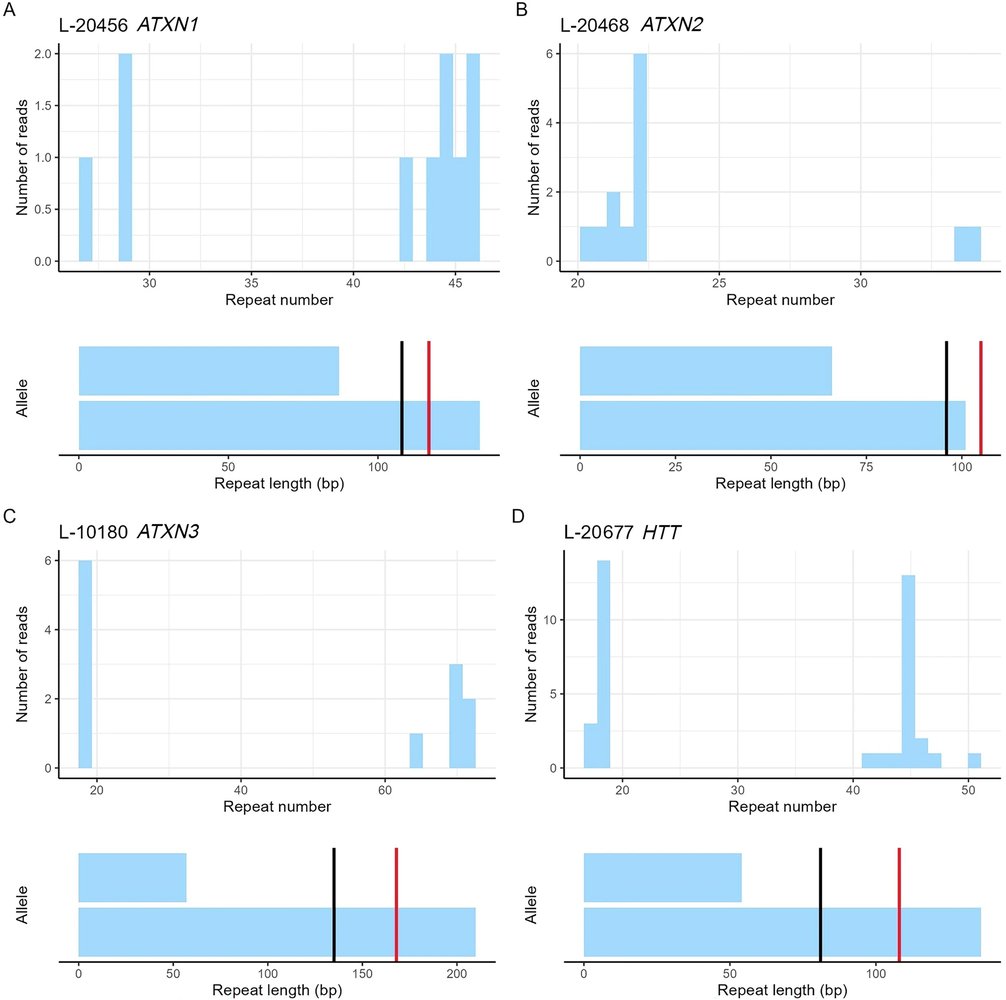
Researchers designed a novel gene panel comprising 564 loci related to #Parkinsons, repeat expansion disorders, & other neurodegen. conditions, & performed adaptive sampling to jointly interrogate various variants (STXBP2, AP4S1, RARS2, ALS2, & CNBP)
nature.com/articles/s41531-0…


5
10
1,233
Comparing resting-state functional connectivity in 58 people with mild-to-moderate #Parkinsons scanned in the OFF-medication state & 24 neurotypical older adults revealed patterns of both increased & decreased functional connectivity across key motor areas
academic.oup.com/braincomms/…

1
3
2
419