

Midgard Trading, the realms futures prop firm. One Trial · three paths · industry’s largest drawdown. Use Code Midgard for 40% Off your trial.
The Realm
- Tweets 1,059
- Following 19
- Followers 159
- Likes 5


Pinned Tweet

Welcome to the Realm of Midgard. ⚔️
Forged by the Gods for the benefit and enjoyment of traders — simple laws, instant payouts and different paths to the glory and the coin.
The gate stands open.
The toll is cut 40% → midgardtrading.com
2
1
12
4,231
Midgard Trading is a futures prop firm built for Midgardians who want clear rules first.
The book is public before you start a Trial.
When do you stop trading for the day — clock, profit and loss, or a hard rule?
8
Midgard Trading retweeted

Success in trading isn't built in a day. It's built trade by trade, week by week. 📈
Everyday is another chance to prove it.
Stay FOCUSED. Stay DETERMINED.
Follow- @FuturesBulls for daily trading psychology 🐂
TRADE. DISCIPLINE. FREEDOM.

1
14
Midgard Trading retweeted

After a lot of procrastination and preparation, I finally dug out my old trading-theory notes and trading-algo drafts and wrote Part 2 of my series on futures trading methodology…
In Part 1, I laid out the mathematical structure of $ES, $NQ and $VIX futures and how they work.
The new post, part 2 goes from reading a volume profile all the way to a working order:
- What volume and TPO profiles actually measure, and what they don't: traded volume is not order-book liquidity
- How to read the open and the developing auction: prior value, the first 15 minutes, the opening price as the intraday pivot, and the 4 classic opening sequences
- How to scale entries, stops and targets to the day's realized volatility instead of fixed point distances
- 3 precisely defined entry models: a failed excursion back into value, continuation away from value (including going with an opening drive), and expansion from an intraday balance
- A real September 23 ES short, step by step: confirmation, entry, position sizing from the worst permitted fill, execution in IBKR, and 2 different exit policies from the same entry, showing why the exit matters as much as the entry
- And the part most people skip: how little a single winning trade proves, how many trades a track record really needs, and how execution costs quietly eat a "good" reward-to-risk ratio
Along the way I walk through the implementation of my 2 TradingView indicators, HTF Lvls (completed-period POC, value area and VWAP levels) and RV (intraday realized volatility and its rank), including the math behind them and their blind spots.
The rules are a frame, not a machine. They are precise enough to test and log, but meant to discipline judgment, not to replace it.
In the next part, I'll move from the profile to the swing, talking about the 3/10 oscillator, first crosses and divergences across time frames, the rhythm of buy, sell and sell-short days, classic setups (Holy Grail, three-bar triangle, pinball, failure tests), extended runs, market internals (TICK, breadth, volume), and trade management: initial stops, scaling out, runners and re-entry.
And I'll finish it with the practical implementation of the implied probability distribution that I discovered how one can distract from market and positioning datas as the only forward-looking model based on factual datas.
All of it the way I once learned it from my mentors, one of whom appears in the Market Wizards series.
Enjoy the read, and happy learning!
Warmly,
~A❤️

5
13
128
7,050
Last day for Light Armor and DOUBLE PLAT together.
Code Midgard. Shared trial. Double Midgard Currency through tonight.
Do you size up after a win, or keep the same risk?

1
1
65
Midgard Trading retweeted

Manage your trading capital like a CFO running a business — budget for losses, control burn, never bet rent money. The mindset shift fixes most discipline issues.
1
12
Midgard Trading retweeted

After 20+ years of trading, one lesson stands above the rest:
Most traders don’t need another strategy. They need better stock selection, more discipline and better execution.
1
1
1
15
DOUBLE PLAT Midgard Currency ends with Friday’s close.
Midgard Trading doubles it on every purchase until then.
Do you journal during the session or after you flatten?
37

RT @dhesi_trades: Started off with a loss on futures
Bounced back with 0 DTE
Beautiful way to cap off the week.

3
2
Midgard Trading retweeted

The discipline of golf mirrors the discipline of trading. Mastering the course requires consistent practice, just like mastering the markets. It's about dedication to the process, not just the outcome. #Golf #Trading #Discipline

1
31
Midgard Trading retweeted
If you’re not studying the charts this weekend
You don’t want it enough
Plain and simple
8
6
52
5,266
Midgard Trading retweeted
If you are a trader
You must have a hobby
This is non-negotiable
7
2
28
3,771
Midgard Trading retweeted
Risk management is stress management in trading
Limit your risk, minimize stress
Focus on what you are willing to lose versus what you want to profit!
1
1
7
3,308


The Midgardian hall stays open all session in Discord.
discord.gg/nKZG4NXXu7
Who is the one trader you still learn from?
1
70
Midgard Trading retweeted

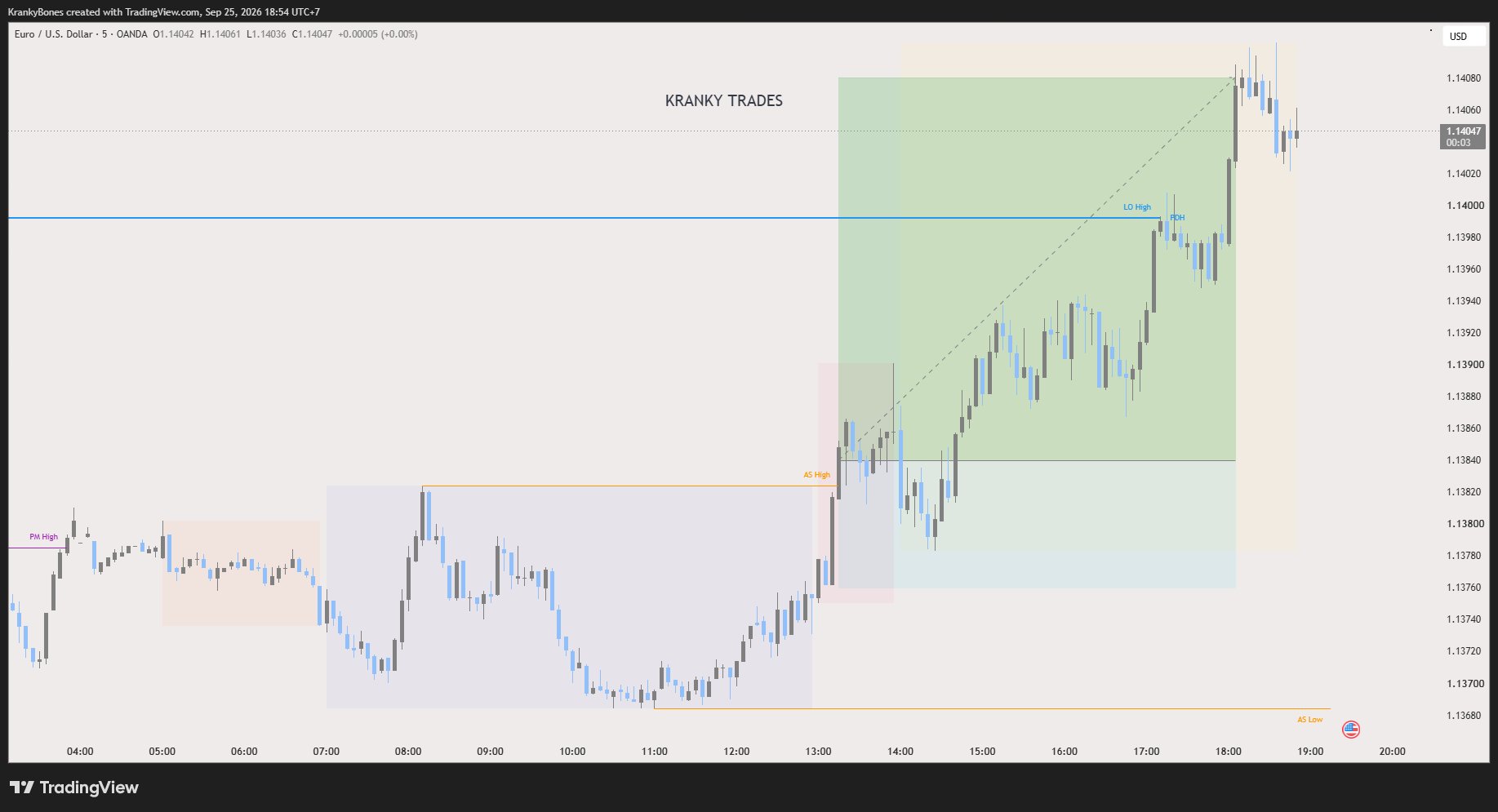
🔥 +3R on $EURUSD today
Been backtesting a mechanical strategy. Finally going live with it.
One trade a day, zero discretion.
All I need to do is show up during Frankfurt and London opens, place my orders, and walk away.
Set it and forget it 🧘
Win rate just under 50% in backtesting, but targeting 3R makes the difference.
Adding this alongside my existing Gold strategy for diversification.
On to the next one 🫡

1
1
2
51


Midgard Trading retweeted

Trading discipline is doing what you planned to do — even when the market is tempting you to do something else.
Your plan tells you when to enter.
Your rules tell you when to stay out.
Your risk management protects you when you’re wrong.
Don’t abandon your strategy because of one missed trade or one loss.
Follow the plan. Trust the process. Stay consistent. 📈🧠

25
15
33
3,883
Midgard Trading retweeted

📈 Trade Recap
📌 Setup: BUY
📊 Trend: BUY ZONE ↑
⏱️ Confirmation: H1 🟢 | M30 🟢 | M15 🟢
🎯 Price respected the bullish structure and continued higher.
✅ Patience
✅ Followed the setup
✅ No FOMO
✅ Let the trade develop
The market rewards discipline, not prediction. 📈
#Trading #PropFirm #Futures #Trader #OGTrader


1
4
131