

Author, Filmmaker, Artist, sharing creativity, no offense intended, looking to be part of discussions that make life better for everyone! @avaleighfilm
Atlanta, GA
- Tweets 27,043
- Following 1,654
- Followers 3,059
- Likes 19,886


Pinned Tweet

Howard Finster worked day and night to get God’s messages out, he wrote, “I took the pieces you threw away. I put them together by night & day, washed by rain, dried by sun, a million pieces all in one…” -his life story is inspirational, watch today!


8
11
51
18,074
Ava Leigh Stewart retweeted
Use your voice to tell the truth, when words do not match actions, call it out, in a world that lacks a degree of integrity and moral fiber, do not dare sacrifice your own internal compass, say the truth, and say it loud, you do not win a battle of injustice without truth….

3
2
74
Everyone needs to see this film so this will never happen again! It should’ve never happened after the Bolshevik revolution, the holocaust, apartheid, the civil wars in Africa, when will humanity ever learn? It’s free to watch, no excuses

🚨BREAKING: 'NAZA' documentary will be available for free online viewing after theatrical release, according to filmmakers haaretz.com/israel-news/isra…
1
1
50
 DavidSaysStuff_
Why is Latin a dead language that is not spoken? It is preserved in religion only…Multiple languages came from it, but they were all adapted to new languages, is it because of the secrets in the language? The meaning in Latin for north explains much more than a direction.

1
1
42
The spirit of evil is negation of the life force by fear that only boldness can deliver from fear and if the risk is not taken, the meaning of life is violated and that’s a summons, an accountability to show up, knowing in the face of circumstance, control is an illusion - Jung

33
Ava Leigh Stewart retweeted
We hold these truths to be self-evident, that all men are created equal, that they are endowed by their Creator with certain unalienable Rights, that among these are Life, Liberty and the pursuit of Happiness… Drawing George Washington taught Howard to paint - Finster on demand

4
2
279
Ava Leigh Stewart retweeted
Join me to try a Meditation for Peace today at 4:44p EST - Good people take a moment to wish peace for all the inhabitants of Earth and the Universe “peace be with you all”
This is a theory, The Maharishi Effect, a proposed phenomenon when a group of people practicing Transcendental Meditation (TM) or other advanced meditation techniques at the same time can create a measurable and beneficial effect on the surrounding environment.
Moreover, the significance of the Maharishi Effect lies in its potential to promote peace and harmony on a global scale. Let’s try it!!

ALT Photo from Paradise Garden in N Georgia
2
1
465
Ava Leigh Stewart retweeted
One of the great crises of our times is the crisis of meaning, which is both a symptom and a cause of the broader polycrisis – the convergence of ecological, political, spiritual and social breakdown. Traditionally held certainties about humanity’s place in the world are crumbling. Those to whom we have abdicated our power – politicians, academics, doctors, experts, leaders – reflect back the confused, muddled buffoonery of a collective emperor with no clothes. Extinction illness and other psychological collateral effects are deepening both depression and denial, forcing humility and exacerbating hubris. The Anthropocene casts a long and convoluted shadow.
As the political adage goes, “we are prisoners of context in the absence of meaning.” So what then shall we do? A starting place is better understanding of and relating to the current context – i.e. assessing the nature and texture of the oxygen we breathe (even when we can’t). We can also attribute new and ancient meaning to the consequences of our actions. Solidarity can play a central role in triangulating these two practices as a means towards sense-making. We can re-imagine solidarity as a communal, spiritual act. Solidarity as becoming.
Etymologically, solidarity comes from the Latin word solidus, a unit of account in ancient Rome. It then merged into French to become solidaire referring to interdependence, and then into English, in which its current definition is an agreement between, and support for, a group, an individual, an idea. It is essentially a bond of unity or agreement between people united around common cause. True to its original meaning, there is the notion of accountability at its core, it starts with common sense. Alnoor
-Ladha

1
3
4
185
Do you know wolves helped the environment in Yellowstone? They just shot the oldest wolf and I don’t even understand this world where you would kill animals that are completely in their natural environment because of money, it is so devastating to see this evil in America
33
The American Chestnut tree dominated the eastern woodlands. Then, blight wiped out 99.9% of them. A conservatory in West Virginia preserved the genetics so they would be available to future generations, now the land has been sold and they are bulldozing the sanctuary of trees.

3
4
79

RT @beekmanplace78: This stays on repeat until you believe it.
Look in the mirror everyday and say this to yourself until you believe it.…
25
3
Regular guns are not as relevant to modern warfare, when lasers from space, micro dust and nano particles are the weapons, our own bodies and the literal air we breathe is under attack. The second amendment alone will not protect from tyranny!

the plan is to genocide humanity.... that's why prices are so high... and it's why they're poisoning the food, air and water

1
3
75
It’s caught my attention that they made this powerful memorial with 1400 shoes of Doctors and Medical staff killed in war zones, at the same time the Dutch euthanized a disabled child, this world does not make sense to me
38
Someone told me Peter Thiel issued a refund for his AI AntiChrist lecture series in Nashville to anyone that was a journalist? Why have a series to open discussion on a topic and not want people to discuss? I do not understand-noted as odd

“If you’re evil, you’re not bad, maybe you’re kind of good”
Palantir- The All Seeing Eye
You feel safe yet?

1
3
259
To understand the conflict in the Ukraine, you have to understand that the Balkans were one of the great cradles of civilization and the Slavic people have some of the oldest DNA in human existence, they are strong and have endured, so a group wants to erase the DNA.

📑The Forgotten Continent: Eastern Europe📑
Boris Nad
After the Second World War, Europe was divided into East and West. The East was under the domination of Moscow, and the West under the undisputed domination of Washington. The old division into “East” and “West” was thus especially absolutized during the Cold War, cemented by the Iron Curtain. After the fall of the Berlin Wall, when the flag of “united Europe” was raised, there was supposed to be only one, strong, singularly unique Europe, united under the umbrella of NATO and the EU. In this regard, Eastern Europe — the “European periphery”— was supposed to become part of the West and to forget or overcome its historical heritage and its historical traditions, which were declared retrograde in the likes of the “heavy burden of Communism” or Orthodoxy. This design, it soon turned out, was quite utopian. Reality was and is different. Europe consists of different wholes and regions, and each of them has their own developmental paths—and their own interests.
The peculiarity of Eastern Europe lies in that it has always represented a crossroads, a “contact zone” and bridge between civilizations. But the most important civilizational division is not the dichotomy between “West” and “East.” In actual fact, Eastern Europe was never “West”, nor was it the “East” as it was imagined to be, but was something third and incomparably more important. This much was said by one “historian of religion, humanist, Orientalist, philosopher, and fruitful writer”, Mircea Eliade, whose longtime associate and friend Joseph Mitsuo Kitagawa wrote: “Eliade was born in Bucharest, Romania, very close to the imaginary line where the West meets the East.” From this uncertain “border line”, Eliade first went to the East: “He spent almost five years in India, studying Indian philosophy with Surendranath Dasgupta at the University of Calcutta. He spent the next six months in an ashram near Rishikesh in the Himalayas.” After 1945, Eliade lived in the West: 10 years, from 1945 to 1955, in Paris, and the next 30 years in America, working at the University of Chicago.” Mircea Eliade was not at all a Westerner, but a “man of a third culture”: “He had all the grounds to conceive of his work in a highly comparative perspective.” Indeed, he dedicated his life to confirming one thesis: the essential unity of the traditions of Eurasia.“Eliade had a strong awareness of this unity,” the Italian professor Claudio Mutti writes, “and during the fiercest period of the Cold War he did not agree to defining Europe within the narrow borders that the apologists of ‘Western civilization’ sought to impose.”
“The fact is that Eliade was a Romanian, not a Westerner”, Professor Mutti emphasizes, and he belonged to a “nation that took shape at a geographical crossroads.” Romanian culture is not “Western”, but a culture that has traditionally played the role of mediator between different traditions and civilizations of East and West. The influences that ran through it are numerous, sometimes direct, sometimes fluid and almost imperceptible. It is a “culture of mediation” and a culture of great creative syntheses.“Romanian culture,” as Eliade saw it,“has represented a kind of bridge between the West and Byzantium, between the West and the Slavic world, between the Orient and the Mediterranean.” “What Eliade claims about his own country’s culture”, Mutti states, “proves to be true for all of South-Eastern Europe.” Indeed, the same can be said about the entire European East.
In general, do East and West exist as two antithetical and incompatible cultures? Is Western Europe the only “true Europe”, which lays claims to all the rights to universality and Modernity, to the past and to the future? Opposite of it in this vision is that Europe in the East—“ backwards”, “primitive”, and of course destitute; its cultures and historical traits are supposed to be erased and forgotten as soon as possible so as to join the “progressive West.”
Such is the Western conception of the modern history of Europe. It denies Eastern Europe any cultural identity and uniqueness. Mircea Eliade wrote about precisely this with a sense of ridicule and sarcasm:
There are still some honest people among intellectuals for whom Europe ends at the Rhine or, at best, Vienna. Beyond that begins what is to them an unknown world, perhaps charming but uncertain. These purists would be tempted to discover under the skin of a Russian that infamous Tatar whom they heard of in school; as far as the Balkans are concerned, there begins that confusing ethnic ocean of natives which stretches all the way to Malaysia.
For such “intellectual purists” and “honest people”, Asia begins “outside Vienna.” Here ends“civilization”—and civilization exists exclusively in the singular, as in “Western Civilization.” Austria is only a protruding fortress, as its name indicates: “Austria”, or Österreich, from the old German Ostarrîchi, meaning “Eastern Reich”—the Eastern border of the Holy Roman Empire. The rest beyond are savages or barbarians. The word “barbarian” is a loan from the ancient Greeks, in whose language such was an onomatopoeia composed of syllables supposed to imitate animal sounds. “Bar-bar”—hence “barbarian”—was anyone who did not possess human language and was therefore akin to a dumb animal. For Westerners, “outside Vienna” is where the “East” begins, that dark Scythia which, in the words of Carl Gustav Jung, does not cease to trouble and frighten the German petty-bourgeoisie; the Scythia from which “new and different winds always blow.” These “ barbarians” are, in fact, mostly Slavs.
This racist conception was quite openly proclaimed by Hitler’s Third Reich, for which Slavs were subhumans and the German Aryans were the bearers of culture. This Western racism did not disappear with Hitler, but only became subliminal and moved into the realm of the unconscious, which by no means rendered it any less dangerous or any better-intentioned. The case of the contemporary European Union is the same. It is authorized to prescribe the rules, since it represents the only true civilization. It is up to everyone else, including Eastern Europe (which otherwise remains essentially “ barbaric”), to accept these norms as if they were actually the norms of civilization itself, as elementary preconditions for civilized life. Postmodern racism avoids talking about biological superiority, but it has replaced this idea with the civilized superiority of the West.
It is impossible to pinpoint the borders within which this imagined “civilization” stretches. Over the course of the 19th and even 20th century, for English liberal gentlemen the Germans were “barbarians” and “Huns”, and this propaganda was revived in the First and Second World Wars. Out of the very same reasoning appeared yet another construct: “Middle Europe” or “Central Europe”, which marked a kind of “transition” between the civilized West and the wild East, i.e., something that was not the “real West” but was not, or not completely barbaric or the “ backwards East.”
All the bravado is an inaccurate, false image that the West has cultivated around itself and imposed on others, first and foremost Eastern Europe which, still yesterday “Communist”, is condemned to bear the heavy burden of a “totalitarian heritage” from its “Communist dictatorships.”
To this alleged “Middle Europe” belongs the Pannonian Plain. This positioning, Aleksandar Gajić notes in his work The Geopolitical Position of Vojvodina, has been ingrained in both the expert community and general public of Serbia, where it is thought that the area of the northern Serbian province of Vojvodina and the entire Pannonian Plain are located in Central Europe, while the rest is the “primitive Balkans.” The flow of the Danube and the Sava are taken to mark a “fixed border between different geopolitical and civilizational entities.”
This thesis is, of course, deeply wrong, on which Gajić remarks: “Such views are the result of prejudices that took root due to historical circumstances in the past several centuries, when the area of Vojvodina was a contact and border zone between the Habsburg and Ottoman empires, and later the border between Austria-Hungary and Serbia.” The backbone of the Habsburg Empire, Milomir Stepić recalls, was the Danube:“ The Pannonian lowlands were the core of that great and powerful state, and the space of today’s Vojvodina, with its Serbian defenders, was a shock absorber during Turkish incursions and a geostrategic ‘springboard’ for counter-penetrations to the south.” Hungarian interests, whose ambitions included the political, territorial, ‘great-power’ unification of the entire Pannonian lowlands, fit well with rapid Germanic penetrations into the south and east. All in all, Gajić concludes: “The point of view that this area was part of an exclusive, culturally superior Catholic Central Europe, whose Orthodox inhabitants were ordinary intruders, and that beyond this ‘civilizational border’ there existed only barbarism and non-culture, was well-placed from the Habsburg geostrategic standpoint.”
What, then, is Pannonia if not “Central Europe”? Since ancient times, Pannonia has been a “contact space”—a place of interactions, encounters, and conflicts between the European Rimland and the Eurasian steppes. Although partially isolated by the Carpathian and Tatra mountains in the East, the Pannonian Plain was and remains “the westernmost part of the great steppe space of Eurasia.” Along these paths, from the East and North- East, the oldest known migrations of (Indo-European) nomads proceeded into the Pannonian valley, creating among other things the hotspots of the first civilizations in Europe. It is here, in fact, that at least three different geopolitical “great spaces” meet: the Western, emanating from the center of European Rimland, the space of Russian Eurasia, and the space of the Mediterranean and Middle East.
It is in Pannonia and the Balkans, whose borders have throughout history been neither cultural nor geopolitical but only geographical, that the earliest civilizations emerged: the Mesolithic and Neolithic culture of Lepenski Vir (in the period from around 9500 to 5500 BC), the Middle Neolithic Starčevo culture (during the 5th and 4th millennia BC), then the Vinča culture which, according to some scholars, included migrants from Anatolia. The bearers of the Vučedol culture (3000 - 2200 BC) were the Indo-European peoples of the Eurasian steppe, its epicenter located in Srem and Slavonia and its reaches encompassing a much wider space from Slovenia in the West, Serbia in the East, and Prague and the Vienna Basin in the North.“The fact is that the Neolithic culture of Europe began here (in Lepenski Vir),” archeologist Djordje Janković concludes, “and the Vinča culture is really the oldest state in Europe.”
Thus, there is no single civilizational and geopolitical entity that extends southwards from Central Europe to the Sava and the Danube, except for that which appeared only very late in history (the Habsburg monarchy). Rather, the truth is quite the opposite.
Eastern Europe has its own uniquenesses and its own extremely rich cultural heritage. It is, in many ways, a world unto itself. Eastern Europe is also a space between two civilizations whose borders are not immutable and fixed: the Western European and Russian. In his monumental work Noomakhia, in the volume dedicated to the “Slavic Logos”, the Russian thinker Alexander Dugin notes: “Precisely here ran the border between the nomadic, Indo-European, patriarchal civilizations of Turan and the matriarchal civilizations of Old Europe (which appeared in Anatolia and spread to the Balkans and Southern Europe), as well as between the Catholic (Latin) Celto-Germanic West and the Russian-Orthodox East.”
The Sarmatian-Scythian factor played an undoubtedly important and in all likelihood fateful role in the ethnogenesis of the Slavs. But long before the arrival of the first Indo- Europeans in the Balkans and Pannonia, Dugin thinks, here prevailed an “ancient matriarchy—the civilization of the Great Mother—and its vestiges are found in Lepenski Vir, Vinča, and elsewhere.” It is therefore wrong to imagine the Balkans as the periphery of Europe. The Balkans were Europe’s real center. The Neolithic civilizations such as those at Lepenski Vir or Vinča were not only the oldest civilizations and states, or proto-states, of Europe, but were, as the works of Professor Radivoje Pešić have shown, also the very cradle of European writing, although this is denied today.“In a certain sense,” Dugin says, “here is also the cradle of European peasantry, and the European peasantry is responsible for many of the key elements of European identity.” It might be superfluous to add, but we will: these “key elements” of European identity are those which have been forgotten or deeply suppressed.
To this day, the dominant ethnos of Eastern Europe and the Balkans remains the Slavs. Yet, due to a number of historical circumstances, the whole of Eastern Europe has always been a complex conglomeration of different ethnoi, peoples, and faiths. What’s more, in the past this space was never geopolitically singular. “But,” Dugin writes, “this does not mean that the peoples of Eastern Europe cannot develop civilizational unity in the future and regain cultural identity based on a common Eastern European Dasein.”
History, the Belgian scholar Robert Steuckers discerns, is today impermissibly reduced to a Western version, while the heritage of numerous peoples—Scythians, Sarmatians, and Slavs—has been erased from collective memory. Rediscovering this lost heritage is vital not only for the future of Europe, East and West, but also all of Eurasia. Future in-depth studies must take into account “every component on the common territory of Europe and Asia” and focus on “in-depth studies that discover convergences, not reasons for hostilities.” The first step in this direction is “seeking out convergences between the Western- European powers and Russia as the basis for the unity of Eurasia.”
With this in mind, Steuckers cites the example of the philosopher Leibniz. As a diplomat, Leibniz was initially distrustful of Russia, which he saw in the likes of a “new Mongol khanate”or “Tartary” potentially posing a threat to Europe. Then upon studying the development of Petrine Russia, he “began to perceive gigantic Russia as a necessary territorial link that could enable Europe to link up with two old civilizational spaces, China and Russia, which at the time had a higher civilizational level than Europe.”
The French historian Arthur Conte has also pointed to the importance of Sarmatia to the formation of the Slavic peoples: “The Sarmatian element is important not only for the Slavic peoples, but also for the West, which has tried to erase their heritage from collective memory.” The Sarmatians once made up the backbone of the Roman cavalry, which “in Roman Britain was partly or largely composed of Sarmatian knights.” Today, British historians acknowledge these Sarmatians and their heritage to be the origin of the Celtic Arthurian myths (such as the “sword in the stone” and the legend of the Holy Grail).
In his book Empires of the Silk Road: A History of Central Asia from the Bronze Age to the Present, Professor Christopher Beckwith argues that in the distant past it was the horsed Indo-Iranian tribes (primarily the Scythians and Sarmatians) that established the set of rules on which all of the future organizational schemes of kingdoms and empires along the Silk Road were based. Ancient history is repeating itself in its own way: the “New Silk Road” is connecting China with the expanses of Central Asia and Russia, extending into Eastern Europe towards the West. In the past as well as today, the Silk Road represents the axis of Eurasia—its backbone—around which time and again empires and zones of mutual prosperity have taken shape out of efforts to establish peace throughout the vast territory between Western Europe and China. All of this completely differs from the conceptions on which Western policies are based and carried out today, such as Brzeziński’s project, which encourages lasting war in contrast to China’s One Belt One Road, “the most serious project for the 21st century.”
Reducing history exclusively to the Western European version is “intellectually unacceptable reductionism.” In fact, it is intellectual fraud and political manipulation, wherein historical facts are systematically ignored, in Steucker’s words, “only because they do not fit into the schemes of the superficial interpretations of the Enlightenment currently sought by Western powers, which have provoked a whole number of catastrophes.”

1
72
People say that Victoria’s Secret Amber romance is the greatest spray for Gnats, my grandmother, used Avon skin so soft, which works, but both are interesting in that no one is sure which ingredient or why it is so toxic it kills bugs, hmm
1
88
Ava Leigh Stewart retweeted
I woke up thinking about living in a world where it’s a completely different energy, where people understand nature and how interconnected and interdependent we all are, at the very least they understood to protect your food, protect the BEES!

2
3
60
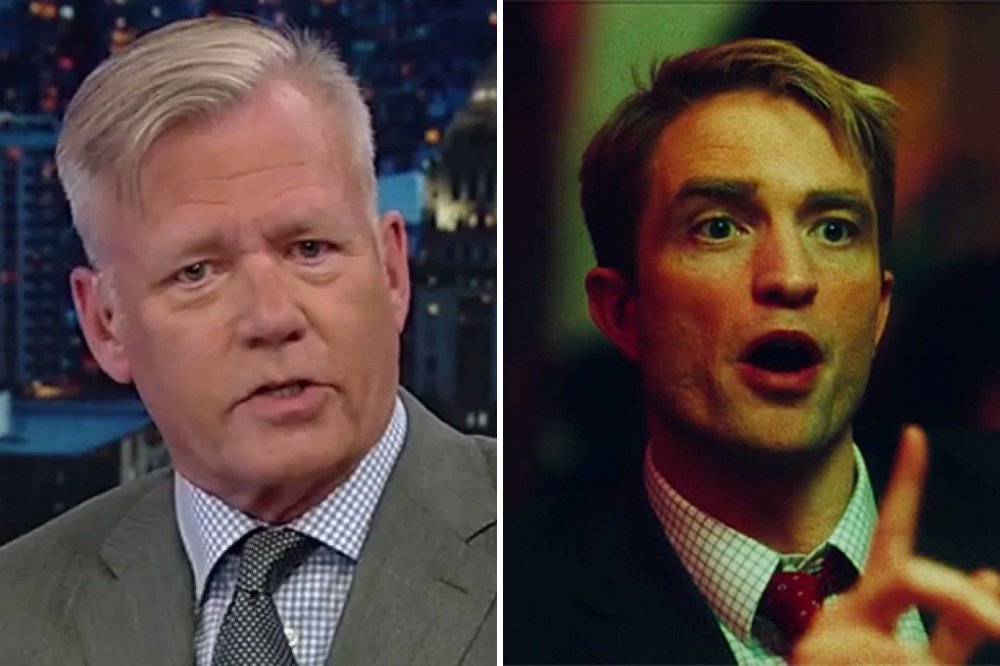
A24 has made film projects that are either operant conditioning for story control or a gaslighting piece like this movie to defame Hansen for catching child predators, something is very off with the content, it is not art to me

Lance Oppenheim says Chris Hansen’s reaction to “Primetime” is “exactly what the film is about.”
"When he first heard about it, he was quite excited. He was at CrimeCon saying, 'I’m sorry, I’m not Robert Pattinson, but I’m Chris Hansen.' Several weeks later, we wanted to show it to him and there was a fairly standard NDA he didn’t want to sign."
"Since then, he has done what Chris Hansen, the showman, does and has said a lot more about it. His reaction to the film right now is exactly what the film is about. I was a fan of Chris Hansen, and I still am. That’s why I wanted to make this film. Yes, he’s a journalist. Yes, he’s an entertainer. But he’s also an artist. He made this hall of mirrors, with adult actors pretending to be children and sets that looked like something out of 'Blue Velvet.' Without that show, I don’t think I would be making films the way I do."
variety.com/2026/film/awards…
1
131
 The Matt Walsh Show