

Cetera Investment Management LLC, owned by @CeteraFinancial, provides market perspectives, portfolio guidance & other investment advice to its affiliated firms.
San Diego, CA
- Tweets 4,864
- Following 673
- Followers 3,030
- Likes 263


There are signs of wage inflation picking up, driven by job switchers. The Atlanta Fed median wage growth tracker is at an 11-month high of 4.1% Y/Y, while wage growth for job switchers accelerated to a 26-month high of 5.0%.

3
87
A busy week ahead for markets.
@btklimke breaks down the key economic reports to watch, including jobs data, wage growth, PCE inflation, and ISM Manufacturing.
Will stronger data push rate hike expectations and long-term yields even higher?
Watch #TheWeekAhead: cetera.com/research-and-insi…

1
2
5
779
Since the Iran war began 7 months ago, the S&P 500 has a total return of 13.3%, ahead of the MSCI EM Index (+9.3%) and MSCI EAFE (+1.2%). The US Aggregate Bond Index has lagged (-4.0%), while gold has fallen sharply (-18.3%).

3
7
157
What’s the data saying about the economy and markets? Our Q4 Chartbook is here packed with dashboards, indicators, and timely insights from Cetera Investment Management. See what’s shaping the conversation this quarter: tinyurl.com/3wj7psbp

1
4
260
What could drive markets in the final months of the year? Our Q4 Outlook examines the impact of Fed policy, inflation, bond yields, corporate earnings, and global events, along with the opportunities and risks investors may face. Read more here: tinyurl.com/w7r2nfuw

1
5
154
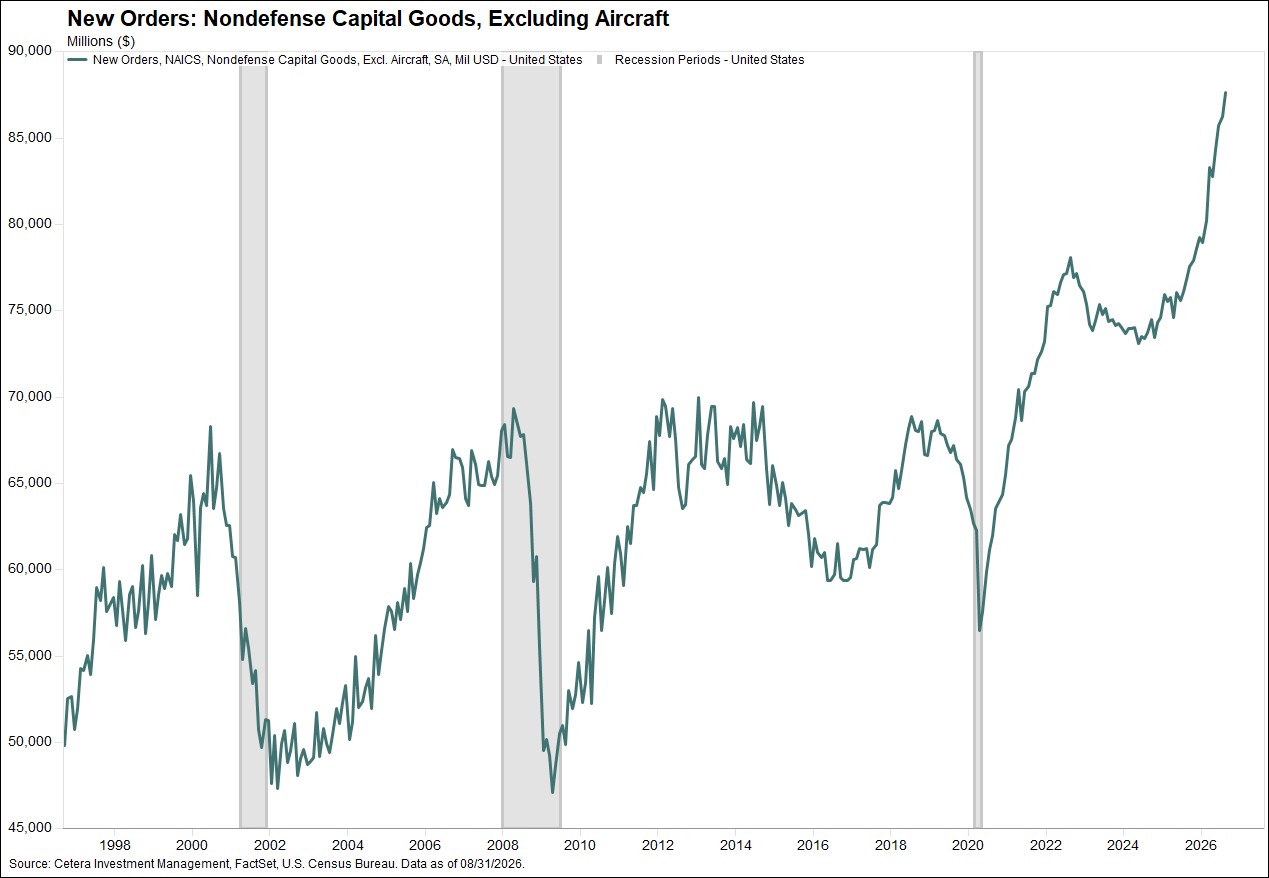
Core capital goods orders increased to a record $87.6 billion in August, up 14% over the past 12 months. Business investment is accelerating, supported by AI-related equipment demand, and coincides with the recent rebound in manufacturing activity.
4
154
Bond market volatility has risen this year, but credit spreads remain narrow. The current high yield spread of 280 bps is well below its long-term average of 513 bps. Tight spreads signal investor confidence in the economy and low expected default risk.

4
209
Bond yields have risen sharply across the curve as markets turn more hawkish on rates. The implied fed funds rate for December 2027 is 4.81%, up from 2.86% in February. The bond market is pricing in roughly 4 additional hikes by the end of next year.

1
1
5
233
Layoffs remain at very low levels. Initial jobless claims fell by 1K last week to 197,000, lower than expected (203K). Continued claims edged higher to 1.719 million but are more than 10% below year-ago levels.

1
5
151
The US Flash PMI Composite jumped to 58.4 this month, outpacing expectations of 55.3 and reaching the highest level since March 2022. Both manufacturing and services activity accelerated, with momentum picking up heading into Q4.

3
5
181
Mortgage purchase applications fell for the third straight week and are down 20% from their January peak. The 30-year mortgage rate has risen from 6.25% in January to 7.1%, creating a headwind for housing activity.

1
3
238
Household credit card debt is nearly $1.3 trillion, but debt remains manageable relative to income. Credit card debt equals 5.3% of disposable income, below the long-term average of 6.3% and GFC levels near 8%. It’s not as bad as the headlines suggest.

2
5
185
On @FoxBusiness’ The Claman Countdown, our CIO @GeneGoldman spoke with @cherylcasone about why investors should expect continued market volatility, how higher bond yields are doing some of the Fed’s work, and the opportunities he sees in liquid alternatives, equal-weight strategies, and small- and mid-cap stocks.
Watch the full segment here:
foxbusiness.com/video/640538…

2
7
722
The Fed raised interest rates for the first time in three years, while the dot plot indicates rates could be moving higher by year-end. Persistent inflation was the driving factor behind the decision.
Check out our latest Fed Monitor for more insights: tinyurl.com/3vxju29m
1
4
167
The Fed's latest rate decision isn't the only development investors are watching.
In this week's The Week Ahead, CIO Gene Goldman discusses earnings expectations, sector trends, and key themes to monitor as earnings season gets underway.
Watch: cetera.com/research-and-insi…
#TheWeekAhead

2
6
403
Surging diesel prices are fueling inflation. The average price has jumped from $3.50/gallon in January to a record $6.51. Trucking, agriculture, and construction are especially sensitive to diesel prices, adding to freight, food, and goods price pressures.

1
5
160
On @BBGIntelligence, our CIO @GeneGoldman discussed why the Fed’s latest rate hike is likely an insurance move, not the start of a new hiking cycle, and how higher long-term yields are already doing some of the Fed’s work.

2
6
542
Low energy? The best performing sector this year is energy with a YTD total return of 45%, but its impact on the broader S&P 500 index is diminished by its low weight (3.5%). When oil prices peaked in 2008, energy was nearly 16% of the index.

3
7
264
Consumer spending is two-thirds of the economy, but consumer stocks are a shrinking share of the stock market. The combined S&P 500 weight of Consumer Discretionary and Consumer Staples stocks has declined to a record low 13%.

1
6
189
