š¢š¢š¢ Today, weāre releasing āStop Greed Build Green,ā a strategy and agenda to confront the affordability crisis and the climate crisis together by putting working people in charge of the economy and the climate transition š (1/8)
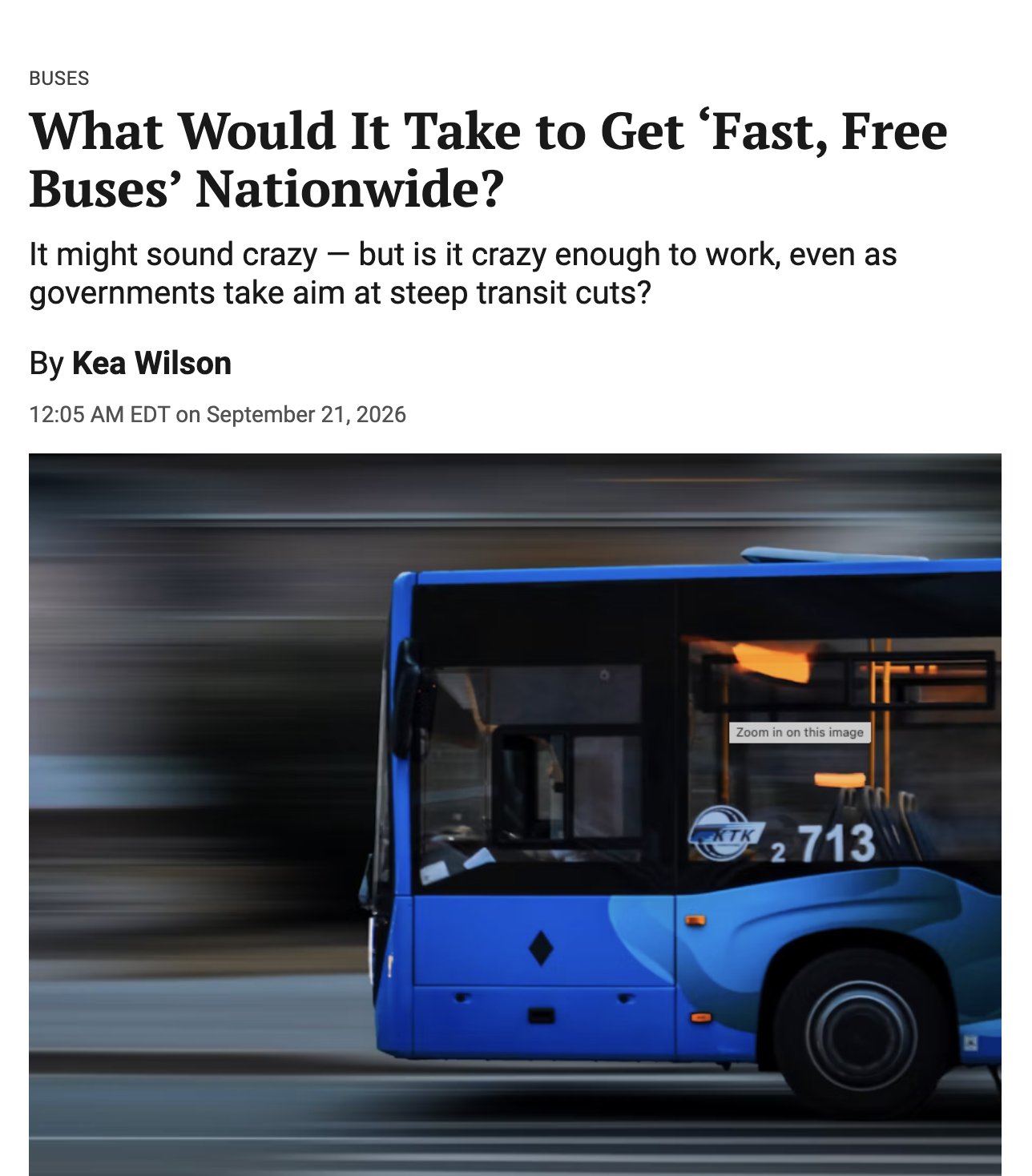
Can fast and free buses take off across the US? Our report says yes. @StreetsblogUSA spoke with John Stehlin and Emmett Hopkins, co-authors of our report, on why faster service and free fares work better together, and what states can do right now.
Stoked to join @aldatweets, @OlufemiOTaiwo, + Keller tomorrow, at the Center for Brooklyn History (w/help from @cplusci + Arch League, to help launch my new book.
If you havenāt bought it yet, DM me + Iāll send a discount code (only valid this week).
bklynlibrary.org/calendar/cbā¦
My new paper for @cplusci is out! I estimate the potential household cost impacts from utilitiesā planned 1.4T in capex spending in the next 5 years ā the majority of which is motivated by data center demand and extreme weather mitigation. Thread šš¼
NEW: If you live in the US, your electricity might cost an additional $376/year by 2030. Why? Utilities are passing on $1.4 trillion in costsālargely to deal with AI expansion and climate disastersāto customers over the next five years. š§µ
Thanks again @dharna for such a great story, which shows what it really means when candidates do this in practice! And for more on the logic behind Jane's single-payer insurance proposals, see our @cplusci research on this exact framework.
climateandcommunity.org/reseā¦
Biden's IRA incentives favored wealthier households while falling short on green jobs and housing. The urgency of the climate crisis demands a more ambitious agenda, one that embeds it in issues that people care about. Our Founding Co-Director @aldatweets explains in this @guardian storyāš below.
ALT When Florida governor Ron DeSantis signed a law erasing the words "climate change" from state statutes in May 2024 - colloquially known as the "don't say
climate change" law - Democrats were outraged. Just six months later, many liberal politicians began to go quiet on the issue themselves. After Donald Trump won the 2024 election, mentions of the climate crisis started to disappear from Democrats' rhetoric. As the 2026 midterms approach, that retreat is still shaping how some candidates talk about climate on the campaign trail.
The trend, known as "climate-hushing" , may reflect the
limitations of Joe Biden's climate policies, said Daniel Aldana Cohen, assistant sociology professor at the University of California, Berkeley, who studies climate politics and inequality. Green jobs and housing investments fell short of the climate movement's desires, consumer incentives disproportionately benefited wealthier households, and Democrats struggled to effectively communicate their...
ALT The climate crisis, however, is still rearing its head around the country, fueling the heatwaves, wildfires and floods plaguing communities around the US. It also lurks behind issues animating voters, from datacenter expansion to rising home insurance rates. And while some pundits have concluded from their polling and research that Americans don't want to hear about global warming, other surveys directly contradict those findings.
"Maybe people don't rank climate as their main or top issue ... but nobody really experiences everyday life like walking around the world rank-ordering the things that they care about," said Aldana Cohen, who is also founding co-director of the thinktank Climate and Community Institute that calls for "green economic populism".
"What's important is to learn how to embed the climate issue organically amidst the other issues that people care most about."
ALT Some progressive and populist candidates in the US midterms are pushing back against climate-hushing, linking the issue to economic concerns and everyday struggles. Others aren't speaking about it directly, but pushing for policies that could curb emissions. Such efforts could help build a mass base for climate policies, said Aldana Cohen.
"If we want to decarbonize fast enough and adapt to the impacts that are already here, we're going to need a robust majority that backs those policies," he said. "Elite consensus alone will not suffice ... we're going to need like large numbers of people really enthusiastic about climate policies."
NEW: If you live in the US, your electricity might cost an additional $376/year by 2030. Why? Utilities are passing on $1.4 trillion in costsālargely to deal with AI expansion and climate disastersāto customers over the next five years. š§µ
Investing in high-voltage transmission lines would save customers money, allow more renewables to come online, and more effectively meet demand, but utilities only built 55 miles of high-voltage transmission in 2023, down from 4,000 miles in 2013.
We need investments in long-range transmission, battery storage, and energy efficiency upgrades. These goals can be supported by Federal investment in interregional transmission, rate design reform, and incentives for long-term resilience and affordability. stopgreedbuildgreen.climateaā¦
For low-income households facing extreme heat, buying an AC unit solves one problem and creates another: higher utility bills. Our Founding Co-Director @aldatweets is quoted in a @sfchronicle story on who has cooling as heat waves spread (link below).
Climate Week NYC is just around the corner. Starting next week, our staff and leaders will be at a number of events to discuss the issues that the climate movement faces in the months ahead and beyond. Join us, and visit the links below to RSVP and get more information š§µ