

Content Creator Crypto & AI Open for Collabs → DM TG: t.me/destinydou
- Tweets 106,754
- Following 15,600
- Followers 18,551
- Likes 104,650


Pinned Tweet

privacy has a byte budget.
one detail i rarely see discussed about @BeldexCoin is how the network prices transaction weight.
fees aren’t just a flat charge.
they account for outputs and the actual kilobytes a transaction occupies.
that matters on a privacy chain.
cryptographic protection still consumes bandwidth, storage and verification resources.
so the protocol has to balance two things at once:
hide useful information from observers
without pretending computation is free.
privacy is cryptography.
scalability is resource accounting.
@NucleusCodes


most web3 apps ask the wallet to trust the webpage.
i prefer the opposite model.
with @BeldexCoin’s browser extension, signing happens locally through wasm and the private key stays inside the browser environment.
that design choice sounds small.
but it changes where trust sits.
the app can request an action.
the key doesn’t have to travel anywhere to approve it.
for me, that’s a useful privacy principle:
bring the computation to the secret,
not the secret to the computation.
less movement.
fewer exposure points.
@NucleusCodes

Paid partnership (ad)
224
1
248
8,464
the more i look at crypto privacy, the less convinced i am that the real problem is the transaction itself.
you can hide one payment and still leave a permanent identity trail behind.
a reused wallet address exposes history.
a fixed public name can become a map to that address.
and suddenly “private payment” only means one small part of your financial life disappeared.
that’s why the design behind @Americanfort_io is more interesting to me at the identity layer.
FortressName lets someone pay an @name without publicly resolving that name to one permanent wallet. Send-to-Name™ derives a fresh one-time address for the payment, while the recipient can still know who actually paid them.
privacy from observers without making counterparties strangers to each other.
and that distinction matters.
SafeSend™ is still in development, but its direction adds another layer: shielding sender-side financial information while keeping proof of source of funds and selective disclosure possible.
to me, that feels closer to the privacy model crypto actually needs.
not “hide everything.”
share the information required for the transaction, without publishing the rest of your financial life by default.
@NucleusCodes


Every KYC database is a breach waiting to happen. Commissioner Peirce is right: zero-knowledge proofs let you verify compliance without collecting the haystack.
Privacy and compliance were never opposites. We just didn't have the tools yet, until now.
Paid partnership (ad)
143
132
8,180
more partners also means more ways for a product to break.
that’s the less glamorous side of @sleepagotchi joining Welcome3.
Gotchi Labs is heading toward specialized agents that may eventually depend on outside services, providers and infrastructure.
one unavailable API.
one provider that stops performing.
one integration returning bad data.
the user won’t see the dependency map.
they’ll just see Gotchi failing.
so as the network grows, redundancy starts mattering as much as access.
can an agent switch providers?
can it degrade gracefully?
can one broken service stay isolated instead of affecting the whole experience?
ecosystem depth isn’t only measured by how many connections exist.
it’s also measured by how well the product survives when one disappears.
@NucleusCodes @BeldexCoin

joining a network is easy to announce.
turning relationships into a better product is much harder.
@sleepagotchi and Gotchi Labs just joined Welcome3, which puts the team closer to founders, operators and service providers across web3.
for Gotchi, that matters for a specific reason.
its future agents won’t live on AI alone.
wellness needs specialists.
commerce needs supply.
new verticals need integrations, distribution and reliable partners.
so i’m not treating this as another logo added to a partnership page.
the useful signal comes later:
which relationships actually remove a product bottleneck?
network access creates optionality.
execution decides whether any of it reaches the user.
@NucleusCodes @BeldexCoin

Paid partnership (ad)
223
2
202
8,281
Kim retweeted

The Gotchi ecosystem starts with something real.
Sleepagotchi is already live.
500K+ registered users.
~80K daily actives.
Live AI product.
From that foundation, Gotchi Labs is expanding into new Consumer AI verticals.
Keep an eye on the horizon ☁️ Gotchi is in the air.

203
229
1,732
62,905
Kim retweeted

The decentralized agent economy is taking shape. Where does privacy fit in?
Join Beldex CSO @BDXcris and @4ainet Head of BD Nova for a fireside chat on AI agents, privacy, identity & decentralized infrastructure.
🗓️Sept 24
🔔Set a reminder 👇
nitter.net/i/spaces/1PKqrNnbMqMGb

79
87
327
22,125
Kim retweeted
A better way to explore the Beldex blockchain is here.
More insights. Better visibility. Easier exploration.
Explore the new version now explorer.beldex.io/

263
915
5,158
95,833
i've been thinking about one detail in the new 0xCyberThrone campaign.
@NucleusCodes isn't only using reputation to decide who gets access anymore.
it's starting to influence the quality of that access.
3x gtd enters earlier through the vip phase.
1x gtd follows later.
that sounds small, but it changes what reputation actually represents.
a binary whitelist says:
qualified or not.
a reputation-aware system can say:
qualified, but with different priority.
that's closer to how mature networks usually work.
trust doesn't always unlock a completely different product.
sometimes it reduces friction, moves you forward in the queue, or gives you better execution.
the difficult part is making sure that priority remains earned rather than becoming permanently inherited by the same wallets.
that's the design question i'm watching now.
personal view only, not financial advice.
@NucleusCodes

the new Slippyclub campaign made one part of @NucleusCodes more interesting to me:
it doesn't treat one wallet as one person.
reputation can now be aggregated across connected wallets on evm, bitcoin and solana.
that sounds like a small feature.
i think it's actually an identity problem.
a real web3 user can have years of history scattered across chains, old wallets, nft collections and different ecosystems.
judge one address and you only see a fragment.
connect those fragments and reputation starts looking less like a wallet score and more like a user graph.
but this also raises the harder question.
the more identities nucleus connects, the more accurately it must distinguish genuine history from wallets assembled purely to manufacture a stronger profile.
aggregation creates better context.
it also creates a bigger attack surface.
that's the tradeoff i'm watching here.
personal observation only, not financial advice.

Paid partnership (ad)
123
2
122
432
joining a network is easy to announce.
turning relationships into a better product is much harder.
@sleepagotchi and Gotchi Labs just joined Welcome3, which puts the team closer to founders, operators and service providers across web3.
for Gotchi, that matters for a specific reason.
its future agents won’t live on AI alone.
wellness needs specialists.
commerce needs supply.
new verticals need integrations, distribution and reliable partners.
so i’m not treating this as another logo added to a partnership page.
the useful signal comes later:
which relationships actually remove a product bottleneck?
network access creates optionality.
execution decides whether any of it reaches the user.
@NucleusCodes @BeldexCoin
80k daily users is the first number in the new @sleepagotchi update that made me stop.
not because it sounds big.
because scale changes what you should measure next.
500k registrations can tell you reach.
80k DAU can tell you people are showing up.
neither tells you whether the AI is becoming more useful.
for Gotchi Labs, i’d rather watch the next layer:
how many people return to the Sleep Coach?
how often does advice change behavior?
how many users eventually find a second vertical useful without being pushed there?
once distribution exists, growth metrics become less interesting than cohort quality.
the project now has enough users to test that properly.
that’s the stage i find more meaningful.
@NucleusCodes @BeldexCoin

Paid partnership (ad)
232
2
261
8,333
Kim retweeted
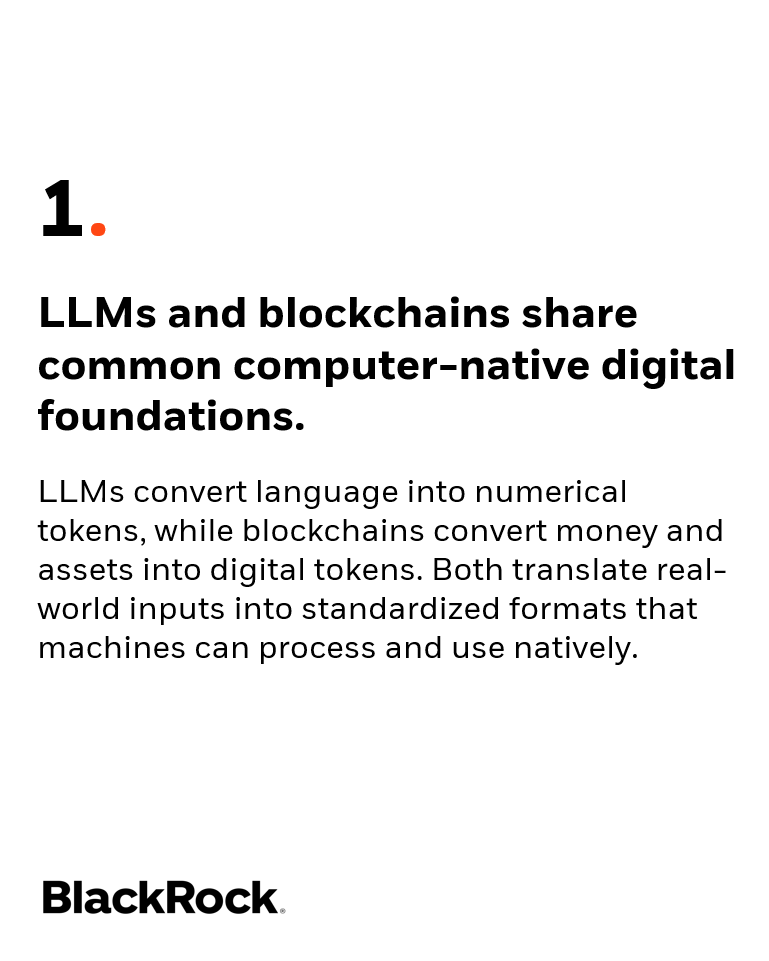
The interesting part starts when AI stops answering and starts participating in the economy.
That’s where Consumer AI is going, from intelligence to action to commerce.
Gotchi is building for that shift. 🦖

Our latest research paper explores the growing connection between AI and digital assets and explains why broad AI adoption may drive new demand, utility and applications across the digital asset economy. blackrock.com/us/individual/…


185
226
1,629
55,777
most web3 apps ask the wallet to trust the webpage.
i prefer the opposite model.
with @BeldexCoin’s browser extension, signing happens locally through wasm and the private key stays inside the browser environment.
that design choice sounds small.
but it changes where trust sits.
the app can request an action.
the key doesn’t have to travel anywhere to approve it.
for me, that’s a useful privacy principle:
bring the computation to the secret,
not the secret to the computation.
less movement.
fewer exposure points.
@NucleusCodes

A better way to explore the Beldex blockchain is here.
More insights. Better visibility. Easier exploration.
Explore the new version now explorer.beldex.io/
Paid partnership (ad)
238
3
403
8,750
the new Slippyclub campaign made one part of @NucleusCodes more interesting to me:
it doesn't treat one wallet as one person.
reputation can now be aggregated across connected wallets on evm, bitcoin and solana.
that sounds like a small feature.
i think it's actually an identity problem.
a real web3 user can have years of history scattered across chains, old wallets, nft collections and different ecosystems.
judge one address and you only see a fragment.
connect those fragments and reputation starts looking less like a wallet score and more like a user graph.
but this also raises the harder question.
the more identities nucleus connects, the more accurately it must distinguish genuine history from wallets assembled purely to manufacture a stronger profile.
aggregation creates better context.
it also creates a bigger attack surface.
that's the tradeoff i'm watching here.
personal observation only, not financial advice.
there's a hidden variable behind the new @NucleusCodes community rankings:
coverage.
nucleus can measure wallets, activity and social signals.
but it can only measure the members who actually show up in its dataset.
that creates an interesting problem.
a smaller community with high participation may look stronger than a much larger community where only a fraction of members have connected their accounts.
now that top communities are starting to receive allocation from upcoming campaigns, this matters more.
the ranking isn't simply measuring community quality.
it's also measuring how completely that community can make itself legible onchain.
for me, that's the next thing worth watching.
as coverage improves, do the rankings stay stable or change dramatically?
that will tell us a lot about how mature the underlying signal really is.
personal observation only, not financial advice.
@NucleusCodes

Paid partnership (ad)
100
1
97
840
80k daily users is the first number in the new @sleepagotchi update that made me stop.
not because it sounds big.
because scale changes what you should measure next.
500k registrations can tell you reach.
80k DAU can tell you people are showing up.
neither tells you whether the AI is becoming more useful.
for Gotchi Labs, i’d rather watch the next layer:
how many people return to the Sleep Coach?
how often does advice change behavior?
how many users eventually find a second vertical useful without being pushed there?
once distribution exists, growth metrics become less interesting than cohort quality.
the project now has enough users to test that properly.
that’s the stage i find more meaningful.
@NucleusCodes @BeldexCoin
personalization has a quiet failure mode:
the AI can learn the wrong version of you.
that becomes much more important with @sleepagotchi expanding into Gotchi Labs.
one mistaken assumption inside a sleep coach is manageable.
but if the same assumption follows you into wellness, fitness, shopping or productivity, a small error starts influencing several agents at once.
so i’d like to see personalization become editable, not just automatic.
let users correct preferences.
reject assumptions.
tell the system when something was temporary.
the smartest profile isn’t the one that remembers everything.
it’s the one that can admit when its model of you is wrong.
@NucleusCodes

Paid partnership (ad)
208
1
188
8,273
Kim retweeted
Gotchi energy enters Welcome3 🤝
🦖 Dino made the guest list.

.@sleepagotchi and Gotchi Labs are now a part of Welcome3.
Sleep tracking was just the beginning.
Sleepagotchi is now the first live vertical under Gotchi Labs, running an AI Sleep Coach for 500K+ users and ~80K daily actives.
Same Dino. Much bigger world.
Apply 👇
welcome3.com

223
219
1,564
49,300
privacy infrastructure has a physical cost too.
@BeldexCoin is now sitting around 5.96m transactions
with roughly 44.8gb of chain data.
those numbers made me think less about usage
and more about what decentralization asks from operators over time.
every block has to be stored.
every history has to remain verifiable.
and the network still needs enough people willing to run the infrastructure.
so scalability isn’t only “how many transactions can this chain process?”
it’s also:
how expensive does verification become as history keeps growing?
that tradeoff gets more interesting the older a privacy network becomes.
personal research perspective only.
@NucleusCodes

a wallet doesn’t need every key for every job.
that detail in @BeldexCoin v7.0.3 caught my attention.
background wallet sync can now work using the view key without requiring the spend key.
small implementation choice, bigger security idea.
one key can observe what the wallet needs to synchronize.
another remains responsible for spending.
the fewer capabilities a process needs, the less damage it can cause if something around it goes wrong.
for me, good privacy architecture isn’t only about hiding information.
it’s also about refusing unnecessary access in the first place.
personal research perspective only.
@NucleusCodes

Paid partnership (ad)
251
1
221
7,909
there's a hidden variable behind the new @NucleusCodes community rankings:
coverage.
nucleus can measure wallets, activity and social signals.
but it can only measure the members who actually show up in its dataset.
that creates an interesting problem.
a smaller community with high participation may look stronger than a much larger community where only a fraction of members have connected their accounts.
now that top communities are starting to receive allocation from upcoming campaigns, this matters more.
the ranking isn't simply measuring community quality.
it's also measuring how completely that community can make itself legible onchain.
for me, that's the next thing worth watching.
as coverage improves, do the rankings stay stable or change dramatically?
that will tell us a lot about how mature the underlying signal really is.
personal observation only, not financial advice.
@NucleusCodes
the number that caught my attention from @NucleusCodes wasn't 3,000 posts.
it was 12 hours.
web3 distribution usually has a hidden cost nobody puts on the dashboard:
coordination.
finding communities.
opening tickets.
negotiating allocations.
briefing creators.
waiting for posts.
then trying to figure out whether any of that attention reached the right people.
nucleus is compressing much of that workflow into one system.
that changes the product thesis for me.
the real efficiency isn't simply generating more content.
it's reducing the distance between a project deciding “we need distribution” and thousands of relevant participants actually responding.
of course, faster coordination only matters if quality survives the compression.
otherwise you just manufacture noise faster.
that's the metric i'd watch next.
not how many posts nucleus can activate, but how much useful attention remains after scale kicks in.
personal observation only, not financial advice.
@NucleusCodes

Paid partnership (ad)
96
4
100
779
personalization has a quiet failure mode:
the AI can learn the wrong version of you.
that becomes much more important with @sleepagotchi expanding into Gotchi Labs.
one mistaken assumption inside a sleep coach is manageable.
but if the same assumption follows you into wellness, fitness, shopping or productivity, a small error starts influencing several agents at once.
so i’d like to see personalization become editable, not just automatic.
let users correct preferences.
reject assumptions.
tell the system when something was temporary.
the smartest profile isn’t the one that remembers everything.
it’s the one that can admit when its model of you is wrong.
@NucleusCodes

Gotchi Labs — Consumer AI for Everyday Life. 🦖
We believe the next chapter of AI won’t be one assistant that does everything. It will be a network of specialized agents built around the things people do every day, becoming more contextual, personalized and useful over time.
That’s what we’re building at Gotchi Labs.
Our first live vertical is Health & Wellness, powered by Sleepagotchi, with 500K+ registered users, approximately 80K daily active users and a live AI Sleep Coach, making us one of the largest live Consumer AI platforms in Web3.
And this is just the beginning. We’re building a multi-vertical Consumer AI platform, progressively expanding beyond Health & Wellness into Shopping & Commerce, Fitness & Exercise, Productivity & Daily Life, Personal AI and, over time, other areas of everyday consumer life.
Our vision is simple: AI that goes beyond answering questions. Specialized agents that understand consumer context, provide personalized intelligence and help people move from recommendations to real-world actions and commerce.
Across the ecosystem, $CHI will serve as the access, rewards and commerce layer, connecting users, AI agents, products and partners as new verticals come online.
We’re not starting with a whitepaper or an idea.
We’re building on an existing consumer foundation: real users, established distribution, historical revenue and a live AI product already in people’s hands.
Sleepagotchi is our first vertical. Gotchi Labs is the bigger vision.
One platform. Multiple verticals. Consumer AI for Everyday Life.
Welcome to Gotchi Labs. 🦖

Paid partnership (ad)
243
3
230
5,864
Kim retweeted
Gotchi Labs — Consumer AI for Everyday Life. 🦖
We believe the next chapter of AI won’t be one assistant that does everything. It will be a network of specialized agents built around the things people do every day, becoming more contextual, personalized and useful over time.
That’s what we’re building at Gotchi Labs.
Our first live vertical is Health & Wellness, powered by Sleepagotchi, with 500K+ registered users, approximately 80K daily active users and a live AI Sleep Coach, making us one of the largest live Consumer AI platforms in Web3.
And this is just the beginning. We’re building a multi-vertical Consumer AI platform, progressively expanding beyond Health & Wellness into Shopping & Commerce, Fitness & Exercise, Productivity & Daily Life, Personal AI and, over time, other areas of everyday consumer life.
Our vision is simple: AI that goes beyond answering questions. Specialized agents that understand consumer context, provide personalized intelligence and help people move from recommendations to real-world actions and commerce.
Across the ecosystem, $CHI will serve as the access, rewards and commerce layer, connecting users, AI agents, products and partners as new verticals come online.
We’re not starting with a whitepaper or an idea.
We’re building on an existing consumer foundation: real users, established distribution, historical revenue and a live AI product already in people’s hands.
Sleepagotchi is our first vertical. Gotchi Labs is the bigger vision.
One platform. Multiple verticals. Consumer AI for Everyday Life.
Welcome to Gotchi Labs. 🦖
226
95
570
106,117
a wallet doesn’t need every key for every job.
that detail in @BeldexCoin v7.0.3 caught my attention.
background wallet sync can now work using the view key without requiring the spend key.
small implementation choice, bigger security idea.
one key can observe what the wallet needs to synchronize.
another remains responsible for spending.
the fewer capabilities a process needs, the less damage it can cause if something around it goes wrong.
for me, good privacy architecture isn’t only about hiding information.
it’s also about refusing unnecessary access in the first place.
personal research perspective only.
@NucleusCodes
Be part of the infrastructure powering private Web3.
Beldex Masternodes help secure the network, support private transactions, and receive incentives for powering the ecosystem.
Paid partnership (ad)
220
6
205
5,923