


Pinned Tweet

Earlier today, Bloomberg reported that Optiver, one of the leading trading firms in the world, as well as a large university endowment fund have become strategic shareholders in Eden Block. We're honored to welcome these partners into Eden Block as we continue to aggressively scale our platform.
Eden Block is built on the belief that the most important systems of the next decade will emerge at the intersection of markets, software, and intelligence. This evolving amalgam of infrastructure will enable endless applications.
This view has not always been obvious. For a long time, much of what sits at this intersection felt early, fragmented, and difficult to categorize. Underlying teams, and the solutions they are working on did not fit neatly into any clear buckets that investors could easily underwrite. The infrastructure was incomplete, the applications immature and unclear. The demand signals were weak or indirect. In many cases, the most important work was happening below the level of visibility or interpretability that markets typically reward.
Over time, this direction has become more clear. Markets are becoming increasingly permissionless and programmable, and intelligent software, powered by compute, sits at the heart of their coordination and execution. Machine intelligence, once detached from broader economic activity, has become the beating heart of innovation, and the driver of most, if not all future inventions. Therefore, scaling and accelerating the capabilities of machine intelligence has become one of humanity's biggest missions. This expansion will occur across all layers of the stack: the infrastructure, the intelligence itself, and the applications it powers.
We've long held the belief that we've entered a point of no return, a point where all aspects of the world's dynamics converge on a free, permissionless market for innovation and advancement. In this market, technology loses all semblance of gravity. To put it simply, there's never been a better time in history to build things.
With the support of our new partners, we're doubling down on our mission to back the builders of the new internet. We meet relentless founders at the frontier, and build alongside them. With AI disrupting or empowering every single industry in the world, markets in particular are experiencing a dramatic shift. We're excited to bring the combined platforms of Eden Block and Optiver to accelerate the teams who are shaping the markets and technologies of tomorrow. We're confident that our combined efforts will foster new experimentation, and enable the dramatic shifts we're expecting to see across markets.
We're excited to reinforce our commitment to our founders, our conviction in Eden Block's mission, and the ecosystem we're building. We look forward to meeting you in the arena.
Founders: we're deploying.

Optiver Holding BV has taken an equity stake in crypto and artificial intelligence-focused venture capital firm Eden Block, as the two technologies continue to attract institutional backing. bloomberg.com/news/articles/…
30
16
133
33,899
this can't be real, right?

BREAKING: the UK government publishes official rules on how to use AI:
1. Ask first if you really need to use AI
2. Check if a spreadsheet can do the job before using AI
3. Choose the worst model possible so it uses less energy
4. Keep prompts short to reduce the environmental impact
5. In general, use AI only when necessary, as a climate-saving measure
With a mindset like this, we should accept the UK back into the European Union

2
4
574
My son went from 7th percentile birth weight/size to 91st percentile by the time he turned 5 months old. I have never seen a chubbier baby in my life.
Breastfeeding is magic?
5
40
2,182

Colossus 1 is 150k H100, 50k H200 and 30k GB200.
Colossus 2 is 110k GB200 and 440k GB300.
Another 220k GB300 will be fully operational next week and another 220k in November. If we get lucky, yet another 220k GB300 by late December.
880
1,097
14,783
2,128,947
Kalshi shareholders must be ecstatic about the last 6-9 months for Polymarket.

JUST IN: New York Attorney General Letitia James has filed suit against the prediction market Polymarket, accusing it of being an illegal gambling operation that is operating in New York without a license. abcnews.link/EFYH5vi
3
3
1,920

Thrilled to join @khoslaventures and learn from @vkhosla, @SStrohband, @SamirKaul1, @rabois and David, and from all of my amazing new partners, while helping back and build the next generation of world-changing companies.
Someone asked me yesterday what success looks like 5 years from now. I think it’ll probably be too early to judge my investment record. But I hope founders will say I was one of the most helpful people around the table, and had a real positive impact on their company.
If you’re building in AI, especially AI infra, I’d love to talk! 🚀

Thrilled to announce @TalBroda has joined Khosla Ventures! He’s bringing his experience building AI infrastructure to the founders we back.
At OpenAI, he led more than a dozen teams that built and operated the hardware and software serving OpenAI’s models. He helped lead GPT-4.5 training, participated in the development of OpenAI’s first custom inference chip, Jalapeño, and contributed to Stargate. Previously, he headed up platform at Citadel Securities. He’s tackled the infrastructure challenges AI founders face firsthand, and we’re excited to have him in join KV!
wsj.com/pro/venture-capital/…
54
8
260
60,029
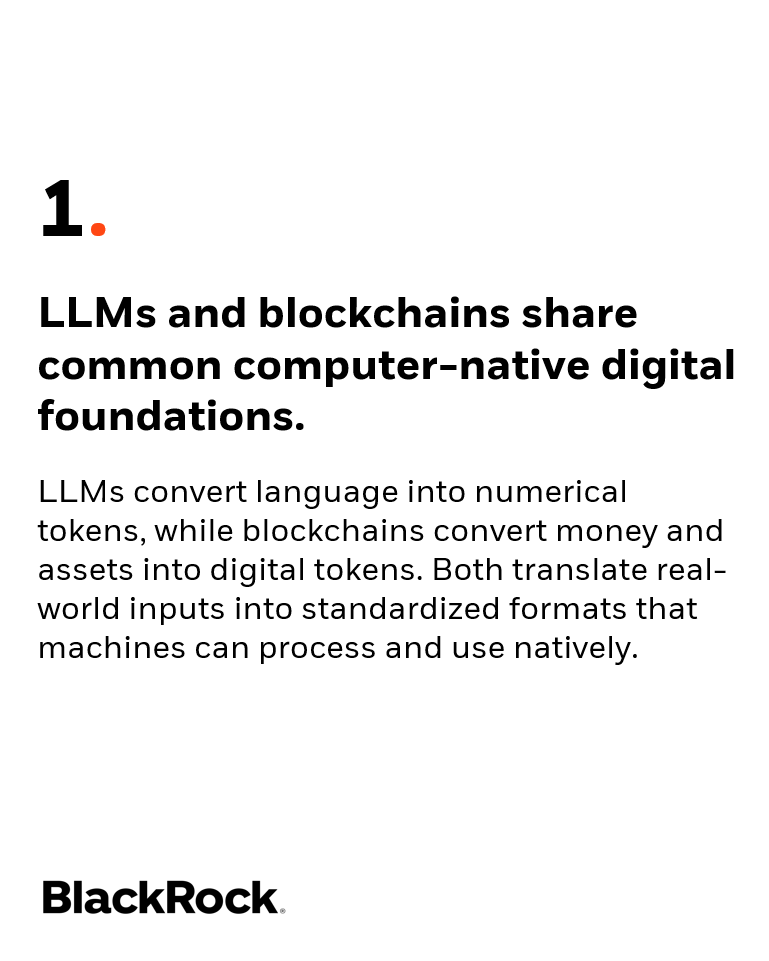
Blackrock is bull posting the crypto x AI intersection, positioning the technologies as two sides of the same coin.
Some of us have been saying this for a while, and I’m really glad to see this framework going mainstream.
Higher.

Our latest research paper explores the growing connection between AI and digital assets and explains why broad AI adoption may drive new demand, utility and applications across the digital asset economy. blackrock.com/us/individual/…


13
3
88
8,920
Arrived in NYC after a week in Palo Alto + SF. My conclusion is that New York is the Europe of the US.
17
51
3,494
Lior Messika retweeted

All I can think of is how cruel aging is
If we want to solve aging, we need more AI
That's why I'm an AI maximalist

My dad died Wednesday at 91. It’s never long enough. In his final hours, we took him from the hospital back to memory care so they could be together. Two months shy of 67 years of marriage.


141
156
2,574
183,663

This might be a hot take, but not everyone should be spending their free time “grinding away” with AI.
Vast majority of normies who suddenly became AI hobbyists are wasting insane amounts of money on hardware and tokens only to build shit no one needs with close to 0% follow through.
Normies will use harnesses to actually save time and money or have new experiences (Muse, Instinct achieve this pretty well).
There’s a whole subset of unimpressive, non creative people buying Mac minis and getting 10 subscriptions to coding harnesses just to automate their shopping lists. Utter waste of time and money.
Everyone SHOULD have access to these tools because the top 1% of users will create the next billion dollar companies. But saying everyone should just do it is obviously not the best suggestion.
For most people, playing WoW is a perfectly good way to waste your time on a fun hobby.

WoW Forever looks cool but I don’t understand how anyone doesn’t just look at AI the same way and grind away with all their free time.
You get the fun and IRL progress together.
If someone could combine WoW with IRL progress, it would be game over.
Imagine quests being personalized to your goals. Or quests being personalized by your employer.
1000x more fun.
Someone will do it.
5
23
2,901
When people ask me about my taste in founders, I send them this:
Hungry, young, insane levels of talent, killers of the first order.

How To Turn 13 Days Into 749 Million
Lots of DMs asking what their playbook was, so here is their story.
Two Swiss traders in their early twenties signed five contracts with Germany's health ministry across thirteen days in March 2020.
Jascha Rudolphi and Luca Steffen started Emix in 2016 as a parallel import business. They bought branded goods abroad and delivered them to Swiss kebab shops and small retailers out of a Fiat Ducato. Their edge was sourcing products that official distributors kept locked up, so their customers paid them for supply rather than for a discount.
From 2018, they applied the same business model to China and sold European luxury goods into the Chinese market over the internet. They flew out repeatedly and spent two years meeting suppliers and distributors in person.
In January 2020, those Chinese partners called them. By the founders' account, the message was that Beijing would mandate masks and the volumes would be enormous.
European health ministries reached the same conclusion in March.
By late February, China was producing over 100 million masks a day. Moving the goods was the constraint. Passenger flights across Asia were being cancelled, air cargo rates climbed weekly, and Emix found itself bidding for capacity against Apple and Microsoft.
They reserved three aircraft while the buyer list was still hypothetical.
Onassis made the same bet in 1932. Shipowners were selling into the Depression, and he bought six freighters at roughly their scrap value of 20,000 dollars each. By the outbreak of the war, he had 46 ships, and the Allies needed all of them.
Three weeks later, the Swiss army pharmacy was buying FFP2 masks from Emix at 9.90 francs each.
Between 12 and 24 March, Emix signed five contracts with Jens Spahn's health ministry and delivered over 60 million surgical masks and almost 36 million FFP2 masks, at prices described in the contracts as market prices. Across 2020 and 2021, the ministry paid Emix over 749 million euros.
Marc Rich built his career on the same pricing logic. He spent the early seventies buying and selling crude outside the long-term contracts the majors relied on, and he created the spot market doing it.
The Playbook
Build supply access years early, at ordinary margins, through repeat orders and relationships maintained in person. Those relationships hold ordinary value for years and command a premium inside a single quarter.
Collect the information before the market has it, which is what the relationships are for.
Buy the movement while it is still cheap, and carry the risk of holding capacity ahead of a buyer.
Sell into institutions working under public deadlines, where approval is fast and the reference price is whatever the other offers arriving that same week are asking.
3
12
2,573
Seeing all these new or returning WoW players is so endearing.
Feels like after consistently being a WoW gamer since launch, us grizzled veterans may finally get the respect we deserve.
2
47
2,309

Lior Messika retweeted

How To Turn 13 Days Into 749 Million
Lots of DMs asking what their playbook was, so here is their story.
Two Swiss traders in their early twenties signed five contracts with Germany's health ministry across thirteen days in March 2020.
Jascha Rudolphi and Luca Steffen started Emix in 2016 as a parallel import business. They bought branded goods abroad and delivered them to Swiss kebab shops and small retailers out of a Fiat Ducato. Their edge was sourcing products that official distributors kept locked up, so their customers paid them for supply rather than for a discount.
From 2018, they applied the same business model to China and sold European luxury goods into the Chinese market over the internet. They flew out repeatedly and spent two years meeting suppliers and distributors in person.
In January 2020, those Chinese partners called them. By the founders' account, the message was that Beijing would mandate masks and the volumes would be enormous.
European health ministries reached the same conclusion in March.
By late February, China was producing over 100 million masks a day. Moving the goods was the constraint. Passenger flights across Asia were being cancelled, air cargo rates climbed weekly, and Emix found itself bidding for capacity against Apple and Microsoft.
They reserved three aircraft while the buyer list was still hypothetical.
Onassis made the same bet in 1932. Shipowners were selling into the Depression, and he bought six freighters at roughly their scrap value of 20,000 dollars each. By the outbreak of the war, he had 46 ships, and the Allies needed all of them.
Three weeks later, the Swiss army pharmacy was buying FFP2 masks from Emix at 9.90 francs each.
Between 12 and 24 March, Emix signed five contracts with Jens Spahn's health ministry and delivered over 60 million surgical masks and almost 36 million FFP2 masks, at prices described in the contracts as market prices. Across 2020 and 2021, the ministry paid Emix over 749 million euros.
Marc Rich built his career on the same pricing logic. He spent the early seventies buying and selling crude outside the long-term contracts the majors relied on, and he created the spot market doing it.
The Playbook
Build supply access years early, at ordinary margins, through repeat orders and relationships maintained in person. Those relationships hold ordinary value for years and command a premium inside a single quarter.
Collect the information before the market has it, which is what the relationships are for.
Buy the movement while it is still cheap, and carry the risk of holding capacity ahead of a buyer.
Sell into institutions working under public deadlines, where approval is fast and the reference price is whatever the other offers arriving that same week are asking.
The Onassis Middleman Playbook is unbeaten.
These two Swiss kids made more than $750M selling masks during the pandemic.
They spent millions on Bentleys, a Ferrari, and a luxury yacht, prompting authorities to put them under the microscope for price gouging.


1
14
241
28,202
By far one of the most incredible stories I’ve ever seen or heard about in modern times:
- These two 22 year old kids from Switzerland saw a dramatically inefficient market, and took a monumental bet on the direction of that market.
- They risked their own capital, inventory, and reputations as traders to deliver high-grade equipment to the German and Swiss governments, who were desperate and willing to pay market prices (at the time, the inefficiencies in the market and burst in demand drove pricing relatively higher, but in line with global market pricing).
- the tweet below highlights the 13 days, but it doesn’t mention the *months* of pre wiring that were necessary to pull this off.
- flying to Hong Kong in the very early innings of COVID pandemonium.
- literally buying thousands of rolls of materials to secure downstream production.
I’ve come to build a very deep and unique relationship with Jascha, one of the two masterminds behind this operation. One of the most humble, brilliant, and self-aware man I’ve ever met in my life.
The crazy thing is that in an efficient market, this trade would’ve been much more evenly distributed.
For the past few months, we’ve been incubating Jascha’s new company together. Its mission is to unite the world through efficient real-world trade. The potential outcome here will be measured in the trillions.
Looking forward to engaging more publicly on what we’ve been building, very soon.
How To Turn 13 Days Into 749 Million
Lots of DMs asking what their playbook was, so here is their story.
Two Swiss traders in their early twenties signed five contracts with Germany's health ministry across thirteen days in March 2020.
Jascha Rudolphi and Luca Steffen started Emix in 2016 as a parallel import business. They bought branded goods abroad and delivered them to Swiss kebab shops and small retailers out of a Fiat Ducato. Their edge was sourcing products that official distributors kept locked up, so their customers paid them for supply rather than for a discount.
From 2018, they applied the same business model to China and sold European luxury goods into the Chinese market over the internet. They flew out repeatedly and spent two years meeting suppliers and distributors in person.
In January 2020, those Chinese partners called them. By the founders' account, the message was that Beijing would mandate masks and the volumes would be enormous.
European health ministries reached the same conclusion in March.
By late February, China was producing over 100 million masks a day. Moving the goods was the constraint. Passenger flights across Asia were being cancelled, air cargo rates climbed weekly, and Emix found itself bidding for capacity against Apple and Microsoft.
They reserved three aircraft while the buyer list was still hypothetical.
Onassis made the same bet in 1932. Shipowners were selling into the Depression, and he bought six freighters at roughly their scrap value of 20,000 dollars each. By the outbreak of the war, he had 46 ships, and the Allies needed all of them.
Three weeks later, the Swiss army pharmacy was buying FFP2 masks from Emix at 9.90 francs each.
Between 12 and 24 March, Emix signed five contracts with Jens Spahn's health ministry and delivered over 60 million surgical masks and almost 36 million FFP2 masks, at prices described in the contracts as market prices. Across 2020 and 2021, the ministry paid Emix over 749 million euros.
Marc Rich built his career on the same pricing logic. He spent the early seventies buying and selling crude outside the long-term contracts the majors relied on, and he created the spot market doing it.
The Playbook
Build supply access years early, at ordinary margins, through repeat orders and relationships maintained in person. Those relationships hold ordinary value for years and command a premium inside a single quarter.
Collect the information before the market has it, which is what the relationships are for.
Buy the movement while it is still cheap, and carry the risk of holding capacity ahead of a buyer.
Sell into institutions working under public deadlines, where approval is fast and the reference price is whatever the other offers arriving that same week are asking.
6
19
3,689
Auditable AI is a crushing blow to the EA doomers.

Just audited a training step from @gensynai's open-1b.
On an H100, I downloaded the checkpoint published at step 69,300, trained it for one step, and checked it reproduced the published state hash bit for bit. The original hash was committed on-chain a week before I checked, so it couldn't have been fitted to my result. I was also able to explore the data each step was trained on.
Thanks to @TargonCompute, running this on their H100 only cost $3.09/hr as well.
Here's hoping we move to a world where every big AI lab ships auditable open training recipes you can check just like this, with the training data just as open.

2
1
6
2,243


Lior Messika retweeted

Most problems in life come from four sources
1. You don’t earn enough money
2. You are overweight or your appearance is bad
3. You believe you are your body or bank account and lack a spiritual conception of being
4. You spend no time doing stuff you like
54
256
4,177
148,431
Lior Messika retweeted

Popular distrust in AI is growing.
We can solve this with bureaucracy - enshrining a few companies to build all the models and meter out access
Or we can solve it with math and cryptography, allowing anyone to prove what's in the model, including the data it was trained on.

open-1b: the first model you don’t have to trust
Auditable training is the best defense against the future of AI we’re being warned about
open-1b is a milestone toward verifiable AI, a goal that is absolutely necessary for the future of intelligence
gensyn.ai/news/introducing-o…

3
15
58
5,432