

engineering total market awareness / colosseum frontier winner
- Tweets 14
- Following 0
- Followers 230
- Likes 192


Recognizing that “truth” in a conflict environment is a multi-layered construct involving physical reality, narrative frames, and market perceptions,

1
3
172
Modern geopolitical analysis increasingly depends on the integration of heterogeneous data streams: structured conflict event databases, open-source intelligence (OSINT), social media narratives, cyber activity indicators, and expert commentary. Traditional analytic systems treat these signals independently or reduce them to simplified indicators.
The system models four interacting layers:
- Reality Layer — verified events and evidence bundles
- Narrative Layer — claims, frames, propaganda, and discourse propagation
- Signal Layer — statistical indicators, cyber signals, and OSINT precursors
- Perception Layer — market beliefs, attention dynamics, and epistemic divergence
Early warning indicators of conflict escalation
narrative propagation and propaganda analysis
causal hypothesis testing on geopolitical interventions
reflexive modeling of belief formation in prediction markets.
The result is a computational observatory for geopolitical systems, capable of modeling both material conflict dynamics and informational warfare.

2
174
The Historical Perception Layer (HPL) extends this architecture into a longitudinal system. It preserves, for each event, the joint evolution of:
- Ground-truth OSINT evidence
- Market-implied belief trajectories
- Capital allocation intensity
- Microstructure stress signals
- Integrity diagnostics and causal bounds
HPL transforms War Machine from a live market interface into a durable epistemic observatory.

1
133
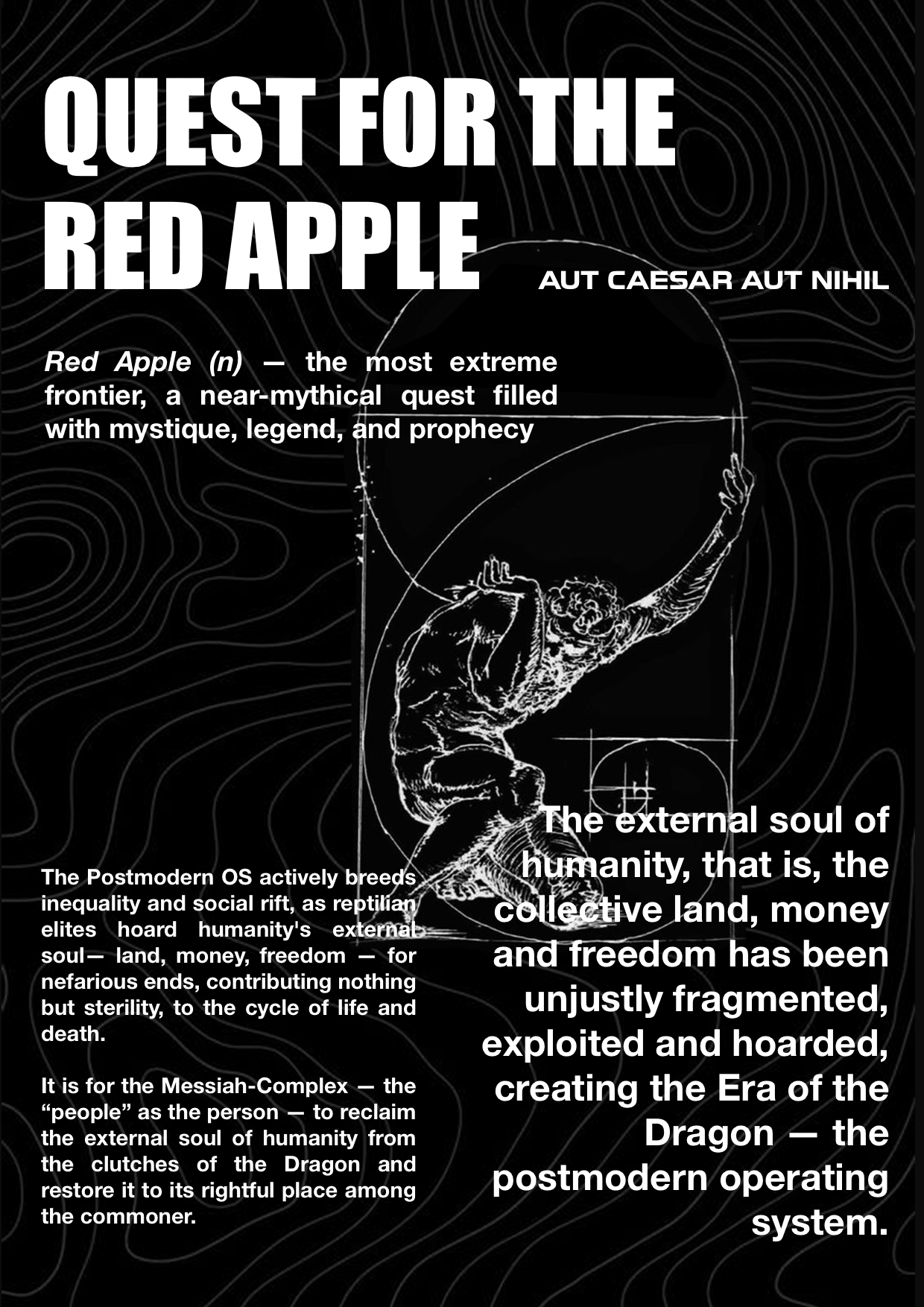
The crisis of the surveillance State is a time of opportunity for the Memetic War Machine. The State is a trap for revolt, because revolution can also be turned into a commodity. People are failing to create an outside because they are hypnotised by the State. If mediation is the main enemy, the State’s main means of control, then effective resistance takes the form of disappearance; along with immediacy (instead of mediation) and presence (instead of representation).
1
2
4
265
Memetic Machines retweeted

Well... I just found out that we're one of the winners of the Solana Frontier hackathon with one of the products we're developing with @memeticmachines.
Thank you guys!! @colosseum It has been an awesome journey, I can't wait to show you more of what we're building soon.
Thank you @semiii and @suleymanthe3rd for all the hard work!!

1/ Announcing the winners of the Solana Frontier
Hackathon!🏔️
Read about the winners & honorable mentions: blog.colosseum.com/announcin…
The subset of winning teams accepted into our VC fund's next accelerator cohort will be shared in the coming days.
Congrats to all! 🏆

3
2
12
430
Memetic Machines retweeted

Malaysia on the @colosseum frontier hackathon winners list!
🏆 @memeticmachines → programmable news that turns geopolitical events into tradeable yes/no markets
Congrats, this is massive 🔥

1/ Announcing the winners of the Solana Frontier
Hackathon!🏔️
Read about the winners & honorable mentions: blog.colosseum.com/announcin…
The subset of winning teams accepted into our VC fund's next accelerator cohort will be shared in the coming days.
Congrats to all! 🏆
10
10
40
14,490

We built a prediction market from scratch and won @colosseum !
Was superfun working with @suleymanthe3rd @rami_decodes
footnote: The program itself was straightforward, had to chose a design where we didnt have to bootstrap much liquidity. For the scale we wanted it to also have instances for staging, preprod, sandbox etc in the same contract which was achieved by bundling namespaced PDAs.
(3rd colosseum win for me personally, did 2x with send arcade)


Malaysia on the @colosseum frontier hackathon winners list!
🏆 @memeticmachines → programmable news that turns geopolitical events into tradeable yes/no markets
Congrats, this is massive 🔥
32
4
117
10,411
🥈 at @SuperteamMY demo day
Builders pitched. Judges scored. We have our winners for @solana builder's day 👇
🥇 @verityxyz by darren
> rwa marketplace for physical collectables
🥈 @memeticmachines by @semiii
> quantitative benchmarks for 30-year asset pricing
🥉 @raptor_trade by @reifydb
> building blocks for trading

6
1
13
11,869
co-founder @rami_decodes of memetic machines is live right now
> front-running frontier finance, automated newscasts and prediction markets
↓ tune in now

📢 KYZZEN LIVESTREAM
Tuesday (08 Jul), 7am UTC / 3pm SGT
Feat: @memeticmachines
Host: @OhMeOhMy_Sol
Set your reminders 👇 nitter.net/i/broadcasts/1wGWjjdAw…
1
7
6,408