

¶ Pearl is a mathematical breakthrough that redefines the unit economics of AI.
- Tweets 58
- Following 2
- Followers 13,797
- Likes 89


Pearl Research Labs retweeted

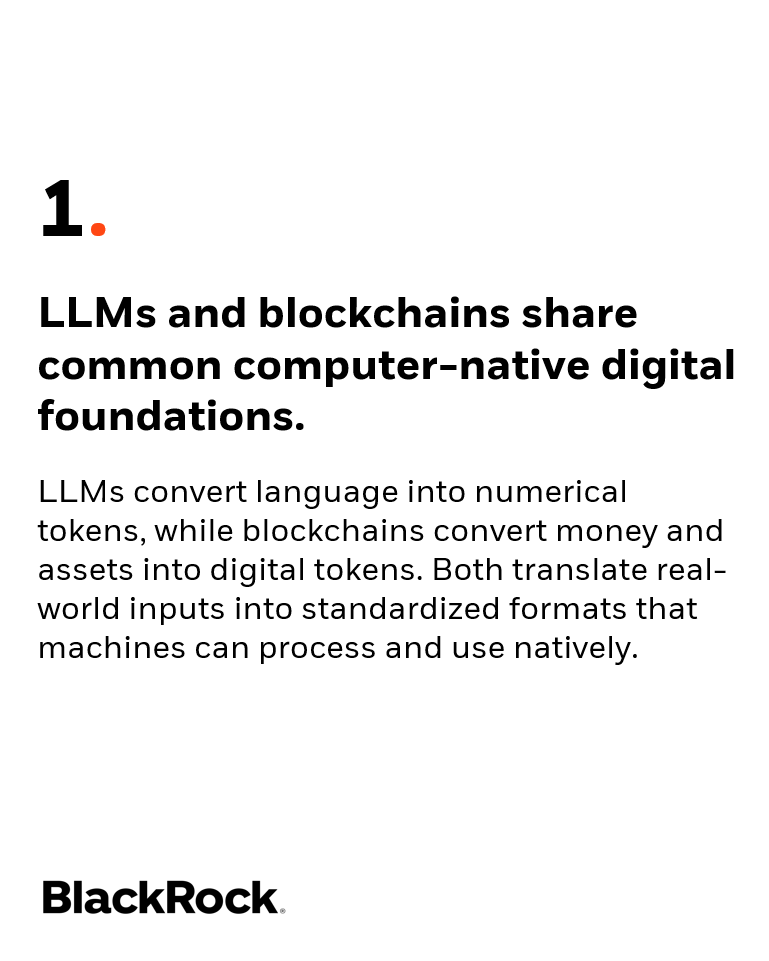
Our latest research paper explores the growing connection between AI and digital assets and explains why broad AI adoption may drive new demand, utility and applications across the digital asset economy. blackrock.com/us/individual/…


748
1,931
8,189
3,813,374
Pearl Research Labs retweeted
Pearl (@prlnet) has the fastest FP8 MoE Kernels for Blackwell chips!
Group-Matrix-Multiplication is one of the most optimized operations in AI. As a former researcher at @nvidia I can say firsthand that pushing the performance frontier of MatMuls is... Hard.
Pearl-GEMM is ~5% faster than prior state-of-art Quack (@tri_dao) and ~42% faster than Flashinfer on B200s.
pearlresearch.ai/research/bl…
17
45
254
45,320

Privacy-preserving proof of inference is a key building block for AI safety. @DarioAmodei's call for AI slowdown & independent oversight raises a critical question / How can frontier labs prove their computations follow the rules, without revealing model weights, prompts, or private data?
Two complementary technologies are necessary to make this inference layer possible: Zero-Knowledge proofs (zk-SNARKs) can prove that Y = M(x), while keeping M and x private, and verify compliance using explicit policies. Proof-of-useful-work (PoUW) can
tie that evidence to actual, timestamped GPU computation, with a public immutable record and economic incentives for participation.
@prlnet is partnering with @attestable to build this trust layer for AI. Together, our complementary technologies can make AI objectively accountable, making verification economically sustainable and self-funding.
Today, we are announcing @prlnet's new and ultra-efficient floating-point PoUW scheme for NVIDIA Blackwell chips.
Floating-point arithmetic has been a notorious obstacle to efficient verification of compute for decades. Pearl’s FP scheme brings proof-of-useful-work technology to Blackwell FP computations on frontier LLMs, with NEAR-ZERO additional overhead over end-to-end inference on optimized vLLM.
The FP network upgrade specification is now available (github & whitepaper) and will soon serve frontier models on Pearl x @togethercompute's endpoints in production.
Explore the implementation:
github.com/pearl-research-la…
Whitepaper: pearlresearch.ai/Pearl_White…
Run Pearlified models on our endpoint:
pearlresearch.ai/
18
36
188
48,722
Read more on our collaboration with @attestable here:

The world is debating whether frontier AI needs to slow down. If it comes to it, do we know how?
A lab can say it stopped training. A country can sign a treaty. But, is the compute following the rules? @attestable is building that layer. New blog! 🧵

2
3
35
14,487
The Pearl founders will be hosting another live AMA with the community!
Tuesday, September 15
6:00 PM CET · 12:00 PM ET · 16:00 UTC
We've been heads-down building, and the questions have been piling up — about the research, the roadmap, and where the network goes from here. On Tuesday, we're answering them.
Here's how it works: head to the ama-questions channel on our Discord and drop in whatever you'd like answered. Upvote the questions you care about most. The founders will open with the five that rise to the top, then it's an open floor for the rest of the session.
Come with good questions. We'll come with real answers.
discord.gg/joinpearl
9
11
92
19,779
Pearl started with a simple question:
Why should AI and blockchain mining compete for the same GPUs when the same computation could do both?
In this talk, Pearl co-founder @komargodski explains how that idea became a live proof-of-useful-work network turning AI inference into blockchain security with minimal overhead.

15
12
139
19,785
Proof-of-Useful-Work forced us to solve a problem ordinary blockchains do not have.
A Pearl miner performs large matrix multiplications as part of a real AI workload. Naively, when it finds a valid block, it would need to publish those matrices so the network could verify the computation.
The matrices may contain private model data or user information, and a single weight matrix can be tens-to-hundreds of megabytes. Publishing them on-chain would be both prohibitively expensive and a privacy risk. This is why we encapsulated the entire mining computation inside a zk-SNARK.
A zk-SNARK can take an arbitrarily complex computation and compress it into a small cryptographic proof. The proof reveals nothing about the underlying matrices, while still allowing the network to verify that the miner found a valid block.
Instead of placing tens-to-hundreds of megabytes of potentially sensitive data on-chain, Pearl miners publish a zero-knowledge proof of roughly 60 kilobytes. The blockchain verifies the useful computation without ever seeing the model weights, activations or private data behind it.
This is what makes Proof-of-Useful-Work practical at scale: large AI computations happen off-chain, while only a compact, privacy-preserving proof reaches consensus.

8
9
90
14,259
GPU non-determinism forced us to reverse-engineer arithmetic that modern AI hardware does not expose.
The same matrix multiplication can produce different results across @NVIDIA Ampere, Hopper and Lovelace GPUs. The reason is not randomness - it is architecture-specific behavior in the order of accumulation, internal precision, rounding, normalization and handling of subnormal values. That makes exact verification difficult: a CPU re-execution may disagree with a perfectly correct GPU execution.
Hawkeye solves this by systematically probing Tensor Cores with carefully constructed matrix multiplications. These tests recover the hidden numerical pipeline behind each architecture, including how products are grouped, when significands are truncated and when intermediate values are normalized. The recovered behavior is then encoded into a CPU simulator that reproduces the original GPU computation bit-for-bit.
The results show meaningful architectural differences. Ampere uses a two-stage accumulation structure with a 24-bit internal significand, while Hopper combines all 16 products in one stage using 25 bits. Both use truncation-based, round-towards-zero behavior rather than conventional round-to-nearest arithmetic.
Across 100,000 randomly generated matrix multiplications in FP16, BF16 and FP8, Hawkeye reproduced the GPU result with 100% bit-exact accuracy. This creates a foundation for auditors to verify AI training and inference without modifying or slowing down the original GPU workload.
Looking forward, matrix multiplication is only the first step. Extending this approach to attention, fused kernels, distributed training and cryptographic proof systems could make end-to-end, hardware-accurate verification of AI workloads possible.

11
26
124
21,959
Proof-of-Useful-Work forced us to invent a quantization format that did not exist.
Pearl Protocol adds noise to both the weights and activations before matrix multiplication. That creates a constraint ordinary inference stacks do not have - the model values and the noise must fit together inside INT8. So we quantize the model to an effective W7A7 range, reserving one bit of headroom for the noise. The perturbed operands still fit in INT8, multiplication uses INT8 inputs with INT32 accumulation, and the low-rank noise can then be peeled off exactly, recovering the exact result of the quantized computation.
Existing quantization for INT7 were unsatisfactory, so we built our own - a non-trivial fusion of GPTQ-style weight reconstruction, SmoothQuant-style activation smoothing and custom inference kernels. The result is an end-to-end W7A7 pipeline that, in our internal benchmarks, even outperforms many FP8 baselines (in quality and in efficiency). We are writing a paper detailing this technique so stay tuned.
Looking forward, W7A7 is only an intermediate step. Our upcoming upgrade is designed to support FP8 workloads directly, eliminating the need for the extra integer-quantization step.

9
18
102
15,698
Today, the Pearl Protocol relies on INT-based matrix multiplication, which requires model quantization.
To eliminate this overhead, we are developing our next-generation Proof of Useful Work to natively support floating-point computations.
Launching soon, the initial release will support FP8, with FP4 to follow.

14
14
123
24,435
Pearl Research Labs is officially a member of the @Nvidia Inception program! #NVIDIAInception
We are building an accelerated inference platform to run the world's leading open-weight models - powered by Hopper and Blackwell GPUs.
➡️ Join the waitlist: pearlresearch.ai/waitlist?pr…

33
40
197
34,124