


🇪🇸🚨 | 𝘽𝙍𝙀𝘼𝙆𝙄𝙉𝙂: Pep Guardiola is now the manager linked to two of football’s biggest controversies.
🔵 Barcelona’s Negreira case — involving payments to a former refereeing chief.
🔵 Manchester City’s 115-case saga — with City reportedly found guilty of 114 charges.


280
1,744
13,105
300,014
(fan) Skye xports premier League retweeted

🚨 Premier League coaches on City's 115 accusation over the years
🗣️ José Mourinho — 2020
“If Man City is not guilty of it, to be punished by some millions is a disgrace. If you’re not guilty you’re not punished. In the other way, if you’re guilty you should be banned.”
He added:
“If you’re not guilty, you don’t pay. You are not punished, even with a pound.”
🗣️ Jürgen Klopp — 2020
After City's UEFA ban was overturned:
“I am happy that City can play in the Champions League but I don’t think it was a good day for football yesterday, to be honest.”
🗣️ Jürgen Klopp — 2022
Speaking about competing financially with City:
“There are three clubs in world football who can do what they want financially. It’s legal and everything, fine. But they can do what they want.”
🗣️ Arsene wenger — 2014:
“There are rules. You respect them or you don’t respect them. If you don’t respect them you have to be punished".
🗣️ José Mourinho — 2024:
Regarding City's 115 charges, Mourinho said:
“If I lost, I want to congratulate my opponent because he was better than me. I don’t want to win by dealing with 150 court cases.”
Jose Mourinho was really pressuring on it 😂🔥


54
108
190
3,142
🇳🇴🚨 | 𝘽𝙍𝙀𝘼𝙆𝙄𝙉𝙂
Barcelona are reportedly planning a move for Manchester City striker Erling Haaland next summer. 🇳🇴🔵🔴
[@footyinsider247]


10
75
1,911
21,211

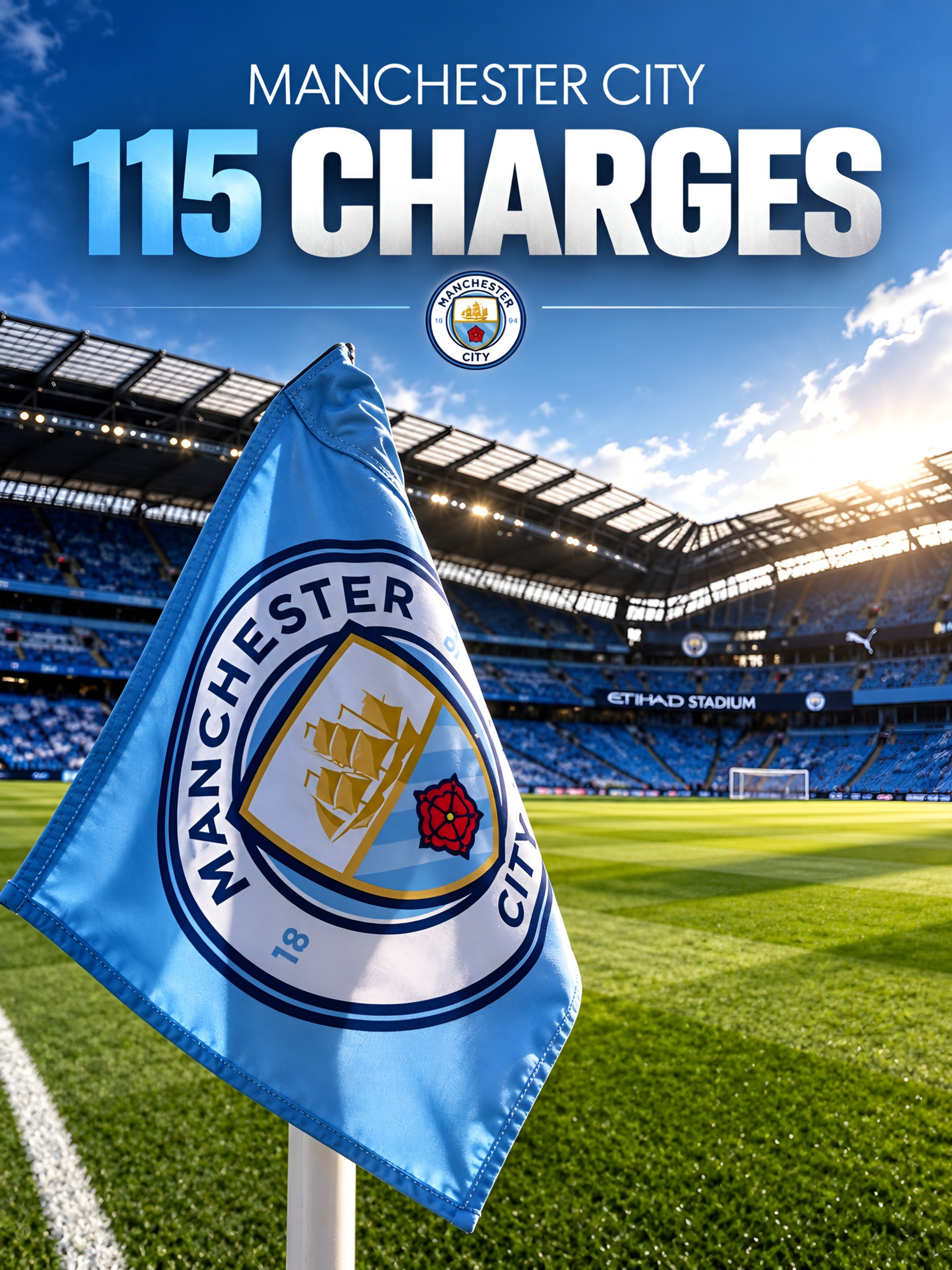
🔵 Manchester city found guilty on all but one of the 115 Charges according to @David_Ornstein.
- Here's everything you need to know and what could possibly be thier faith as the big question now isn't whether there was a verdict.
It's what happens to City next.
No punishment has been announced yet.
City are expected to appeal, with the club continuing to deny the allegations.
So for now:
Guilty verdict.
No points deducted.
No trophies removed.
No relegation.
That could all change once the sanction is decided.

Made with AI
42
72
153
1,698
COULD CITY LOSE TROPHIES OR BE RELEGATED?
This is where the situation becomes even bigger.
Possible sanctions under the Premier League rules include:
🔴 Points deduction
🔴 Heavy financial fine
🔴 Transfer or registration restrictions
🔴 Suspension
🔴 Relegation or expulsion
There has also been discussion about whether historic titles could be affected.
But that is not the same as saying titles will be stripped.
No decision has been made on that.
Relegation or expulsion would be an extreme sanction, and there is currently no announcement that either will happen.
Whatever punishment is chosen will almost certainly be challenged by City.
Made with AI
1
114
The reported verdict is only step one.
Next comes the sanction.
Then potentially the appeal.
And that process could take months or longer.
So as things stand:
114 guilty findings.
No punishment yet.
No points removed.
No trophies stripped.
No relegation.
But the possible consequences range from a financial penalty all the way to major sporting sanctions, depending on what the commission ultimately decides.
Manchester City's lawyers now have another fight ahead of them.
And after years of waiting for the verdict...
Football now waits to find out what 114 guilty findings actually cost.

Made with AI
1
108
(fan) Skye xports premier League retweeted
🚨 Arsenal third kit for the season is said to be black.
This is how it looks on Viktor gyokeres and Kai havertz 🖤 🔥

7
58
1,148
(fan) Skye xports premier League retweeted
This Arsenal's third jersey concept is pure Gold 💛🔥

9
82
1,641
February 2023.
Achraf Hakimi was 24, playing for PSG and Morocco, and his life looked almost perfect from the outside.
Then one night changed everything.
A 24-year-old woman told police she had been speaking with Hakimi on Instagram since January.
They exchanged messages, and eventually she went to his home in Boulogne-Billancourt.
She later alleged that Hakimi raped her.
She initially did not want to make a formal complaint.
She went to police to report what she said had happened and, according to reporting, to make sure it was documented.
The investigation began.
On 2–3 March 2023, Hakimi was placed under formal investigation for rape and judicial supervision.
He denied the allegation from the beginning.
His lawyers maintained that the encounter was consensual and disputed the complainant's account.
And that's the important part:
There was no verdict.
Just an accusation, a denial, and an investigation that would continue for years.
But behind the headlines was a footballer whose private life had suddenly become a legal case watched by the entire world.
And this was only the beginning.
Because the next three years would bring conflicting accounts, witnesses, court decisions — and a trial that Hakimi has continued to say he wants.

57
127
223
16,252
Both sides agree that Hakimi and the woman met at his home that night.
After that, their accounts diverge.
The woman alleges that what began consensually became non-consensual.
She told investigators that Hakimi forced sexual contact on her and that she contacted a friend during the encounter, who later came to collect her.
Hakimi's position has been the opposite.
He has consistently denied rape and said the encounter was consensual.
His lawyers have also challenged aspects of the complainant's account and pointed to evidence they say supports his version.
Investigators examined messages, witness statements and other elements of the case.
In February 2026, an investigating judge ordered Hakimi to stand trial, finding there was sufficient evidence for the case to proceed.
The decision was appealed.
Then, on 19 June, the Versailles Court of Appeal confirmed that Hakimi should face trial.
His lawyers appealed again.
And on 23 September 2026, France's highest court for criminal matters rejected that appeal.
That does NOT mean Hakimi was found guilty.
It means the legal challenge against sending him to trial was unsuccessful.
His lawyer, Fanny Colin, stressed that the Court of Cassation had not ruled on whether Hakimi was guilty or innocent.
Those questions will be examined at trial.
The complainant's lawyer said her client remains determined to see the case through.
Two people.
Two versions of the same night.
And now, after more than three years, both sides are heading toward the courtroom.
1
1
3
806
Through all of this, there is another part of Hakimi's life that has remained important to him:
His faith.
Hakimi has openly described himself as a practising Muslim.
He has spoken about growing up in a Muslim household, with his parents teaching him prayer and faith from a young age.
In a 2025 interview, he said he takes time to pray every day and described prayer as a spiritual moment where he is alone with Allah and asks for help.
That side of Hakimi's life existed long before this case.
And it has continued while his legal battle has unfolded.
But faith does not decide a criminal case.
Neither does fame.
Neither does social media.
Neither does public opinion.
The legal position today is simple:
Hakimi denies the allegation and remains presumed innocent.
The complainant maintains her allegation.
France's highest criminal court has now cleared the way for the trial to proceed, but no trial date has been set yet.
So this story does not have an ending yet.
It began with an Instagram conversation in January 2023.
It became a criminal investigation in March.
It survived years of legal challenges.
And on 23 September 2026, the final appeal against the trial was rejected.
Now comes the part both sides have been waiting for.
The courtroom.
And until the court hears the evidence and reaches its decision, this remains exactly what it is:
An open criminal case — not a verdict.
2
4
534
🇧🇷🚨 Roberto Carlos : "I Think nuno mendes is even better than me, He reminds me of Cafu" 🇵🇹
[@Canal_11Oficial]


1
5
99
4,437
Before the records.
Before Old Trafford.
Before anyone called him the best player in the world, Cristiano Ronaldo had a heart that refused to slow down.
He was 15.
A skinny kid from Madeira, trying to make it at Sporting’s academy in Lisbon.
Then doctors discovered he had tachycardia — his heart was racing even when he wasn't running.
For a boys whose entire future depended on football, it was frightening.
His mother, Dolores, was called to Lisbon.
She had to give permission for her son to undergo surgery.
There was a possibility, however smalls, that the problem could affect the career he had sacrificed so much to build.
Doctors performed a catheter ablation, using a laser to treat the part of his heart causing the abnormal rhythm.
The procedure was successful.
Ronaldo was discharged that same day.
And remarkably, he returned to training only a few days later.
Dolores would later recall that Cristiano didn't make a huge fuss about the operation.
Then she said something that almost sounds like the beginning of a myth:
After the operation, he ran even faster.
The same boy.
The same dream.
A heart problem that could have changed everything...
And a teenager who simply went back to chasing the ball.
He had no idea what was waiting for him.....


49
105
189
3,235
September 2005.
Cristiano Ronaldo was 20 years old.
He had already spent two years at Manchester United, but he was still becoming the player the world would eventually know.
Then came the news that changed his life.
His father, José Dinis Aveiro, was seriously ill in hospital.
Ronaldo had always had a complicated relationship with his father, but Dinis was still his father — the man who had been there at the beginning of his football journey.
Ronaldo went to Sir Alex Ferguson and asked to be allowed to see him.
Ferguson told him to go.
Forget football.
Go home.
Then, while Ronaldo was with Portugal, the call came.
His father had died.
Luiz Felipe Scolari was the one who told him.
Ronaldo had just lost his father at 20 years old.
And the next day, he still had a game to play.
He played.
Ninety minutes for Portugal against Russia.
Then he went home for the funeral.
Football did not stop because Ronaldo was grieving.
Neither did he.
He returned to Manchester and kept playing.
And something about him was changing.
The teenager who had arrived at United as a flashy winger was becoming much more serious.
Stronger.
More direct.
More dangerous.
He was no longer just trying to entertain people with stepovers.
He wanted goals.
He wanted trophies.
He wanted to become the best.
And Manchester United was about to watch it happen.
1
439
In 2003, Sir Alex Ferguson had seen something in an 18-year-old from Sporting that made him willing to wait.
The stepovers.
The speed.
The confidence.
The raw talent.
But by 2006, the waiting was over.
Ronaldo had become a star.
In 2006/07, he scored 23 goals as Manchester United won the Premier League.
He also collected the PFA Player of the Year and Young Player of the Year awards.
The skinny winger from Madeira had become one of England's most dangerous players.
Then came 2007/08.
And Ronaldo exploded.
42 goals in 49 appearances.
Premier League title.
Champions League.
A famous header against Chelsea in the Moscow final.
European Golden Shoe.
And, in December 2008, the Ballon d'Or.
Portugal's first winner since Luís Figo.
Manchester United's first since George Best.
He wasn't the exciting kid anymore.
He was the player everyone was trying to stop.
Then came 2008/09.
Another Premier League title.
A ridiculous long-range winner against Porto that earned him the inaugural Puskás Award.
Another Champions League final.
This time, Barcelona won.
And that was the end of Ronaldo's first Manchester United chapter.
When he finally left in 2009, he had scored 118 goals in 292 appearances for United.
Three Premier League titles.
One Champions League.
One Ballon d'Or.
From a teenager lying on an operating table...
To a 20-year-old burying his father...
To the best player in the world wearing Manchester United's No.7.
The same boy.
A completely different reality.
Football had tested him long before the world knew his name.
And when the moment came to answer...
He answered with goals.
271
(fan) Skye xports premier League retweeted
📷🚨 - Viktor gyokeres latest image in swedish training.
My man's looking very excited joining the swedish team


5
29
1,052


In 2003, Sir Alex Ferguson had seen something in an 18-year-old from Sporting that made him willing to wait.
The stepovers.
The speed.
The confidence.
The raw talent.
But by 2006, the waiting was over.
Ronaldo had become a star.
In 2006/07, he scored 23 goals as Manchester United won the Premier League.
He also collected the PFA Player of the Year and Young Player of the Year awards.
The skinny winger from Madeira had become one of England's most dangerous players.
Then came 2007/08.
And Ronaldo exploded.
42 goals in 49 appearances.
Premier League title.
Champions League.
A famous header against Chelsea in the Moscow final.
European Golden Shoe.
And, in December 2008, the Ballon d'Or.
Portugal's first winner since Luís Figo.
Manchester United's first since George Best.
He wasn't the exciting kid anymore.
He was the player everyone was trying to stop.
Then came 2008/09.
Another Premier League title.
A ridiculous long-range winner against Porto that earned him the inaugural Puskás Award.
Another Champions League final.
This time, Barcelona won.
And that was the end of Ronaldo's first Manchester United chapter.
When he finally left in 2009, he had scored 118 goals in 292 appearances for United.
Three Premier League titles.
One Champions League.
One Ballon d'Or.
From a teenager lying on an operating table...
To a 20-year-old burying his father...
To the best player in the world wearing Manchester United's No.7.
The same boy.
A completely different reality.
Football had tested him long before the world knew his name.
And when the moment came to answer...
He answered with goals.
176