

Web3 on-chain smart data analysis tools enable data value creation. Learn more about us 👉: linkhub.aitraceroot.com
BNB Chain
- Tweets 63,604
- Following 69
- Followers 84,654
- Likes 649


Pinned Tweet

To all web3 builders and users worldwide: AItraceroot's beta version is now live! We welcome web3 enthusiasts worldwide to experience its features and provide your valuable feedback. We sincerely collect all feedback, and every piece of advice will drive product iteration.
Users who join and actively experience the product can receive an Ecosystem Builder badge, which will unlock exclusive community incentives in the future.
Mobile website: aitraceroot.pro
PC website: aitraceroot.pro
User badge (mint):
mint.aitraceroot.pro/
105
2
692
94,038
Weekend plans?
Sleep. Eat. Touch grass. 🌱
…then somehow end up tracking a wallet at 2 AM. 👀
The blockchain really said:
“You thought you were off?” 😂
#AiTraceRoot #Web3 #OnChain

22
366
47,929

Just one more day at the office.
Then the weekend schedule is officially locked:
📊 Check the charts
☕ Check the charts again
👀 “One last look”
🌙 Somehow it’s 3 AM
No plans. Just charts. 😂

55
312
59,076
⚡️ AI is moving deeper into Bitcoin infrastructure.
StarkWare’s latest optimization challenge shows what’s possible: AI-assisted optimization reduced the estimated GPU compute cost of a Quantum-Safe Bitcoin transaction from ~$320 to ~$67 — a 79% reduction, ~5× faster computation
🧠 AI is moving beyond code generation — into computation, optimization, and blockchain infrastructure.
Code → Computation → Infrastructure
That’s where AI is starting to create a deeper impact on Web3.
#AiTraceRoot #AI #Bitcoin #Web3 #OnChain

65
3
439
61,186
We’re set. Let’s go. 🔥

99.9% of people are not ready for 2027.
Everything will change.
Just a few of the developments that could make 2027 unlike any year before it:
RSI.
ASI.
Humanoids.
Millions of AI scientists. Scientific progress exploding.
OpenAI's math breakthrough and Anthropic’s CRISPR like enzyme discovery from today are just tiny early glimpses of what's coming.
Next year, we will likely see 100x–10,000x more of this.
Digital workforces: AI agents that are faster, cheaper, and more capable than humans across all parts of knowledge work.
We will see more technological and scientific progress in 2027 than our grandparents saw in their entire lives.
40
353
51,424
AI is moving beyond conversation.
Agents are starting to research, decide and execute.
At the same time, more financial assets are moving on-chain — creating markets that are increasingly machine-readable, programmable and available 24/7.
The next challenge isn’t just building smarter AI.
It’s giving AI better context.
#AiTraceRoot #AI #Web3 #OnChain #AIAgents

61
463
72,772
AI is learning to read the world.
Blockchain is making the world machine-readable.
That convergence matters.
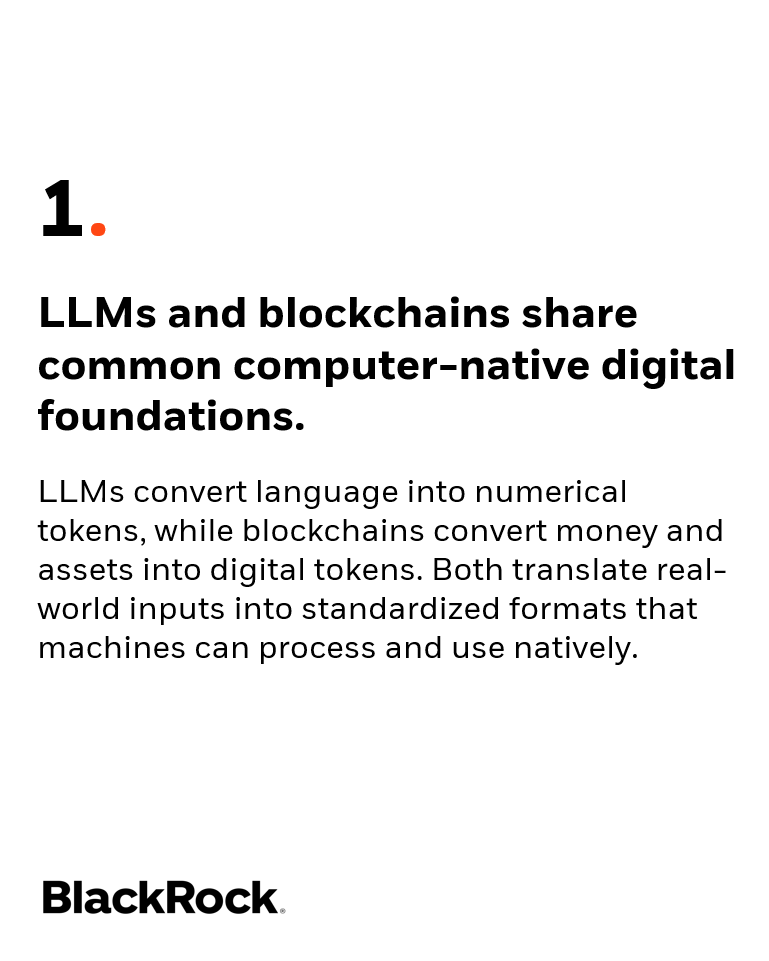
AI turns language into tokens.
Tokenization turns assets into on-chain data.
Stablecoins enable machines to move value.
AI Agents can then interact with that value programmatically.
The next challenge?
Making all of this data understandable.
That’s where AiTraceRoot comes in — connecting on-chain data with AI-driven analysis to turn machine-readable activity into actionable intelligence.
AI + On-Chain Data → The next intelligence layer. 🔍

Our latest research paper explores the growing connection between AI and digital assets and explains why broad AI adoption may drive new demand, utility and applications across the digital asset economy. blackrock.com/us/individual/…


53
2
351
44,816

🚀AiTraceRoot — 30-Day Testnet Update
30 days of continuous operation, real user activity, and ongoing product validation.
→ 628,825 Total Minted
→ 182,114 Active App Wallets
→ 1,314,296 AI Requests
→ 167,896 Active AI Users
→ 99.87% AI Success Rate
These results provide a clear view of our early product usage and system performance.
As we move forward, we will continue to strengthen the platform, expand AI-driven analysis capabilities, and build deeper connections between on-chain data and actionable intelligence.
30 days completed. The next stage begins.
#AiTraceRoot #AI #Web3 #Crypto

54
451
63,197
“Moving fast” and “building safely” are not contradictory — this is exactly the right direction for advancing responsible AI.
Rigorous testing, continuous monitoring, and end-to-end security are essential to ensuring that AI can truly benefit society.
For AiTraceRoot, we believe the same principle applies to on-chain AI: move fast, but build with responsibility.

Moving fast and building safely aren’t at odds.
AI should move as fast as we can, with rigorous testing, monitoring, and safeguards every step of the way.
@JensenHuang on @CBSSunday:

43
341
45,963
┌─ WEB3 ─┐
│ DATA │ → ◉ SIGNAL
└────────┘ ↓
◎ INSIGHT
Less noise.
More signal. 🔍
AiTraceRoot
See you in the new week. ⚡️
#AiTraceRoot #AI #Web3

59
455
62,322
SI🧐

Many people think that the words “Artificial Intelligence” are inaccurate, and very ineloquent, relative to AI, or Artificial Intelligence. A far more elegant and accurate description of this new phenomena would be Superior Intelligence (SI) or, Extreme Intelligence (EI) or, Supreme Intelligence (SI). This is a Poll, and I would appreciate everybody voting! Which is the best name for this ever growing “Revolution?” President DONALD J. TRUMP
37
355
48,354
→ On-Chain Data — Deeper
→ AI Analysis — Smarter
→ Market Signals — Clearer
→ Research — Faster
One platform.
Everything you need to understand Web3. 🔍⚡️

49
1
410
53,645
SEC APPROVES TEMPORARY, CONDITIONAL EXEMPTION TO ALLOW LIMITED TRADING OF TOKENIZED STOCKS ONCHAIN
Traditional markets are stepping deeper into Web3 — and a new layer of market data is taking shape. 👀
From off-chain assets to on-chain intelligence.
AiTraceRoot is watching the transition. 🔍

59
2
451
51,664
CLARITY: ▰▰▰▱▱ Stalled
BTC Reserve: ▰▰▰▰▱ Moving
Fed Rates: ▰▰▰▰▱ Hiked 25 bps
So… what’s $BTC pricing more? 👀
Politics? Liquidity? Or the next move?
We’re watching the data. 🔍
#AiTraceRoot #BTC #Web3 #Crypto

61
2
408
59,063
AI is moving from a tool to infrastructure.
We see the same shift happening in Web3 data — from simply collecting on-chain data to actually understanding it. That’s the direction AiTraceRoot is building toward.⚡

At Binance, AI isn’t an experiment. It’s infrastructure running 24/7.
$4.6B in scams stopped before they reached a single user.
100+ AI models.
8M+ users protected
Real-time risk decisions
This is AI in production.
Read more ↓

38
1
248
48,263
AI is becoming more powerful. But capability alone is not the next frontier.
As AI moves from generating answers to interpreting data, making decisions and taking actions, provenance, context and verifiability become increasingly important.
The question is no longer only:
“What can AI do?”
It is also:
“What data did it use? What led to the conclusion? Can the result be verified?”
This is where AiTraceRoot is building.
We believe the next generation of AI intelligence should be data-grounded, evidence-linked and easier to verify — especially in an on-chain environment where every action leaves a trace.
More intelligence requires more transparency.
Better AI requires better evidence. 🔍
#AiTraceRoot #AI #Web3 #Crypto #OnChain

47
443
51,575
AI Should Strengthen Human Agency, Not Replace It
As artificial intelligence becomes increasingly capable, two risks deserve particular attention.
The first is the possibility that AI systems become so powerful that humans gradually lose meaningful control over the decisions they influence. The second is the concentration of AI-driven power and information in the hands of a small number of companies, institutions, or individuals.
For Web3, these questions are particularly important.
A decentralized economy depends on transparency, verifiability, and the ability of individuals to make decisions based on information they can independently assess. As AI becomes a critical layer for interpreting increasingly complex on-chain data, we should ensure that intelligence does not become another source of opacity or centralized control.
AI should not tell users what to believe or what to do. It should help them understand what is happening.
This means building AI systems that can interpret on-chain activity, identify patterns, analyze risks, and turn fragmented blockchain data into insights that users can independently verify. The goal is not to replace human judgment, but to make better judgment possible.
In this context, AI-powered data intelligence can become an important layer of the decentralized ecosystem: transforming raw on-chain data into understandable, contextual, and actionable information—while keeping users in control of the final decision.
The challenge ahead is therefore not simply to build more capable AI.
It is to build intelligence that remains transparent, verifiable, and user-controlled.
A stronger AI ecosystem should give individuals greater access to information, not greater dependence on centralized authorities. In Web3, the most valuable AI may ultimately be the one that makes the underlying data easier to understand—without taking ownership of the decisions that data enables.

There are two ways AI progress could go very badly and that we must avoid.
First, we could lose control of the future to AI. This is unacceptable; we are unapologetically on Team Humanity, and AI must always serve people. To ensure that, we need ways to ensure that alignment and safety techniques stay ahead of progress in model capabilities.
Second, we could end up in a world with too much concentration of power. If an extraordinarily powerful AI is used by one person or company to impress their worldview onto everyone else, the results could be extremely dystopian.
Avoiding these two threats requires walking a narrow middle path; for example, one country could gain too much power. Another example is one lab ending up with too much power.
22
2
415
43,160
Markets are becoming more selective. 🔍
BTC derivatives remain relatively balanced, while macro pressure from rising yields, oil prices and Fed expectations continues to shape risk appetite.
Price is only one signal.
Positioning, funding, liquidity and risk matter too.
AiTraceRoot turns these signals into clearer market intelligence.
#AiTraceRoot #BTC #AI #Crypto #Web3

55
1
448
54,174