

💰 Liberdade financeira via mercado Bitcoin, Ethereum e majors de forex Estratégia + psicologia do trader
São Paulo
- Tweets 297
- Following 3,826
- Followers 1,821
- Likes 44


Angelo Demalio retweeted

Papertrade advertises zero fees. I went through the numbers on a simple trade and that isn't what I found.
Say you go long Bitcoin at $80,000 with $1,000 of margin at 1000x. Your position is worth $1M, or 12.5 Bitcoin.
Each $1 move in Bitcoin is $12.50 to you. Your $1,000 covers an $80 drop, so your margin runs out at $79,920.
Papertrade liquidates you at about $79,960. That is a $40 drop. At that point you have lost $500 on paper, but they keep the full $1,000.
On the winning side, say Bitcoin goes up $50 to $80,050. Your profit on 12.5 Bitcoin is $625. Papertrade pays you $406, which is 35% less.
Here is what they pay at different move sizes:
A $25 move earns $312 and pays $157. That is a 50% cut.
A $50 move earns $625 and pays $406. That is a 35% cut.
A $100 move earns $1,250 and pays $940. That is a 25% cut.
A $200 move earns $2,500 and pays $2,032. That is a 19% cut.
A $500 move earns $6,250 and pays $5,333. That is a 15% cut.
A $1,000 move earns $12,500 and pays $10,843. That is a 13% cut.
The cut gets smaller as the move gets bigger, but it never goes away.
At 1000x most trades end on small moves, because Bitcoin moves $40 or $50 all the time. Small moves are where the cut is largest.
Putting the two sides together, a $40 drop costs you $1,000 and a $50 rise pays you $406. To break even on those terms you need to be right about 71% of the time.
For comparison, Hyperliquid would charge roughly $900 in taker fees to open and close a $1M position. That fee is stated up front. Your margin also runs all the way to zero before you are liquidated.
On Papertrade the cost comes from the early liquidation and the reduced payouts on wins. Each one shows up in the price you get rather than as a fee. Combined with 1000x leverage, it puts the odds well against the trader.
64
16
385
61,635
Angelo Demalio retweeted

Crystal Palace have no immediate plans to change their manager - but Pierre Sage is under increasing pressure following their 5-0 thrashing at Brighton on Sunday ⚽️

20
54
1,490
197,746
Angelo Demalio retweeted

Idk how yall do those 9-5’s like fr fr
Thank you Pumpfun app for my dinner tonight

144
94
196
34,863
Angelo Demalio retweeted

Space got rugged for the second time today.
Idk what the heck is going on. Anyone else having this problem? 🧐

25
6
39
3,241
Angelo Demalio retweeted

I love humanoids but it’s awesome to see the step change evolution of the robot arm from essentially a 1970s PC to something you can now vibe code
Programmable robots -> instructable robots

"If you have an iPad, you can vibe code robots. And potentially save your company millions of dollars while you’re at it."
@Forbes robotics reporter @johnkoetsier interviewed @evanbeard for an exclusive on the launch of Standard Bots AI.
Read the story here: forbes.com/sites/johnkoetsie…
16
3
73
24,611

2/ In Feb 2025, shortly after the $1.5B Bybit exploit attributed to the DPRK-linked group 'TraderTraitor', I observed a pattern of 15+ accounts asking for help with orders directly tied to stolen funds in public groups on Telegram and Discord.
Last week I shared how illicit actors laundering DPRK funds from the Sep 2026 $387M Bitget exploit were openly creating support tickets for orders in public groups. x.com/zachxbt/status/2104528…


BREAKING: Chinese illicit actors laundering funds from the $387M Bitget exploit on behalf of the alleged DPRK attackers are openly asking for support with orders in public Discord servers and Telegram channels of services they use.
Notably, Alias 4 (below) was also seen laundering funds from the Kelp DAO $292M exploit earlier this year.
I've observed the same pattern after multiple TraderTraitor attributed exploits, and I've closely tracked these groups. I plan to share more of my data on them in coming weeks.
Currently, funds are being chain-hopped via bridges and being deposited into mixing services such as Wasabi.
Alias 1 - Cc
Discord: cc02006
Discord ID: 1351486674386948148
Txn: F08657EFAEAE7B58217CD17A22BF4779582E5D080C2E92E173BC239A5D828363
Alias 2 - jack
Discord: jack_34808
Discord ID: 1553705721768714377
Txn: 68583D313A0CCC99F2702D61D05A242A69C86CAE09ED252B65F34B677C377F69
Alias 3 - Melon
Discord: under0346
Discord ID: 1394240539108573215
Txn 1: ABE2AEF8B10057E60F8259CA2CA2CD5D71D38D254960FEEE89CB3C95A964873F
Txn 2: 7BE290865901DEB1680A6D692A11392D1FDDACA0D31C48F26DCB249F2444BD6B
Alias 4 - lolo / Marin
TG: pvpcz
TGID: 6223514198
Discord: losern
Discord ID: 1024415186527985704
Txn: 8E935C19D00F40639B78BF1FD094FE48C92118F3E586AB52DF93851080CCCE15
Alias 5 - HELP ME
Discord: helpme031897
Discord ID: 1554035533817188384
Txn: 7C58CAD760EBBED54F2CA4D2146D056910B7B6688B4F524396DC8807353C2379


43
78
1,774
528,223


it is absolutely insane what elon has done for humanity
it actually makes no sense
electric, self-driving, flying cars -- openai, reusable spaceships, planetary expansion, new internet network that decides wars, paypal, x, solar, neuralink, hyperloop
brother how???
427
515
6,703
207,531
Angelo Demalio retweeted

Here's my conversation with @DHH. He is back for round 2! It was an epic fun 5 hour conversation about the future of programming, AI, Linux, and human civilization.
It's here on X in full and is up everywhere else (see comment).
Timestamps:
0:00 - Episode highlight
1:27 - Introduction
2:56 - Programming with AI agents
18:14 - How software will change
27:30 - AI impact on open source
37:21 - Building Omarchy Linux distro
47:05 - Vibe coding vs agentic engineering
1:00:06 - The end of manual programming
1:10:24 - Advice for programmers
1:22:30 - Surviving Internet Hate
1:31:46 - Programming setup for AI Agents
1:44:11 - Obsessing about speed
2:07:06 - Voice prompting vs typing
2:21:05 - Best AI coding models
2:37:55 - Best AI coding harnesses
2:50:57 - AI video generation and filmmaking
3:10:28 - Fatherhood
3:38:35 - Linux will win the desktop
3:49:51 - PewDiePie
3:59:24 - Future of programming
4:22:17 - Politics and immigration
4:53:54 - Longevity, over-optimization, and fear of death
5:05:38 - Eternal recurrence and future of human civization

358
472
4,592
906,051
Angelo Demalio retweeted

Built for payments. Routed through @Mayan.
$300M+ in stablecoins across 495K+ transactions.

Money moves to Polygon.
$300M+ in stablecoins across 495K+ transactions have been sent to @0xPolygon via Mayan, the chain built for payments.

22
38
327
27,425
Angelo Demalio retweeted
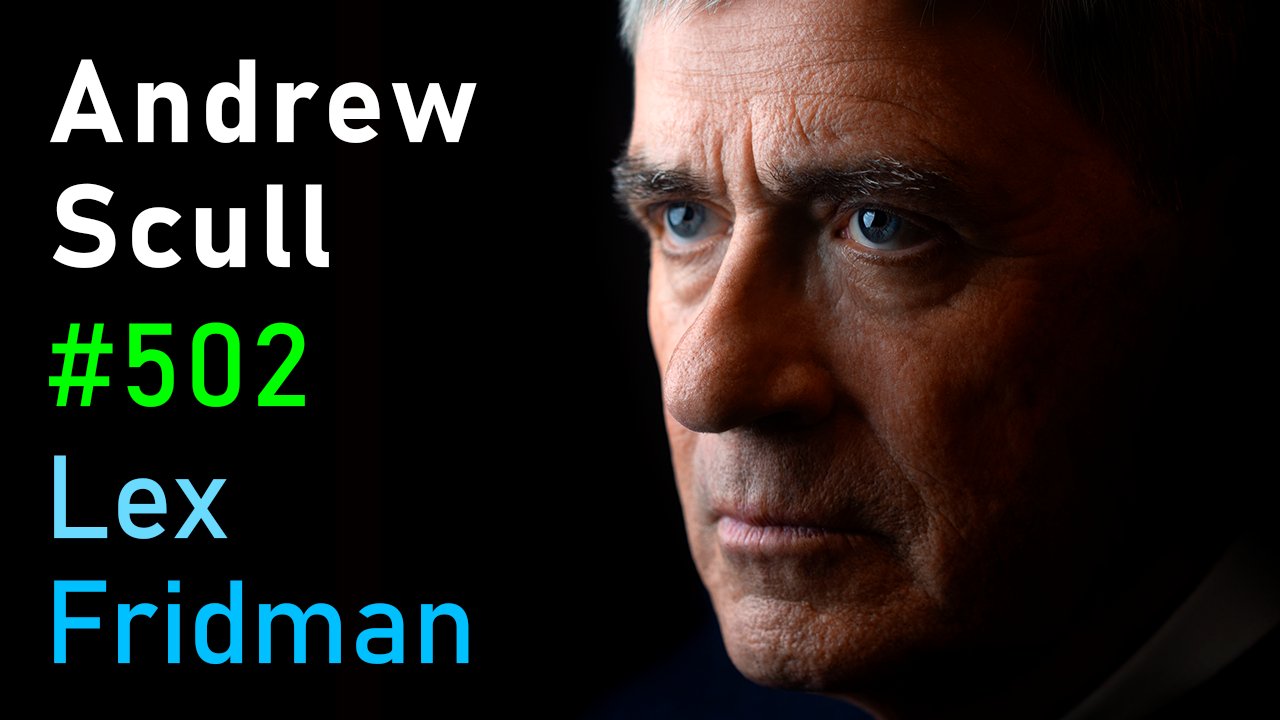
Here's the links for my conversation with Andrew Scull:
YouTube: youtube.com/watch?v=s7d2d8Fh…
Spotify: open.spotify.com/show/2MAi0B…
Podcast: lexfridman.com/podcast
13
8
87
42,968
Angelo Demalio retweeted

I lost $1,200 on FTX. That tuition taught me platform access is not ownership.
18
12
344
33,311

Angelo Demalio retweeted

Looking forward to our time together later this morning. Currently on my daily 20 yard walk


5
4
153
37,130


Angelo Demalio retweeted

Cannot tell if I have acquired a conference plague or if lungs irreparably damaged by the awful air quality experienced the last week in singapore
24
1
74
13,633

O número muda. A pergunta continua. 📈
Separe o que você vê do que você supõe. O primeiro passo é o Fundamentos do Mercado.
👉 tinyurl.com/brain-ebook
#BrainTradeMove2 #Forex #MercadoFinanceiro #Trading

3
3
54
4,998
O número sobe. A pergunta é se você entende. 📲
Separe o que a tela mostra do que você acha. O eBook Fundamentos do Mercado é o começo.
👉 tinyurl.com/brain-ebook
#BrainTradeMove2 #Investimentos #MercadoFinanceiro #EducaçãoFinanceira

6
5
28
3,076


