

Season 16 of the Bitcoin Takeover Podcast is running wild, celebrating Bitcoin's 16th year of existence! 🔥 Subscribe on Spotify, Apple Podcasts & YouTube!
8333
- Tweets 14,919
- Following 1,152
- Followers 4,615
- Likes 12,875


Pinned Tweet

Marc De Mesel on Early Bitcoin Investing and Polygamy
Our latest interview is with @MarcDeMesel an early Bitcoin and Tesla investor who's got amazing stories to tell about the Block Size Wars and the big block perspective of the story.
They discuss The BCH Origin Story and Inflation Math, the Forks Kept Splitting and Talent Lost, the "Hijacking Bitcoin" and Store-of-Value Shift and Privacy Coins as "The New Opportunity".
This is a great episode packed with all manner of interesting information and perspective. Great for a weekend's entertainment.
Some other Highlights
🕯️Never Sell, Borrow Against It: The Saylor Doctrine
🕯️Bitcoin Cash Failed: Death by a Thousand Splits
🕯️From Monogamy to Polygamy
🕯️Eastern European Honesty
🕯️Bear Market Liquidation Scenario
piped.video/live/l7OyHBCS9AQ…


Bitcoin, Tesla & Polygamy with @marcdemesel (Bitcoin Takeover Podcast S17 E44) nitter.net/i/broadcasts/1nxeLMoDz…
Made with AI
1
6
10
450
What did Satoshi actually do for the world, freedom and finance?
@mikebelshe


Mike Belshe on BitGo, Quantum and Clarity
The guest is @mikebelshe, the CEO of @BitGo and the creator of HTTP/2.0.
BitGo started out as a provider of multisig self-custody, but grew into the bona fide bank for Bitcoin exchanges and institutions.
In this episode they discuss The Clarity Act and Crypto Regulation and how institutional investors will remain on the sidelines without legislative clarity. They also touch on Payments, Stablecoins, and the "War on Cash".
Here are more highlights from the show.
💵The White House Visit and the Clarity Act Vote
💵Why BitGo Is Free for Individuals
💵AI Code Auditing at BitGo
💵Quantum: The Perception Threat
💵Satoshi's Coins and the Freeze Debate
piped.video/live/7F9Kk8dXVr0…

2
3
58
Opinions on where bitcoin-cash:native has gone wrong in the quest for adoption.
@MarcDeMesel

Marc De Mesel on Early Bitcoin Investing and Polygamy
Our latest interview is with @MarcDeMesel an early Bitcoin and Tesla investor who's got amazing stories to tell about the Block Size Wars and the big block perspective of the story.
They discuss The BCH Origin Story and Inflation Math, the Forks Kept Splitting and Talent Lost, the "Hijacking Bitcoin" and Store-of-Value Shift and Privacy Coins as "The New Opportunity".
This is a great episode packed with all manner of interesting information and perspective. Great for a weekend's entertainment.
Some other Highlights
🕯️Never Sell, Borrow Against It: The Saylor Doctrine
🕯️Bitcoin Cash Failed: Death by a Thousand Splits
🕯️From Monogamy to Polygamy
🕯️Eastern European Honesty
🕯️Bear Market Liquidation Scenario
piped.video/live/l7OyHBCS9AQ…
2
4
55
RT @YuviLightman: Today we open sourced our Quantus indexer (based on @hellosqd). If you need high performance access to Quantus data you c…
3
24
Bitcoin Takeover (BTCTKVR.com) retweeted

The problem is not bad people. Its ordinary people who enable them by insisting to remain terminally "neutral".
2
1
19
1,934
Bitcoin Takeover (BTCTKVR.com) retweeted
If you are looking for a way to escape the shackles of the state and the bank, this episode is for you.
@TheDesertLynx from @Dashpay giving his stories about how he has been living unbanked and some inspiration and life lessons that we could all use.
piped.video/live/8bIrcouq1AQ…

Made with AI
3
5
146
Bitcoin Takeover (BTCTKVR.com) retweeted
MICA Didn't Ban Cash.
It made cash-like money expensive, lonely, and optional.
The EU passed Markets in Crypto-Assets in 2023.
Titles on stablecoins applied June 2024.
The rest, including CASP licensing, December 2024.
Transitional period ended 1 July 2026. No extension.
Official story: investor protection, market integrity, one rulebook instead of 27.
Mechanism: if you want a token that behaves like money, you need a license, bank-grade reserves, redemption on demand, and a fixed, large share of those reserves sitting as deposits in EU banks, 60% for significant tokens.
Tether did not apply.
USDT disappeared from regulated EU venues... Coinbase first in December 2024, then Crypto.com, Binance, and Kraken by March 2025.
Circle's USDC and EURC stayed.
They complied.
So did other dollar-denominated tokens that sought authorisation.
The dominant dollar stable got cut out of every licensed venue in Europe; a compliant one took its place.
That is not a technical accident. MiCA requires EMT issuers to hold that reserve share in cash at EU credit institutions.
Interest is banned.
The token is supposed to look like e-money, not like cash you can move without asking a bank first.
Meanwhile the AML ( Anti-Money Laundering ) package landed alongside it.
AMLR sets an EU-wide cash payment limit of €10,000, phasing in from 2027, with carve-outs for private person-to-person payments.
The Transfer of Funds Regulation extended the travel rule to crypto. Self-hosted wallets sit outside MiCA's CASP perimeter, but every on-ramp, off-ramp, and licensed venue now treats them as a risk event.
Unauthorised firms have to wind down.
ESMA said the deadline was real.
Liquidity concentrates on the venues that can afford the compliance stack.
Nobody has to outlaw Bitcoin or physical cash.
They make the analog version of money hit a ceiling in 2027, and they make the compliant version of digital money the only one licensed venues can offer.
The remaining options are: A licensed euro-stable sitting in a bank-like issuer, a future digital euro,
or Bitcoin that never asks the bank.
The first two put the chokepoint back.
KYC door.
Custodial wallet.
One licensed venue as the only place size exists.
The cypherpunks warned in 1993 that a society needs the ability to transact without leaving a permanent, traceable record... that anonymity is what makes voluntary transactions possible.
Cash was always the thing that still works when the institution says no.
MiCA and the coming cash limit push in the same direction from two different laws: shrink the unintermediated stuff until the only remaining money is the kind that can be paused with a letter.
Self-custody is not a lifestyle choice.
It is the part they still cannot license.

Mike Belshe on BitGo, Quantum and Clarity
The guest is @mikebelshe, the CEO of @BitGo and the creator of HTTP/2.0.
BitGo started out as a provider of multisig self-custody, but grew into the bona fide bank for Bitcoin exchanges and institutions.
In this episode they discuss The Clarity Act and Crypto Regulation and how institutional investors will remain on the sidelines without legislative clarity. They also touch on Payments, Stablecoins, and the "War on Cash".
Here are more highlights from the show.
💵The White House Visit and the Clarity Act Vote
💵Why BitGo Is Free for Individuals
💵AI Code Auditing at BitGo
💵Quantum: The Perception Threat
💵Satoshi's Coins and the Freeze Debate
piped.video/live/7F9Kk8dXVr0…
Made with AI
3
4
6
428
Bitcoin Takeover (BTCTKVR.com) retweeted

Hester Peirce: mass KYC collection builds honeypots that get crypto holders phished, hacked, and physically attacked. Her answer: zero-knowledge proofs - verify without exposing anyone.
Meanwhile, SDNY is retrying Roman Storm in April 2027 - on the theory that he committed a crime by NOT building one of those honeypots.
The government's own expert, AnChain.AI's Philip Werlau, told the jury Tornado Cash needed a "user registry": a list of authorized users, with logins "like Gmail, Spotify." On cross he admitted it "could have collected personal identifying information."
When the defense asked whether hackers target exactly such databases, prosecutors objected. Sustained. The jury never heard the answer.
Surveillance is privacy.
Free Roman Storm.
Study the case. Read the docket. See for yourself how bad this precedent is.
Make some noise. This case is a threat to every developer and every user who values privacy. The more people know, the harder it is to get away with.

JUST IN: 🇺🇸 SEC Commissioner Hester Peirce calls to end mass KYC data collection, warning it puts crypto holders at risk of phishing and physical attacks.
Pierce says the current KYC/AML system creates massive databases of sensitive information that can be hacked, leaked, or exploited.
She's pushing for zero-knowledge proofs (ZK proofs) that could verify users meet regulatory requirements without exposing their personal information.
20
91
481
28,537
Bitcoin Takeover (BTCTKVR.com) retweeted

PRICE CONTROLS ARE A LIE POLITICIANS TELL TO BUY VOTES.
They can change the law. They can't change the market dynamics.
History is littered with examples:
- WWII America (ration books)
- Germany, 1948 (goods vanished until controls lifted)
- San Francisco, 1994 (15% fewer rentals)
…in today's Helsinki edition of OUTSIDE MONEY

13
24
183
22,690
Bitcoin Takeover (BTCTKVR.com) retweeted

GM from cloudy Helsinki!
Visit us at the @Braiins booth at @btchelevent and get some free books, stickers and spicy sweets.
Weather is bearish, we are fkn bullish!

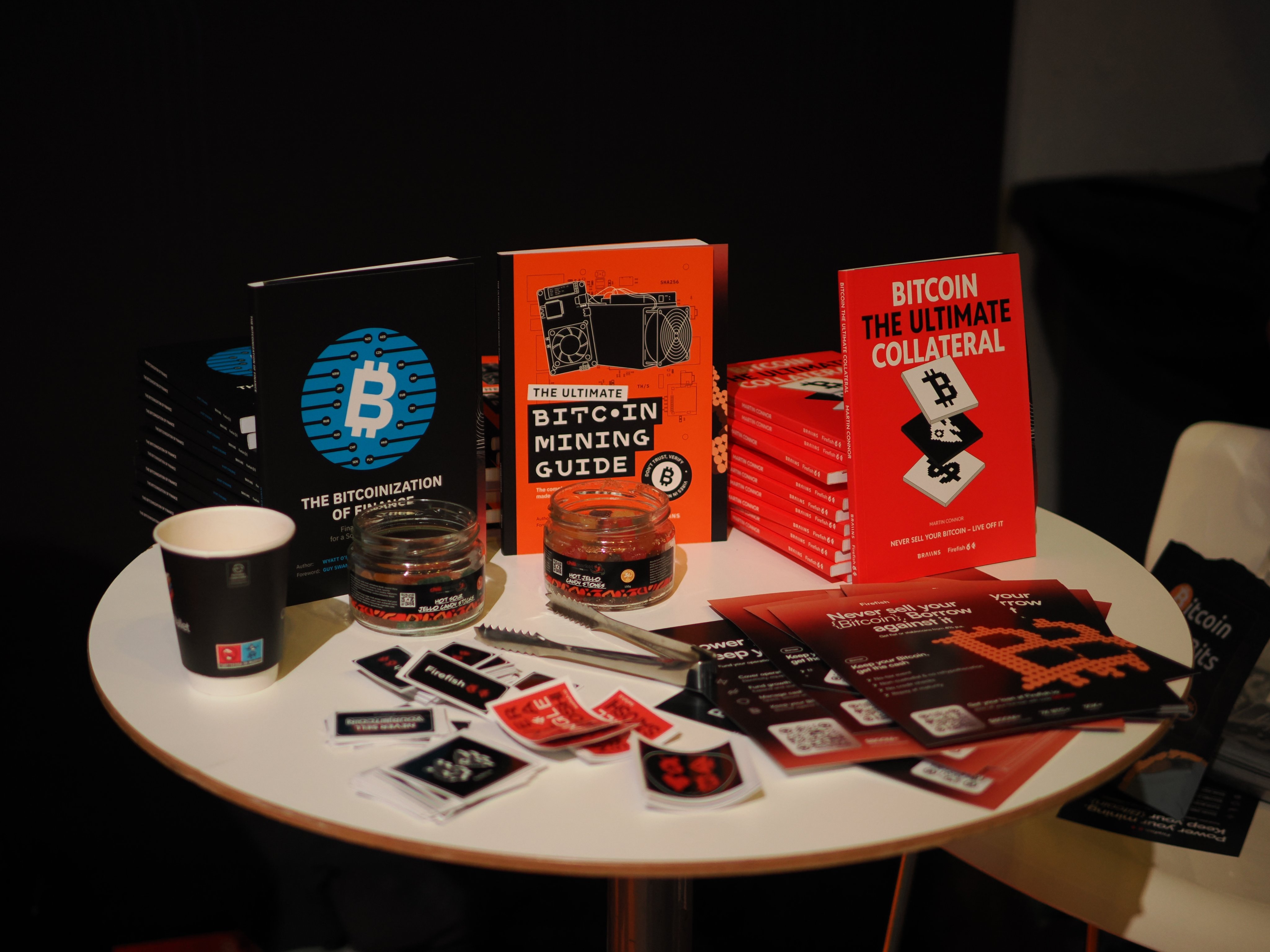
6
4
35
1,640
Bitcoin Takeover (BTCTKVR.com) retweeted

BITCOIN TAKEOVER PODCAST HOST VLAD COSTEA IS SPEAKING AT BITCOIN AMSTERDAM 2026 🇳🇱
"Bitcoin is the name of a movement, the symbol of a revolution, and the ecash that actually changed the world." 👏
📍 SugarFactory, Amsterdam
🗓️ November 5–6, 2026

7
9
43
13,123
MICA Didn't Ban Cash.
It made cash-like money expensive, lonely, and optional.
The EU passed Markets in Crypto-Assets in 2023.
Titles on stablecoins applied June 2024.
The rest, including CASP licensing, December 2024.
Transitional period ended 1 July 2026. No extension.
Official story: investor protection, market integrity, one rulebook instead of 27.
Mechanism: if you want a token that behaves like money, you need a license, bank-grade reserves, redemption on demand, and a fixed, large share of those reserves sitting as deposits in EU banks, 60% for significant tokens.
Tether did not apply.
USDT disappeared from regulated EU venues... Coinbase first in December 2024, then Crypto.com, Binance, and Kraken by March 2025.
Circle's USDC and EURC stayed.
They complied.
So did other dollar-denominated tokens that sought authorisation.
The dominant dollar stable got cut out of every licensed venue in Europe; a compliant one took its place.
That is not a technical accident. MiCA requires EMT issuers to hold that reserve share in cash at EU credit institutions.
Interest is banned.
The token is supposed to look like e-money, not like cash you can move without asking a bank first.
Meanwhile the AML ( Anti-Money Laundering ) package landed alongside it.
AMLR sets an EU-wide cash payment limit of €10,000, phasing in from 2027, with carve-outs for private person-to-person payments.
The Transfer of Funds Regulation extended the travel rule to crypto. Self-hosted wallets sit outside MiCA's CASP perimeter, but every on-ramp, off-ramp, and licensed venue now treats them as a risk event.
Unauthorised firms have to wind down.
ESMA said the deadline was real.
Liquidity concentrates on the venues that can afford the compliance stack.
Nobody has to outlaw Bitcoin or physical cash.
They make the analog version of money hit a ceiling in 2027, and they make the compliant version of digital money the only one licensed venues can offer.
The remaining options are: A licensed euro-stable sitting in a bank-like issuer, a future digital euro,
or Bitcoin that never asks the bank.
The first two put the chokepoint back.
KYC door.
Custodial wallet.
One licensed venue as the only place size exists.
The cypherpunks warned in 1993 that a society needs the ability to transact without leaving a permanent, traceable record... that anonymity is what makes voluntary transactions possible.
Cash was always the thing that still works when the institution says no.
MiCA and the coming cash limit push in the same direction from two different laws: shrink the unintermediated stuff until the only remaining money is the kind that can be paused with a letter.
Self-custody is not a lifestyle choice.
It is the part they still cannot license.
Mike Belshe on BitGo, Quantum and Clarity
The guest is @mikebelshe, the CEO of @BitGo and the creator of HTTP/2.0.
BitGo started out as a provider of multisig self-custody, but grew into the bona fide bank for Bitcoin exchanges and institutions.
In this episode they discuss The Clarity Act and Crypto Regulation and how institutional investors will remain on the sidelines without legislative clarity. They also touch on Payments, Stablecoins, and the "War on Cash".
Here are more highlights from the show.
💵The White House Visit and the Clarity Act Vote
💵Why BitGo Is Free for Individuals
💵AI Code Auditing at BitGo
💵Quantum: The Perception Threat
💵Satoshi's Coins and the Freeze Debate
piped.video/live/7F9Kk8dXVr0…
Made with AI
3
4
6
428
If you are looking for Freedom Money Episodes
@vikrantnyc, founder of @cakewallet,@radarchat
and @arbiterapp in an episode with tools for privacy maximalism.
piped.video/live/-b1rdop-7Oc…
Amir Taki/@lunardragon420 and Richard Werner/
@scientificecon/@professorwerner on Economics, CBDCs and Cypherpunk Tech
piped.video/live/bNxv7wlb5_Q…
Joël Valenzuela/@TheDesertLynx from @Dashpay on Being Unbanked with Private Digital Cash.
piped.video/live/8bIrcouq1AQ…
1
6
70
Bitcoin Takeover (BTCTKVR.com) retweeted
Marc De Mesel on Early Bitcoin Investing and Polygamy
Our latest interview is with @MarcDeMesel an early Bitcoin and Tesla investor who's got amazing stories to tell about the Block Size Wars and the big block perspective of the story.
They discuss The BCH Origin Story and Inflation Math, the Forks Kept Splitting and Talent Lost, the "Hijacking Bitcoin" and Store-of-Value Shift and Privacy Coins as "The New Opportunity".
This is a great episode packed with all manner of interesting information and perspective. Great for a weekend's entertainment.
Some other Highlights
🕯️Never Sell, Borrow Against It: The Saylor Doctrine
🕯️Bitcoin Cash Failed: Death by a Thousand Splits
🕯️From Monogamy to Polygamy
🕯️Eastern European Honesty
🕯️Bear Market Liquidation Scenario
piped.video/live/l7OyHBCS9AQ…
Bitcoin, Tesla & Polygamy with @marcdemesel (Bitcoin Takeover Podcast S17 E44) nitter.net/i/broadcasts/1nxeLMoDz…
Made with AI
1
6
10
450
Bitcoin Takeover (BTCTKVR.com) retweeted
Bitcoin Forks
@mikebelshe gives his thoughts on the 2026 Bitcoin forks.
Let the markets decide!
Spare a thought for the wallets and security providers.

Mike Belshe on BitGo, Quantum and Clarity
The guest is @mikebelshe, the CEO of @BitGo and the creator of HTTP/2.0.
BitGo started out as a provider of multisig self-custody, but grew into the bona fide bank for Bitcoin exchanges and institutions.
In this episode they discuss The Clarity Act and Crypto Regulation and how institutional investors will remain on the sidelines without legislative clarity. They also touch on Payments, Stablecoins, and the "War on Cash".
Here are more highlights from the show.
💵The White House Visit and the Clarity Act Vote
💵Why BitGo Is Free for Individuals
💵AI Code Auditing at BitGo
💵Quantum: The Perception Threat
💵Satoshi's Coins and the Freeze Debate
piped.video/live/7F9Kk8dXVr0…
3
5
236
Bitcoin Takeover (BTCTKVR.com) retweeted

Here the YouTube version of the interview I did with Vlad @BTCTKVR. When you click 'more...' under Description you get the time stamps with subjects, for example:
46:42 - Weak Hands vs Strong Hands & Where Value of Cryptocurrencies Comes From
piped.video/live/l7OyHBCS9AQ…
2:51:40 - The Dating Profile Question
piped.video/live/l7OyHBCS9AQ…
3:27:12 - What It Costs Several Girlfriends in Africa
piped.video/live/l7OyHBCS9AQ…
4:22:28 - Closing Advice: HODL & Spotting the Top
piped.video/live/l7OyHBCS9AQ…
4
6
20
1,070
Bitcoin Takeover (BTCTKVR.com) retweeted
Tesla does the crypto thing: five years sideways, then a 10x. Robotaxi is the key. It works. Nobody else has it. Slow rollout now, then the revenues (and profits) can explode. Another 10x is still on the table. @MarcDeMesel @Vladcostea $TSLA

4
5
288
Bitcoin Takeover (BTCTKVR.com) retweeted
Bitcoin was built to minimize trust. USDT exists to maximize it. You just pray Tether actually holds the bag. We got brainwashed into calling that “progress.” @MarcDeMesel @Vladcostea

4
8
323