

Serial Entrepreneur | CEO | Board Director | Traveler | Art Admirer | Views are my own. Book an appointment here: intro.co/BrandonTorresDeclet
Earth
- Tweets 4,015
- Following 1,858
- Followers 3,045
- Likes 12,168


Pinned Tweet

Today, Exyn officially begins its next chapter as a public company (Nasdaq: EXYN).
This milestone reflects years of focused work building autonomous robotics for the complex, GPS-denied environments where traditional solutions fall short. Thank you to our team, customers, partners, and investors who helped get us here.
As a public company, we're well positioned to accelerate growth, expand adoption across key industries, and continue delivering the mission-critical autonomy solutions our customers depend on. The opportunity ahead is significant, and we remain focused on long-term value through technological innovation, commercial expansion, and operational execution.
This is just the beginning.
globenewswire.com/news-relea…
6
9
74
219,304
RT @ive_m5: A DHS science lab could not score three of five Blue UAS aircraft it flew in Manhattan, and withheld the Chinese-drone comparis…
1
16
Hope you’re watching @konnex_world 👀
markets.businessinsider.com/…

New York, September 24th, 2026, Chainwire
The world is racing to rebuild how money settles. Konnex is making sure machines that move are part of it.
Full article:
markets.businessinsider.com/…

5
4
8
320

Today, SBA kicked off our new Defense Industrial Base series with a conference focused on U.S. drone dominance.
Thank you to the public and private sector leaders who joined us to discuss how America can accelerate drone innovation, expand domestic production, and secure the supply chains needed to keep our military strong.


2
28
118
8,708
Brandon Torres Declet 🇺🇸 retweeted

JUST IN: Bain Capital Ventures raises $1,600,000,000.00 to invest in startups built for “life after AGI.”
104
135
1,867
219,264

BREAKING: Meet the new F10 Lightrunner
100 mph, 30-mile radius, 120-minute flight time, launched and caught by MegaDock's robotic arm. No runway, no crew.
Say where, F10 handles how. skydio.com/f10
#SkydioAscend

27
56
367
30,528
Brandon Torres Declet 🇺🇸 retweeted

Claude has discovered a previously unknown enzyme system hidden in the DNA of bacteriophages. Beside the enzyme’s gene sits a long array of repeating DNA—a structure that looks somewhat similar to CRISPR.
We don’t yet understand what this system does, but only a handful of known systems share its features, and all of them are able to cut, copy, and paste DNA. Historically, the discovery of such programmable systems has helped revolutionize medicine. CRISPR, for instance, is now the foundation of genetic medicines. But it will take much more work to learn what this system does, and whether it can be put to similar use.
Read more: anthropic.com/news/claude-di…
1,511
5,271
40,818
24,988,387
Brandon Torres Declet 🇺🇸 retweeted

Anthropic has announced the Claude-led discovery of a molecular machine that they suspect could represent a new gene editing mechanism.
60
46
715
174,114
Brandon Torres Declet 🇺🇸 retweeted

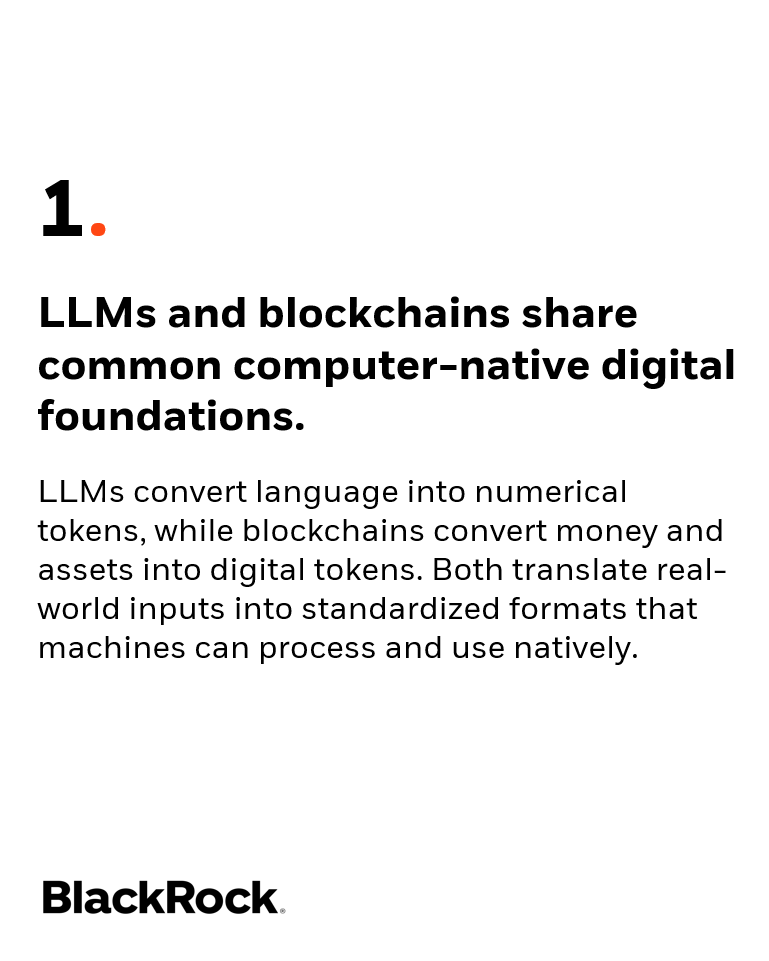
The world's largest asset manager just described machine-to-machine commerce:
Agents paying for compute on programmable rails, in stablecoins.
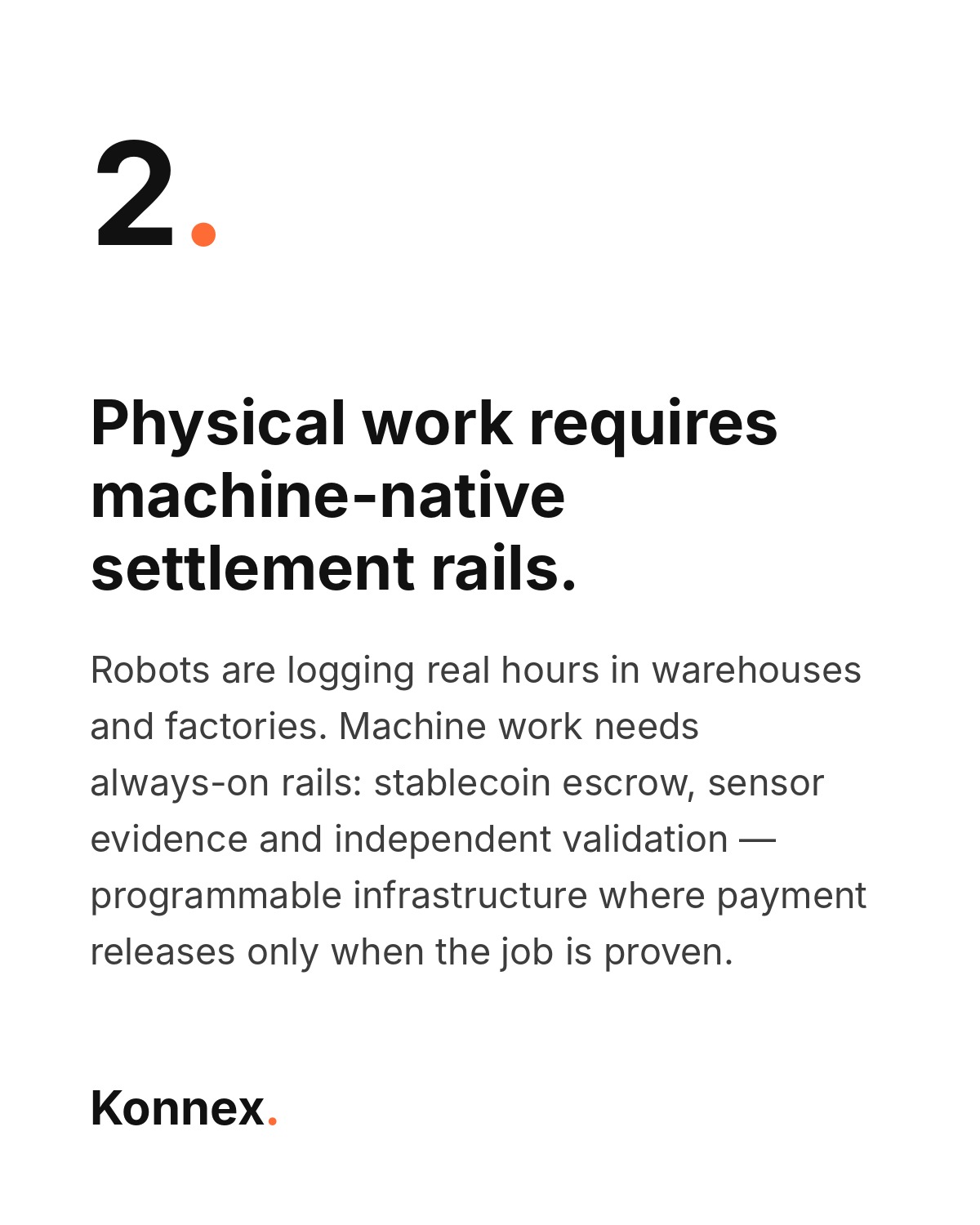
Konnex is building this for physical AI.
Robot labor priced in open markets, settled in stablecoins, proven on-chain.



Our latest research paper explores the growing connection between AI and digital assets and explains why broad AI adoption may drive new demand, utility and applications across the digital asset economy. blackrock.com/us/individual/…


1,945
9,958
8,338
40,532
Brandon Torres Declet 🇺🇸 retweeted

ALERT: Due to an equipment outage involving lighting, Runway 1/19 is closed.
Expect delays, check with your airline. Updates will be posted when available.
14
31
117
39,221
Brandon Torres Declet 🇺🇸 retweeted

onchain robotics is waking up.
a trillion dollar market trading below a billion dollar market cap.
one of the few 100x opportunities left in crypto.

64
53
430
49,955
Brandon Torres Declet 🇺🇸 retweeted
On Sept 15 Agility Robotics said its Digit robots have logged 65,000+ hours of real warehouse work. Machines are clocking in.
The missing pieces: an open market to license their brains, real dollars to pay them, and proof the job was done.
Letter below.

95
70
581
73,360


Brandon Torres Declet 🇺🇸 retweeted

INTEL: U.S. stock markets will expand to 23-hour weekday trading on Dec. 6
The SEC says full 24/7 trading could follow

135
242
2,816
455,376
“I think experience makes you a little less impressed by the announcement and a lot more interested in what happens afterward,” Torres Declet says. “The idea matters, and the technology matters, but then you have to build something around it that can survive the real world.”
brainzmagazine.com/post/bran…
1
130
Brandon Torres Declet 🇺🇸 retweeted
JUST IN: Drone delivery startup Zipline is reportedly in talks to raise $1 billion at a valuation of $20,000,000,000.00.
17
13
164
61,463
Brandon Torres Declet 🇺🇸 retweeted

Day 2 at AFA ASC 2026 is in full swing, and we’re highlighting all three Ondas Sentinel showcase locations across the floor — from long‑endurance ISR and Counter‑UAS to stratospheric sensing and mission‑critical resupply. $ONDS

10
28
243
38,662

Brandon Torres Declet 🇺🇸 retweeted

JUST IN: 🇺🇸 CFTC ready to move forward with crypto rules after the CLARITY Act failed to advance
Chair Michael Selig says the agency can use its existing authority
crypto regulation isn’t waiting for Congress
46
97
1,276
87,845
Brandon Torres Declet 🇺🇸 retweeted

What you're seeing isn't a video game. It's a part of the NS network through the lens of LiDAR technology.
LiDAR, which stands for Light Detection and Ranging, captures millions of data points to create detailed 3D maps of our railroad. That gives our teams a clearer view of the network so they can plan better, work smarter and operate more safely: bit.ly/4hfSkqe.
The data is collected using LiDAR drones and mobile vehicles across the network.
Our railroaders use it to:
🚂 Planning: Supports engineering design, construction projects, infrastructure assessments and digital twin modeling.
🛤️ Maintenance: Helps monitor track conditions, structures, clearances and other assets across the network.
🌳 Vegetation management: Identifies vegetation near the railroad so teams can prioritize maintenance and support safe operations.
🚨Emergency response: Provides detailed mapping and analysis that can support recovery efforts and severe weather assessments.
Behind every point cloud, map and digital model is a team of railroaders who collect the data and transform it into insights we can use to keep freight safely rolling across the network!
Seen here: A bridge tunnel near Pittsburgh, PA.

3
8
84
8,376