

Everywhere
- Tweets 7,757
- Following 2,041
- Followers 7,385
- Likes 25,180


👊🏽 Hoolie 👊🏽 retweeted

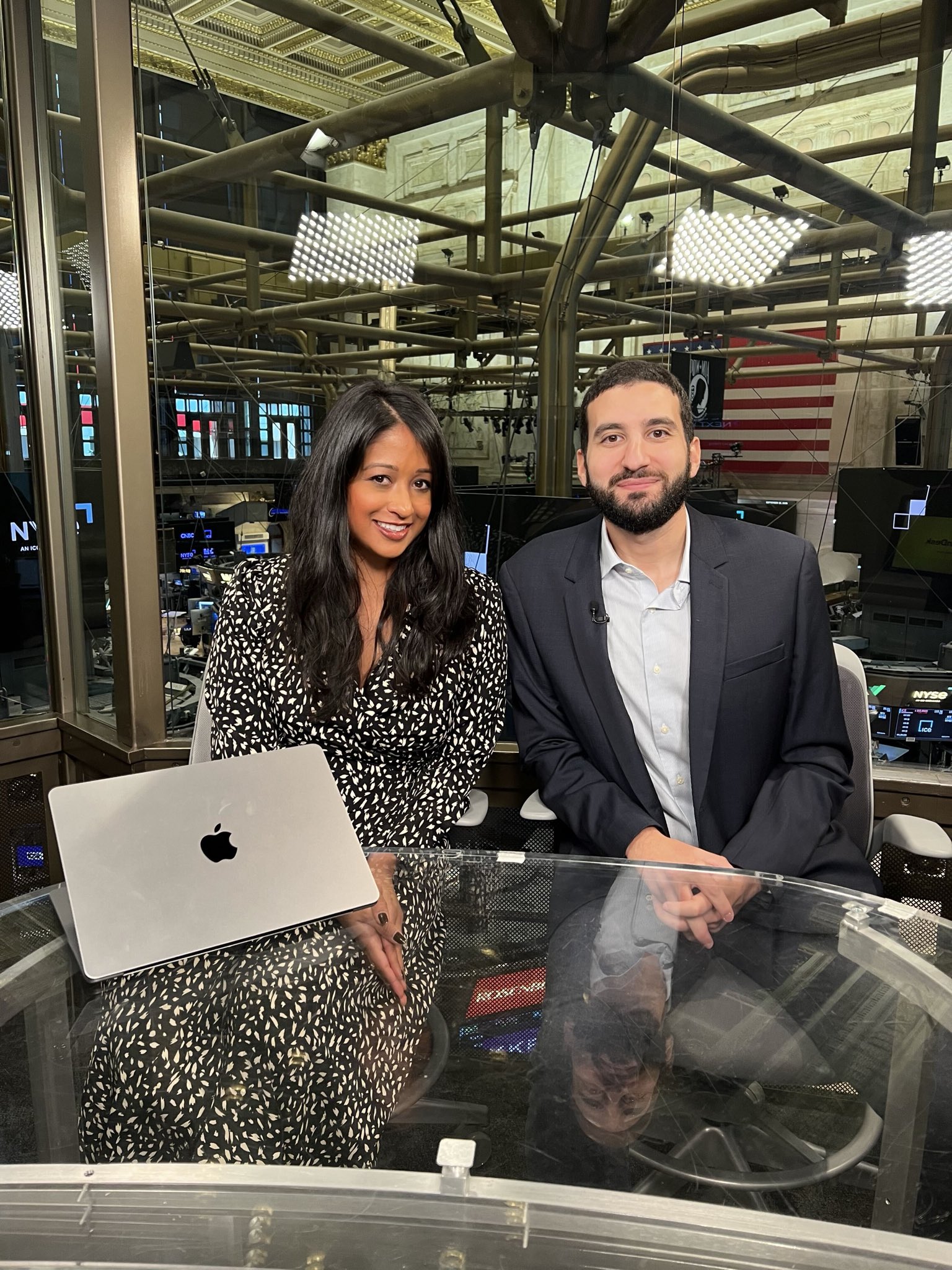
Great chatting with @JennSanasie about our conditional approval of an OCC trust bank charter on Coindesk at the NYSE.
Regulations are in place, enterprise understand the value of stablecoins, and we're now fully ready to support them!
Episode going out on Monday.
6
2
25
1,005
👊🏽 Hoolie 👊🏽 retweeted

It appears that your revenue was simply reoccurring instead of recurring, Mr. Bond.

17
98
3,090
91,805
👊🏽 Hoolie 👊🏽 retweeted

Coinbase is incredibly fortunate to have @LindellYehuda doing the hard work on the quantum threat. piped.video/fP5ZJuHUfUc?is=OFZK…
2
4
50
3,554
👊🏽 Hoolie 👊🏽 retweeted

Zuck has been delivering for millennials at every stage of life.
Facebook for checking out everyone in college.
Insta for early career when you have disposable income.
Muse for mid-career with kids and no time to do personal tasks.
You know empty nesting is gonna be lit.
30
70
1,486
146,481
👊🏽 Hoolie 👊🏽 retweeted

The World is Changing: AI For Creativity
By Jeffrey Katzenberg
A few months ago, I sat in my office in Silicon Valley and watched as a tech founder showed me something extraordinary. On the screen was a fully realized, beautifully lit, well-composed animated scene. It was stunning and it made me feel exactly what I felt in 1986 watching Luxo Jr. That was the first time I watched a computer-animated 3D character take a breath and seem, against all reason, to have life. It left me in awe.
Later that day, I received a text from an artist I've known for thirty years, 350 miles to the south, in the city where I spent most of my career. After seeing a similar video, she texted: "Is this the end of us?" My answer was, "Certainly not.”
I have spent the better part of the last decade in Silicon Valley, but the heart of my career has been in Hollywood. Being deeply connected to both worlds means I have deep loyalties to each and a responsibility to speak honestly to both.
In 2023, I said that these new AI tools would cut the time and cost of producing world-class animation by as much as ninety percent within three years. Some colleagues were alarmed, many were furious.
There is growing fear and resistance surrounding AI within the creative community. I deeply understand it, because I've spent countless hours walking through animation studios watching gifted artists bent over their desks, rebuilding a single second of film for the tenth time because the ninth version wasn't quite right. I've sat in screening rooms where four years of people's labor played out in minutes, and I knew the name of every person that had spent countless hours bringing those images to life. The creative process is a calling, there's really no other way to describe it. From the outside some see resistance. From the inside, it is love.
People do not fight this hard for things they don't care about. The pushback coming out of Hollywood represents the collective effort of people who are deeply passionate about their craft.
Is History Repeating Itself?
The history here is more complicated than either side may realize. In 1906, the most famous composer in America, John Philip Sousa, published an essay titled “The Menace of Mechanical Music." He warned that the phonograph would become "a substitute for human skill, intelligence and soul."
Sousa's fight was not really about the machine, it was about money. The machines were playing his compositions, and the men who built them weren't paying him a cent. His campaign helped create the Copyright Act of 1909. He did not stop the technology. He changed the terms under which it could use his work.
A hundred years ago, sound came to the movies. We remember it now as a miracle, and it was. What we forget is who paid for it. Before sound, tens of thousands of musicians made their living in the orchestra pits of movie houses, scoring every film live, every night, in towns all over the world. When the soundtrack arrived, the work of one composer and one orchestra was recorded for a film that went into thousands of theaters. The union fought back with everything it had, taking out newspaper ads across the country warning against the menace of "canned music," one of them showing a mechanical man tearing the strings out of a harp while an angel wept.
They were not fools, and they were not Luddites. They were right. Those pit jobs did not come back. And yet (this is the part we have to be brave enough to admit), sound gave us the movie musical, the modern score, sfx, sound design, audio engineering, and an art form vastly larger than the one it disrupted. And it helped keep Hollywood in the forefront of world entertainment for the rest of the century and into the next. The loss was real. And yet the art form expanded.
This is a story that has been told over and over again. To resist technology is to risk irrelevance. Just look at Kodak or Blockbuster. To embrace technology is to open doors of new possibility. Just consider Apple and Netflix.
What I Learned From Walt Disney
In the mid-1980s, I was tapped to lead Disney's animation division at a moment when the studio was at an inflection point. Animation wasn't just another business unit. It was the soul of the company, a medium revered because of Walt's genius and his passion. But the production system was cumbersome and unforgiving. A single movie was 125,000 individual hand-drawn and painted cels, photographed one frame at a time. Every revision carried a cost measured in months. These degrees of difficulty shaped the kinds of stories we could tell.
We found our way forward in an unexpected place: Walt himself. The Disney archives held astonishing recordings of Walt explaining his creative process. His own writings. His notes and storyboards. Work product captured at every stage of his process. This was truly a gift. Listening, reading, sitting with the work itself, we heard him talk about character, about emotion, about how an audience feels when a character truly comes alive. He talked about making bold choices and refining a scene until it genuinely moved people. We didn't hear a word about pencils or paintbrushes. In fact, Walt was famous for being a technologist, forever hunting for state-of-the-art tools, often inventing them himself to achieve the images he saw in his head. But he never defined animation by the tools. He defined it by whether the audience believed the character. His principles were timeless. The tools were not.
That realization changed everything. We co-developed the Computer Animation Production System (CAPS) with a young Northern California company called Pixar, replacing hand-painted cels with CGI. In The Little Mermaid, the final scene shimmered with a dimensionality and light that the old process simply couldn't achieve. In Beauty and the Beast, the ballroom sequence moved with a cinematic sweep that placed the audience inside the emotion of the moment. In Aladdin, the Cave of Wonders felt vast and alive, and the Magic Carpet became an intricate, compelling character all its own. In The Lion King, the stampede carried a scale and intensity that raised the emotional stakes beyond anything we'd done before. Technology didn't diminish the craft, it expanded the canvas. It gave artists more room to create.
A decade later, the canvas expanded again. When Disney released Pixar's Toy Story, it wasn't simply a technical milestone. It was proof that a fully computer-animated film could carry real emotional weight, that it could make audiences laugh, cry, and believe. At DreamWorks, we made the difficult decision to sunset hand-drawn animation and become a fully computer-animated studio. It was the right thing to do, but it was not without pain. It cost talented people their place in an industry where they had worked their whole lives. Some made the leap to the new tools and did the finest work of their careers. Some never did.
Tools are never the point. The instruments change with every generation. What endures is taste and imagination. The magical ability to make an audience feel. One of the greatest storytellers of our generation, George Lucas, succinctly captured the eternal essence of this issue: “It’s not the how, it’s the why.”
A Distinction With a Difference
I asked one of the leading AI models a question that has been challenging me for months. What is the difference between reasoning and creating? Its answer changed how I think about almost everything happening in this industry. It said . . .
Reasoning and creating are two distinct cognitive modes, though they also work together. Reasoning is fundamentally evaluative and analytical. It operates on what already exists: facts, premises, evidence. It moves toward a conclusion that was in a sense already implied by the input. Reasoning is constrained by logic and truth. Its goal is to arrive somewhere correct, not to invent somewhere new.
Creating is fundamentally generative. It produces something that didn't exist before. And crucially, there's no single right answer waiting to be found. A blank page has infinite valid responses. Creation involves choices that can't be fully justified by logic alone. Taste, intuition and vision fill the gap where deduction runs out.
Reasoning is what Silicon Valley has been perfecting. Creating is what Hollywood has been practicing for more than a century. AI today operates almost entirely on the reasoning side of the line. It can deduce, evaluate, optimize, and pattern-match brilliantly. And while it can create, there is a real distinction to being creative. What it doesn’t yet have is those things that make us human: empathy, devotion, serendipity, the kind of creativity that comes from a person trying to say something only they could say. When the bot generates a piece of art, it is not trying to communicate anything. It is statistics, not soul; it is emulating things that have been done. By contrast, human creativity isn’t about repeating patterns of zeros and ones; it is about doing something new.
One day, AI may close this gap. Three years ago, the leaders building AI would have called what they are achieving today, improbable, if not impossible. Impossible is no longer improbable.
Today, the line between reasoning and creating is real. Even the leading technologists acknowledge we are not there yet. There is no scientific path to crossing this divide that anyone in the field can articulate today. Understanding that gap is where we will find common ground.
A Path Forward
In 2016, I closed one chapter in Hollywood with the sale of DreamWorks and opened another in Northern California, co-founding WndrCo. We’ve backed more than 50 founders building the next generation of technology and watched how breakthroughs in Silicon Valley emerge, first as experiments, then as platforms, and finally as infrastructure that reshapes entire industries. It's worth remembering that the last great revolution in animation also came from the north. Pixar was a Northern California company, forged not in the conventions of the Hollywood studio system, but in the technological breakthroughs of Silicon Valley. I've spent years on both sides of this bridge. For sure, I don’t have all the answers (take Quibi, for one!). But, from my past and present vantage points of my long career, here is what I see . . .
Brilliant people in Northern California building this technology have made something extraordinary. They have earned the right for the rest of us to be, if not believers, at least optimistic that what comes next will be remarkable. But they have not made an artist. The tools are powerful, but they are not what makes a story matter. That knowledge lives 350 miles to the south, inside people whose life's work has informed the very models you are building. The right path forward includes them by design, with credit, with consent, and with compensation. Build this with the storytellers. Not on top of them. Taste is not something that can be synthesized, it is uniquely human.
At the same time, Hollywood needs to accept that AI is not going away. The energy they are spending trying to make it disappear is energy they are not spending deciding the terms on which it will exist. And the terms are everything. The north needs something from it that they cannot build and cannot buy: creativity. The kind that takes a blank page and conjures a single right answer where there was none and has held audiences for a century. Without it, the most powerful reasoning engine ever invented will still be missing the only thing that makes a story worth telling.
The artists who learn to wield these new instruments will do things the engineers never dreamed of. They always have. Edison invented the motion picture but made terrible movies. It took Chaplin, Lloyd, Keaton and so many others to make movies emotional. Now, the canvas is about to expand yet again. We should decide now that we intend to paint on it.
There are so many valuable lessons in history. This has happened many times before, and it was never settled by the technology. It was settled by the terms. Sousa did not stop the phonograph; he helped write the law that made sure composers got paid. And two years ago, when the writers and the actors walked out, they were fighting for the very things Sousa was fighting for in 1906. Consent, compensation, the basic recognition that human creative work has a price that must be paid. The terms of that fight are still being negotiated, but the principle is older than any of us.
The tools-versus-no-tools argument is a trap. First, we must all agree that there should be terms. Then we can have the crucial debate about what fairness requires.
What I Learned From Steve Jobs
Years ago, Steve Jobs said, "It's in Apple's DNA that technology alone is not enough. It's technology married with the liberal arts, married with the humanities, that yields us the result that makes our hearts sing." He was describing a device. But he could just as easily have been describing this tale of two cities.
What I See Coming Soon
As the barriers and the costs come down, more films will get made, not fewer. Studios will get to take more risks. There will be more seats at the table, and very soon entirely new forms of storytelling. In the 1980s, animation was dismissed as a niche corner of the business. Today it is one of the most beloved and profitable forms of storytelling in the world. In live action, filmmakers like Steven Spielberg, James Cameron and Peter Jackson embraced new visual tools not as shortcuts, but as instruments, and expanded cinema in the process. Every time storytelling has met a genuine technological shift, from synchronized sound to color to computer animation, it has redefined the boundaries of the medium and grown larger in the process.
Assuredly, I don’t have all the answers, but I am confident that the creative opportunities will expand yet again. How we come through this is a choice. The north has the new tools. The south has the creative soul. The best future will draw on the best of both worlds.
773
1,366
7,712
7,850,793


👊🏽 Hoolie 👊🏽 retweeted
When we started @Bastion, we believed stablecoins would become core financial infrastructure. But for the world’s largest enterprises and financial institutions to adopt them, that infrastructure would need to meet the regulatory standards they already expect from their banks.
That meant building compliance, controls and governance into Bastion from the beginning, not adding them after the fact or waiting for others to pave the way.
Today, the OCC granted Bastion preliminary conditional approval for a national trust bank charter, placing us among a small group of companies to reach this stage with the OCC.
That matters because the bar should be high. Stablecoins are becoming part of the financial system, and the infrastructure powering them needs to be built for the regulatory and operational standards that come with that.
Stablecoins are moving into the financial mainstream, but institutional adoption depends on infrastructure that can meet an institutional standard.
We made the decision early to build Bastion for that standard. Today is an important validation of that decision, and we’re just getting started.
bastion.com/article/bastion-…

45
24
159
91,431
👊🏽 Hoolie 👊🏽 retweeted

@velocityxyz_ has raised an additional $10 million, bringing our total Series A funding to $48 million. @Visa, @circle, @Ripple, @HaunVentures, @translink_cap and @mirana are joining us for this extension.
Having some of the largest players across traditional finance and web3 backing Velocity is a strong signal of where the market is heading. Stablecoins are moving deeper into the infrastructure behind global payments, settlement and treasury, connecting onchain technology with the financial systems businesses already use.
A huge thank you to our customers, partners, team and investors for believing in what we’re building. Plenty more to come.
CoinDesk exclusive: lnkd.in/e87xMTs8
Read the Press Release: lnkd.in/e_cYjRjp

13
4
51
7,178
👊🏽 Hoolie 👊🏽 retweeted

Senators pick one of two choices today:
1. vote yes on the CLARITY Act to promote innovation, protect consumers, put new ethics restrictions on elected officials, and create new law enforcement tools to combat illicit finance, or
2. vote no and let other countries lead in building the future of finance
History - and the crypto voter - won’t forget.

Tomorrow, the Senate will consider the CLARITY Act.
A year ago, a group of Democratic senators put out their own framework for what serious market structure legislation needed to accomplish. They identified seven pillars: closing the regulatory gap, clarifying the status of digital assets, bringing issuers and platforms into the regulatory framework, combating illicit finance, preventing corruption and abuse, and ensuring fair and effective regulation.
Every one of those seven pillars is addressed in the legislation before the Senate tomorrow.
And that’s only part of the story. The final text incorporates 126 additional substantive changes requested by Democrats. It includes a historic ethics framework, stronger enforcement — including a role for state attorneys general — new protections around conflicts and insider abuse, stronger consumer and customer-property protections, tougher illicit-finance rules, and greater accountability for the regulators charged with overseeing these markets.
None of that happened by accident. It is the product of more than a year of members raising hard questions, negotiating difficult issues and materially reshaping the legislation.
Congress rarely gets the opportunity to write the rules for an entirely new financial market from the ground up. This is one of those moments.
The bill before the Senate tomorrow is fundamentally different from where this process began. Democratic negotiators played a major role in getting it here. They should vote for it tomorrow.
Let’s pass CLARITY.

411
580
3,899
386,197
👊🏽 Hoolie 👊🏽 retweeted

After a year of intense daily bipartisan negotiations, this bill is ready. Here is the final text. President Trump voluntarily agreed to new ethics provisions holding every federally elected official, judge, and their spouses to some of the toughest ethics restrictions in U.S. history. This new text includes more than 120 of Democrats' demands. A no vote on Tuesday means opposing real ethics reforms on politicians' personal investments, handing American leadership in digital assets to our foreign competitors, and leaving Americans with zero protections in the digital asset markets. Democrats got what they wanted; now they need to take yes for an answer. Here's the latest: lummis.senate.gov/press-rele…
559
3,028
15,878
1,867,753


👊🏽 Hoolie 👊🏽 retweeted

I reread this every year.
I cry like a baby every year.
Todd Beamer died a father, husband, and hero.
Todd: Hello… Operator… listen to me. I can’t speak very loud. This is an emergency. I’m a passenger on a United flight to San Francisco. Our plane has been hijacked.
Lisa: I understand. Can they see you?
Todd: No. There are three that we know of. They have knives — razor knives, like box cutters. Someone announced from the cockpit there was a bomb. It sounded fake.
Lisa: Your name?Todd: Todd Beamer. United Flight 93.Todd: They killed one passenger in first class. They forced most of us back. Fourteen of us here. Five flight attendants. The guy with the bomb ordered us to sit on the floor.
Lisa: Are you okay?
Todd: We’re going down… wait. No. We’re leveling off. We changed directions. We’re flying east again.
Todd: A guy named Jeremy called his wife. She told him two planes hit the World Trade Center. Lisa, is that true?
Lisa: I have to tell you the truth. It’s very bad. Both towers are gone. A third plane hit the Pentagon. Our country is under attack. I’m afraid your plane may be part of their plan.
Todd: Oh God. Lisa, will you do something for me? Call my wife and my kids. Promise me you’ll call.
Lisa: I promise.
Todd: Our home number is… You have the same name as my wife. Lisa. We’ve been married ten years. She’s pregnant with our third child. Tell her I love her. I’ll always love her. We have two boys — David, he’s 3, and Andrew, he’s 1. Tell them their daddy loves them and he is so proud of them. The baby is due January 12th. I saw an ultrasound. We still don’t know if it’s a girl or a boy.
Lisa: I’ll tell them. I promise, Todd.(Lisa patches in the FBI.)
Agent: Todd, your plane is on a course for Washington. Best guess is the White House or the Capitol.
Todd: I understand. I’ll be back.
Todd: Everyone knows this isn’t a normal hijacking. We have decided we will not be pawns in their plot.
Lisa: What are you going to do?
Todd: Four of us are going to rush the one with the bomb. Then the cockpit. A stewardess is getting boiling water. We’ll take them out.
Todd: Would you pray with me?They pray the Lord’s Prayer. Then: Yea, though I walk through the valley of the shadow of death, I will fear no evil, for thou art with me.
Todd: God help me. Jesus help me.Are you guys ready? Let’s Roll.

2,705
27,659
166,088
6,393,644
The "last mile" problem for stablecoin payments is a huge opportunity. Excited for the work @cyril_mathew (CB Alum), Vivek and Brian are doing @rtp

Stablecoins move globally, but payouts need to land locally. That's why we're backing @rtp as they work to connect settlement to local rails, so people can get paid in their local currency in minutes, and without needing a crypto wallet.

4
1
15
2,351


👀

This week, @ActinideInc became the first startup in history to enrich uranium, producing HALEU, the fuel for next-gen and small modular reactors.
We did it using Endurance, a particle accelerator that we designed and built in Texas.
Endurance usually produces enriched Yb-176, a precursor for cancer therapies worth roughly $30,000 per gram.
After a bulk Yb-176 delivery on July 30, we reconfigured Endurance for uranium.

2
11
1,685
PSA: do not be a Meat proxy

TIL I learnt that "Meat proxy" is a person who forwards AI output without reading or validating it. A March 2026 blog used the phrase first; Niklas Gruhn popularized it, then @simonw and @joshtriedcoding helped it spread.
sfisms.org/meat-proxy

1
16
2,120