

HyperTrend 官方中文|链上信用与交易者声誉基础设施。将链上交易行为转化为信用画像,服务交易者识别、风险信号与 DeFi 应用。 TG: t.me/HyperTrendHQ
Hong Kong
- Tweets 1,735
- Following 264
- Followers 1,144
- Likes 1,837


Pinned Tweet

HyperTrend 正在构建链上信用与交易者声誉基础设施。
在 DeFi 中,钱包地址沉淀了大量交易行为。HyperTrend 让这些行为数据更可读、可比较,并服务于真实的金融应用场景。
我们关注:
• 交易者声誉
• 风险信号
• 用户分层
• DeFi 金融应用
核心路径:
链上行为数据➡️信用画像➡️金融应用
1
12
567

行情有起落,但月色恒在。
每一个向上的轨迹,都是探索未知的勇气; 每一轮周期的沉淀,都在积蓄突破重力的力量。
月亮慢慢变圆,事事慢慢如愿。
今晚不盯盘,只赏月。HyperTrend 祝每一位同行者中秋快乐,所行皆坦途,所求皆如愿。🌕

4
145
单边做多 solana:So11111111111111111111111111111111111111112 净赚超 $3.4M(峰值近 $4M)。
比起利润,更震撼的是他一开仓就连续浮亏了整整 19 天,最深浮亏逼近 -$3.5M,单月净值振幅达 $7.4M。
为什么大额浮亏时不慌?
3 倍逐仓、强平线深埋在 $72 的防守数学,才是底牌。
收益榜只看最终赚了多少,链上风控看的是为了活下来承受过多大波动。

A trader on Hyperliquid is sitting on over $3,400,000 in net profit on solana:So11111111111111111111111111111111111111112 .
At the peak earlier this week, it touched nearly $4,000,000.
Most people scroll past the leaderboard and assume it was effortless dip-buying.
The tape tells a very different story:
• Trough (Sep 16): -$3,490,940 uPnL (Account: $7.62M)
• Peak (Sep 22): +$3,916,747 uPnL (Account: $13.88M)
• Net Equity Swing: $7,407,688 in 6 days
To print that profit, this wallet spent 19 consecutive days underwater.
It watched 25% of its $10M principal evaporate on paper.
Even with today’s intraday dip shaving $560K off the top—bringing floating gains to +$3.34M across $13.08M in equity—the wallet hasn’t flinched.
Zero trims.
Zero panic hedges.
Yet on-chain, it settles into an overall Credit Score of just 544 (Tier B).
Here is the anatomy of a $10M directional bet—and why raw PnL never tells the full credit story.
Most retail traders facing a -$3.5M drawdown enter a liquidation spiral:
They panic-hedge.
They sell the absolute bottom.
Or they recklessly double down.
This wallet did none of that.
Across three weeks in the red, execution was completely frozen.
Zero trims. Zero additions. Zero hedges.
That discipline wasn't emotional conviction.
It was risk math funded in advance.
Despite a $10M capital base, the trade was strictly capped at 3x isolated margin.
Effective leverage was kept at a conservative 2.52x.
Liquidation was anchored all the way down at $72.13.
Even when SOL bottomed at $95.75, the position retained a ~25% cushion above forced liquidation.
Low leverage gave the trader the luxury of treating extreme drawdown as a budgeted cost, rather than an emergency.
Yet beneath that execution restraint lies extreme structural vulnerability.
Over 99.9% of the account's $13.08M equity is parked in a single token.
That is $32.96M in notional exposure.
With zero cross-market hedging and zero pair trades.
This was not a repeatable market-neutral edge.
It was an unhedged directional bet that happened to catch a +13% daily breakout candle.
When 100% of your performance hinges on one chart, the line between conviction and catastrophic liquidation is simply whether the regime decides to bounce.
That asymmetry is precisely why the wallet ranks as Tier B (Score: 544) in an on-chain credit lens:
• Gravity Index (422):
$274M in volume and $3.47M in net profit. But heavily penalized for a $7.4M equity swing and unhedged single-asset concentration. Surviving volatility is not managing it.
• Ecosystem (122):
A 32-day-old Arbitrum wallet holding $64 in dust. A pure execution conduit, not a multi-cycle capital base.
• Social Credit (Unestablished):
Zero on-chain identity, protocol attestations, or reputation graph.
Surviving a -$3.5M hole because your liquidation price is far away is solid risk math.
Turning it into multi-million-dollar gains because the market rebounded is pure directional beta.
Leaderboards celebrate the outcome.
Credit profiles measure what it cost to survive.
If you were sitting on a -$3.5M drawdown with a 25% liquidation buffer:
Would you have the discipline to hold, or would you derisk?

52
上海站圆满结束! 感谢现场各位交易者和 Builder 的真诚交流。
现场我们分享了 HyperTrend 如何将链上行为转化为信用画像,并进一步赋能 DeFi 场景与下一代交易协议。
从策略到信用,感谢大家的认可与碰撞。
咱们下一站继续——Token 2049 新加坡见!🇸🇬🤝


1
1
3
93
距离爆仓只剩 6 美元的时候,他在盘面上手动市价平仓,扛下了 45 万美元的亏损。
但只过了 18 分钟,场外关联钱包就直接补进了 35 万 USDC 保证金。
重新补满后,他转手开了 4,000 枚 ETH 空单,而且这次进场就秒设了止损。
大户在 6 美元的边缘敢平仓、能立刻接上,是因为场外有 56 万现金撑腰。
看榜单跟单的散户如果没有对等的底牌,面对这种极限行情,一次就会彻底穿仓。
Today, we spent 3 hours tracking a $12 million trade on the verge of execution.
What happened next was a masterclass in high-stakes survival, ring-fenced capital, and on-chain psychology.
An observation log of Hyperliquid’s #86 trader:
[ 2:00 PM — The Ticking Clock ]
We first flagged this wallet when its setup looked nearly suicidal.
Sitting on ~$400K in margin, running 40x cross on a -150 BTC short. He was holding a -$216K unrealized loss, and most alarmingly: zero stop-loss.
His liquidation line sat at $83,428. Current price: $81,818.
A mere 1.97% move would wipe out the account.
[ 4:38 PM — The $6 Precipice ]
Bitcoin didn't consolidate. It surged.
Candles ripped straight into his liquidation zone, peaking at $83,422.
He was literally six dollars away from the smart contract executing a total liquidation.
Most traders freeze. He didn't.
Right at the edge of the cliff, he took matters into his own hands. Across 334 fills, he hit the market button and manually wiped his entire 150 bitcoin:native short—swallowing a brutal -$451,863 realized loss in seconds.
His perps balance was gutted. But he survived the liquidation event.
[ 4:56 PM — The Cavalry Arrives ]
Here is where on-chain credit profiling changes the story.
If you only watched the exchange screen, you'd think this trader was broke. But our cross-chain tracker already knew he held over $560K in idle USDC on Ethereum mainnet.
Eighteen minutes after the -$451K hit, the wire landed:
+$353,999 USDC bridged straight into his Hyperliquid account from an affiliated reserve wallet.
The $400K he just lost wasn’t his net worth. It was disposable risk capital.
[ 5:00 PM — The Pivot & The Lesson ]
With fresh collateral loaded, he rotated immediately.
No revenge trading on BTC. Instead, he swung his entire focus to Ethereum, opening a 25x cross short on -4,000 ETH ($10.9M notional).
And this time, the trader learned his lesson.
Unlike his unhedged Bitcoin trade, he placed a Stop Market order at $2,761 within seconds of opening the ETH short. The $6 near-death experience forced an instant upgrade in his risk management.
Today’s wild turnaround pushed his all-time volume to $999.58M—he is now just $420K away from hitting the $1 Billion volume mark on Hyperliquid. Even after eating a half-million-dollar loss today, his cumulative profit sits at +$602,000.
Three lessons from today’s log:
1. Ring-fencing works: Big traders survive massive hits because their real treasury is isolated off-exchange.
2. Code is merciless: At 40x leverage, $6 is a rounding error. Smart contracts don't wait for your off-chain cash to bridge.
3. The copy-trader mirage: Looking at a leaderboard showing $1M+ PnL is dangerous. Big players have the reserves to absorb a -$451K manual cut and reload in 18 minutes. Retail copy-traders following that same 40x leverage would have been liquidated at $83,422.
Don't just watch the leaderboard.
Watch how capital behaves when it's $6 from zero.

1
99
上海的朋友,9月22日(周二)线下抓个面基!☕️
来 123X「AI与多资产交易的未来 · 上海站」一起玩。
详细议程见海报,欢迎上海的交易员、Builder 和朋友们来现场交流碰撞。
📍 上海 | 📅 9月22日(周二)14:00–18:00
扫海报二维码报名,现场见!👇

👀9月22日,上海见!🤝
123X @123xLabs 「AI与多资产交易的未来 · 上海站」即将开启。
这一次,我们不只聊 AI,也不只聊 Crypto,而是把 AI与多资产交易 放在同一个现场:
🤖 Agent进入交易之后,我们相信的是策略,还是Agent本身?
HyperTrend @GoHyperTrend 从「策略时代」走向「信用时代」,聊聊 AI Agent 如何重构交易流程。
🔍 每天面对海量信息,如何真正用AI做投研?
Uweb @Uweb_agent 从实操出发,拆解辅助投资研究的 AI 工作流。
⚡ Perp DEX + Trading Terminal + AI Agent,会不会成为下一代交易入口?
@Ewanyun 从黄金、外汇到Crypto,探讨多资产环境下正在形成的新交易范式。
🧠 AI工具越来越强,为什么人反而越来越累?
@key1doo 重新思考人与AI的分工,以及真正有效的AI协作方式。
🎙️最后,我们把问题重新交给交易者:
标的怎么选?策略怎么做?执行如何优化?AI应该参与到哪一步?@Go3Trader @Ewanyun
加密、美股、黄金、外汇等不同市场交易者同场圆桌,回到真实交易本身。
📍上海 📅 9月22日 14:00–18:00
AI在进化,市场也在变化。
欢迎交易者、AI/量化从业者和行业建设者来到现场,一起寻找下一代交易方式。🚀
Thanks❤️
@JinseFinance @TreeNewsCN @fxh_crypto @talk99 @137LabsCN @MarsDAO_ @VARIETY_LABS

3
482
7 天净收益超 420 万美元,为什么 HyperTrend 信用系统只给他评定为中等 Tier B?
盘中继续追高加仓至 1,292 万个 ZEC,名义持仓逼近 1,900 万美元;
成本线被动抬升至 $1,201,强平爆仓线直接上移至 $1,159;
距离全额清算只剩 21% 的缓冲空间。
账面浮盈 346 万不等于落袋平安。
面对单一资产千万级敞口,是顺势暴富还是流动性陷阱?
7 days. +$4,244,665 on the leaderboard.
And yet, his on-chain credit profile sits strictly at Tier B.
Here is what $4.24M in 7D PnL actually looks like when you peel back the layers on Hyperliquid:
1/ The Optics vs. The Balance Sheet
At first glance, this wallet looks like an unstoppable breakout machine:
• 7D Portfolio PnL: +$4,244,665 (+225% ROI)
• Total Account Value: $4.58M
Look closer at the balance sheet.
Out of that $4.58M balance, $3.46M is unrealized PnL (uPnL).
75.6% of the entire account's net worth is floating in an open trade.
2/ The Weapon of Choice: $19.0M in zcash:native
This isn't a diversified portfolio. It's a single, massive directional wager:
• Position: 12,920.77 ZEC Long (Added size into the high)
• Notional Value: ~$18.99M
• Average Entry: $1,201.90
• Current Margin Buffer: 21.14%
• Liquidation Price: $1,159.24
With ~3.9x effective leverage, adding into the highs has pushed the liquidation price up to $1,159. A 21% market retracement from current levels triggers a full liquidation. In mid-cap altcoin liquidity, unwinding a $19M position without catastrophic market impact is structurally complex.
3/ The Behavioral Signature: 8,500+ Fills
Throughout September, this wallet clocked over 8,500 fill events on Hyperliquid.
100% on ZEC. Zero other tokens touched.
Frequent order slicing, high capital turnover, riding momentum with tight execution. When the trend moves in his favor, returns compound rapidly. But the moment momentum stalls, concentration risk surfaces instantly.
4/ The Ghost in the Ledger
Before this parabolic week, what did the wallet look like?
• In 2025: Realized a -$529,000 loss across multiple volatile tokens.
• Then: Went completely dormant for 9 straight months.
• September 2026: Re-funded, targeted the ZEC breakout, and concentrated all capital into one directional trade.
This is not a steady multi-market compounding strategy. It’s an asymmetric momentum runner with high single-asset sensitivity.
5/ The Credit Profile Reality
Paper gains don't equal systemic creditworthiness.
Based on verified on-chain footprint and portfolio structure, the account's credit profile is evaluated as:
• Trading Dimension (Gravity Index): High Momentum
High turnover and trend capture, heavily discounted by 100% single-asset concentration.
• Ecosystem Engagement: Standard Interaction
1.5+ years on-chain, but strictly utilized as a margin rail for perps with minimal native ecosystem integration.
• Social Credit: Unrated
Baseline state with no public platform graph.
• Overall Credit Profile: Tier B
(High PnL · Concentration-Sensitive)
Floating millions on an open book can make you a leaderboard legend overnight.
Navigating a 21% retracement with an illiquid $19M position is what separates sustainable trading from structural fragility.
Are you trailing this position, or taking profit before the books thin out?

1
90
9月22日上海站,HyperTrend 现场见!👋
期待和各位交易员、量化团队与 Builders 线下碰头,一起聊聊 AI 与多资产交易的未来。
📍下一站,上海!
9月22日,123X @123xLabs 「AI与多资产交易的未来 · 上海站」开启报名。
AI × Multi-Asset Trading
一边是 AI Agent、量化、数据与智能交易工具的快速进化;
另一边是股票、黄金、外汇、大宗、Crypto、RWA 等不同资产市场的机会与联动。
技术在变,资产在变,交易方式也在变。
这一次上海站,我们继续把 AI 与多资产交易 放在同一张桌子上,与交易者、量化团队和行业建设者一起讨论未来市场的新机会。
🎫 报名开启|9月22日 上海
#AITrading #MultiAssetTrading #QuantTrading #RWA #Trading

3
213
依靠半导体趋势多头,该账户曾累计实现超 48 万美元利润。但截至目前,其合约可用保证金已完全降至 $0.00。
单一标的(智谱 AI)名义持仓达 177 万美元,未实现浮亏 66 万美元,并持续产生近 1.2 万美元资金费率磨损。
对较深波动的耐受力,在具备宏观买盘的板块中能换取大盈亏比;但当同样的持仓惯性应用到弱流动性标的时,原本博取收益的敞口,往往会演变为全账户流动性的持续沉没。
$639K in Margin, $0.00 Free: Anatomy of a Liquidity Freeze on Hyperliquid
Over the past 7 days, this Hyperliquid account drew down 35.9%, with unrealized losses expanding by roughly $456,000.
This isn't an overtrading death spiral.
It’s an analysis of what happens when a historically effective drawdown-tolerance strategy meets an illiquid market structure.
The trader demonstrates clear sector focus.
After taking early losses in choppy native crypto (BTC, CRV, PEPE), he narrowed his universe almost exclusively to Hyperliquid’s tech and semiconductor synthetics: $SNDK , $SKHY, and $ZHIPU.
He was never a high win-rate trader.
In his most profitable market, $SNDK, his win rate was 55.6% (10W / 8L).
His edge relied on asymmetric upside:
Accumulating heavy exposure on core tech themes, absorbing substantial interim drawdowns, and letting long-term momentum cover the risk. One $SNDK long alone banked him +$282K. Across tech synthetics, he realized over +$480K in profit.
In a trending macro market, wide drawdown tolerance looks like disciplined conviction.
Then came $ZHIPU (Zhipu AI synthetic contract).
The live position details the current challenge:
• Entry Avg: $119.65
• Mark Price: $87.07 (-27.2% adverse excursion)
• Position Notional: $1.77M (20,343 contracts)
• Unrealized PnL: -$663K
• Accumulated Funding: -$11,850
Holding 20.3K contracts means every $1 price movement swings position value by roughly $20,000.
Combined with nearly $12K in negative funding, this reflects an extended holding period where the trader opted to maintain full exposure through a protracted downtrend rather than de-risking.
The core issue is a structural mismatch between holding style and asset liquidity.
Semiconductor names benefit from global institutional volume, macro tech beta, and deep liquidity. Even during sharp pullbacks, mean reversion is supported by industry-wide capital flows.
Single-name AI synthetics do not share those structural cushions.
Order books are thinner, and narrative momentum can dissipate for extended stretches without macro buyers stepping in to absorb large size.
As the price drifted further from entry, the trader maintained his high-tolerance posture.
To support the $1.77M notional position, margin usage reached $639K—effectively absorbing the account's entire perp equity and reducing free margin to $0.00.
Estimated liquidation sits around $58.58 (~32.7% buffer from current mark).
The position remains open, but with zero available liquidity, the account has shifted from an active, thesis-driven participant to a passive holder waiting for market resolution.
A wide tolerance for drawdowns can capture outsized returns in deep, liquid trends.
However, applying that same holding tolerance to narrower synthetic markets presents a distinct risk profile: the very patience that compounded capital in liquid trends can lock up the entire account's liquidity in an extended consolidation.

2
184
持仓还浮盈185万美元,这一周却亏了621万美元。
这个地址靠CBRS空单撑着账面,LIT上已经认亏约200万美元,仍留着435万美元空单。
期间又补进200万美元,扣除入金影响,才是上面的周度亏损。
有钱继续扛,和把亏损赚回来,是两回事。
接下来就看:LIT这笔仓位,是继续减,还是再加回去。
$1.85M in open profit.
$2M in fresh capital.
A $6.21M cash-flow-adjusted weekly loss.
The same wallet. Three numbers that tell very different stories.
This account has a substantial winner, a losing short still on the books, and fresh money supporting its capital base.
The combined position PnL is green. That does not mean the damage has been repaired.
Start with the open book:
• xyz:CBRS short: $10.52M notional, $2.43M unrealized profit.
• ethereum:0x232ce3bd40fcd6f80f3d55a522d03f25df784ee2 short: $4.35M notional, $575K unrealized loss.
CBRS is carrying the book. Its profit more than covers the remaining ethereum:0x232ce3bd40fcd6f80f3d55a522d03f25df784ee2 loss, leaving $1.85M in net unrealized gains.
That is a meaningful winner. It is also only part of the account’s story.
Open PnL measures the remaining positions against their entry prices. It does not capture all the losses already booked or tell you how the account performed over the week.
Here, the weekly numbers are much worse.
The displayed weekly result was negative $4.21M, including a $2M USDC inflow. Strip out that deposit, and the cash-flow-adjusted loss was $6.21M.
The money moved into the perpetual accounts.
It replenished capital. It did not reverse the losses.
That is how a wallet can show seven figures in open profit while having a deeply negative week.
LIT is the clearest source of persistent trading pressure.
The available closing records show roughly $2M in realized LIT losses. Yet the wallet still holds an 872K-token short worth $4.35M, with another $575K underwater.
This trader has been willing to realize losses. It has also kept a substantial bet on lower prices.
The pattern is consistent with taking losses on parts of a position while keeping the broader directional view intact.
The remaining short has an average entry of $4.32 against a mark of $4.98. Its estimated liquidation price is $6.21, about 24.7% above the mark.
That buffer matters. The current position is not sitting on the edge of liquidation.
But distance from liquidation measures room to keep holding—not the quality of the trade. A position can remain open while continuing to consume capital.
That distinction defines this wallet.
CBRS has delivered a substantial unrealized gain. LIT has generated repeated realized losses and remains underwater. Fresh funding gives the account additional resources to carry exposure.
Together, they create a book that looks healthier in aggregate than its recent performance suggests.
There is no need to assume the trader is trapped or refusing to take a loss. The records show losses being taken.
The unresolved question is how much capital it remains willing to commit to a direction that has already been expensive.
For this wallet, the next useful signal is how the LIT exposure is managed: whether it keeps shrinking, stays in place, or gets rebuilt—and how much of the CBRS gain is ultimately retained.
A green open book is a starting point for analysis.
Here, the real test is whether the trader can turn the room it still has into control over what it can lose next.

3
146
胜率不到 47%,照样净赚 264 万美元。
靠的不是 BTC 或 ETH,而是重仓原油和白银。
现在更激进:用 211 万美元账户权益承载着 4,233 万美元仓位。其中 3,570 万美元的原油多单,距离预估清算只剩 3.1%。
钱已经赚到了。
能不能守住,才是这笔交易真正的看点。
$2.11M in equity.
$42.33M in open positions.
And just 3.1% between its largest trade and estimated liquidation.
This wallet has generated more than $3.06M in PnL on Hyperliquid over the past month.
Not by trading BTC or ETH.
By running heavy leverage on Crude Oil and Silver.
Onchain macro at scale looks very different from crypto-native momentum.
Across 56 completed trades, this wallet recorded 26 wins and 30 losses—a win rate below 47%.
Yet it still generated $2.64M in net profit.
The reason is simple: when this trader is right, it gets paid at scale.
Crude oil (`xyz:CL`) has been the primary profit engine. Across 14 completed CL trades—9 wins and 5 losses—it produced $2.23M in net profit, while silver added another $790K.
One CL long was held for 41 hours: a 6.1% move produced $1.74M.
Two days later, it flipped short: a 12-hour trade caught 2.8% for $580K.
This is not a strategy that needs to be right most of the time. It needs a few large positions to catch enough of a directional move to cover the losing trades around them.
The wallet has produced major profits on both long and short CL positions. Its returns did not come solely from staying long through a friendly market.
But the same payoff structure has a dangerous side.
The index book (`xyz:XYZ100`) provides the clearest counterexample.
The wallet won 6 of its 9 completed index trades—a 67% win rate—yet still lost $346K overall.
One short position caused most of the damage. It remained open for two days and closed with a $644K loss, completely erasing the benefit of several previous winners.
In an asymmetric system, win rate is useless without a hard ceiling on losses. One oversized loser can erase an entire sequence of correct calls.
That risk is even more visible in its current book.
The account is running $2.11M in equity against $42.33M in total open positions, with $2.12M of margin in use and nearly 20x effective notional exposure.
The exposure is concentrated in two commodity positions:
• A $35.70M CL long—roughly 386K barrels
• A $6.64M SILVER short
Here is the structural tension:
Even though the combined book was showing $275K in unrealized profit at the time of the snapshot, the CL long sits only 3.1% away from estimated liquidation.
At the recorded mark price, a decline of roughly $2.9 in crude would bring the position close to that level.
Because the account uses cross margin, the liquidation line will move with total account equity and the silver position.
But the broader reality remains: even while the trade is working, the margin for error is razor-thin.
This is a highly profitable commodity trader operating on a structurally fragile balance sheet.
It has turned relatively modest moves in crude into seven-figure paydays through size. It has also shown exactly how quickly one oversized loss can overwhelm a string of correct calls.
This wallet has already proved it can make millions.
Now it has to prove it can keep them.
Would you risk a $3M winning streak on nearly 20x exposure with only a 3.1% liquidation buffer?

2
121
把一个标的做熟,能赚到什么程度?
这个地址做 $CRCL,21 笔已平仓交易全赚,多空都拿到过利润。
最近一笔空单也盈利离场,目前空仓。
专精的成绩有了,但近一周 PnL 也曾从高点回落约 100 万美元。
这份优势有多扎实,得把赚钱的过程一起看。
This wallet has made $CRCL its home market.
21 completed $CRCL trades. 21 wins.
More than $2.17M in net PnL from a single ticker.
The record points to a trader with a serious edge in one market.
CRCL accounts for roughly 90% of profits across its completed trades and 89% of trading volume over the past week. The concentration is consistent: this is where the wallet makes its money, and where it keeps putting capital to work.
The individual trades show how it turns that focus into dollars.
One long lasted less than two hours. Roughly $9.8M in notional captured a 2.9% move and netted $283K.
Another ran for about three days. Around $22.2M in notional captured less than 2%, producing $425K in net profit.
A few percentage points, traded at size, can produce a substantial payday.
At this scale, execution quality matters. A slightly worse fill or a delayed exit can take a meaningful bite out of the PnL. The profitable outcomes are clear; the records alone do not tell us how efficiently those orders were executed.
The activity is concentrated, too. More than 17,000 of roughly 19,000 fills over the past week were in CRCL.
Holding that exposure comes with a bill. CRCL funding cost about $31.7K over the week, against roughly $549K in closed PnL. Trading gains comfortably covered funding during that period.
Then there are the shorts.
Alongside 19 profitable longs, the wallet has closed two profitable CRCL shorts. One earned $383K in about a day, capturing roughly a 2% favorable move. The other also closed in profit.
That adds weight to the specialist thesis. The wallet has made money on both sides of the same market, with another successful short adding to the record.
Longs still account for most of the documented profits, and two successful shorts do not establish an all-weather edge. But the evidence for an ability to switch sides is getting stronger.
The path has been rougher than the winning trades suggest.
Over the past week, the account’s PnL curve fell roughly $1.01M from peak to trough. A perfect record across these 21 completed trades does not mean the positions were painless to hold.
The wallet also received about $8.04M in USDC transfers during the week. That is substantial capital coming in, though we cannot tell whether it was intended to support existing positions or fund new trades.
With the CRCL short closed, the wallet is flat at the observation point.
The profile is fairly clear: a CRCL specialist that repeatedly trades at size, with most profits coming from longs and profitable trades on the short side as well.
The $1.01M peak-to-trough decline puts that record in perspective. The profits are meaningful, but the path has involved substantial swings.
There is enough here to take the CRCL edge seriously.
The next test is whether it can keep producing across different market conditions without giving back too much along the way.

2
143

100 笔已完成交易,100 笔盈利。
其中最大单笔盈利约 2.18 万美元。
但还没平掉的 ZEC 空单,浮亏已经达到 424.78 万美元——相当于 195 笔这样的盈利。
胜率依然是 100%。
可现在真正决定账户结果的,已经不是这些已经落袋的利润了。
A strategy that makes $20K at a time cannot casually warehouse a $4.25M loser.
No win rate can fix that math.
This wallet’s last 100 completed trades are all winners, producing roughly $306.9K in net profit.
The profits were spread across 12 markets, with 61 shorts and 39 longs. XMR, ETH, POL and BNB were the largest contributors.
Its biggest completed winner made only about $21.8K.
That was the visible profit model:
Trade across multiple markets.
Take relatively contained wins.
Let a high hit rate compound over time.
The current book operates on a completely different risk scale.
The wallet is holding 10 perpetual positions, all short, with roughly $9.03M in total notional exposure.
The ZEC short alone is worth about $7.04M—77.9% of the entire book.
It is sitting on approximately $4.25M in unrealized losses and accounts for about 92% of the wallet’s total open loss.
The other nine positions do little to change that exposure.
This may look like a ten-position portfolio.
From a risk-contribution perspective, it is mostly one large ZEC short.
The position has an average entry around $330.91.
At the snapshot, ZEC was trading near $836.40—a move of roughly 153% against the wallet’s average entry.
The current data cannot reconstruct the full build-up of the position or confirm whether the wallet kept adding as ZEC moved higher.
But the result is clear enough:
ZEC moved far beyond the wallet’s cost basis, while the position remained large enough to control the entire portfolio.
The wallet built its profits across 12 markets.
It now needs one market to repair most of the damage.
That is the real mismatch.
Largest completed winner: about $21.8K.
Current ZEC unrealized loss: about $4.25M.
One open loss is equivalent to roughly 195 of the wallet’s largest historical winners.
Even all $306.9K earned across the 100 completed trades would cover only around one-fourteenth of the ZEC loss.
At that point, the loss no longer belongs to the same payoff structure as the wins that came before it.
The closed-trade record and the open book are not two separate stories.
The winners have been realized.
The loss that dwarfs them is still being carried.
That makes the 100% win rate less straightforward than it looks.
It tells us how often the wallet closed in profit.
It does not tell us how much risk the wallet was willing to leave open.
ZEC could still reverse. The short could still recover.
But a trade eventually working does not make the risk carried along the way healthy.
A strategy should not be judged only by how often it wins.
You also have to compare what it normally makes with what it allows itself to lose.
When winners are measured in tens of thousands and one tolerated loss is measured in millions, the real imbalance is not the win rate.
It is the position sizing.
Win rate measures the exits.
Risk is defined by what remains open.

1
82
92.7% 的胜率,看起来几乎没怎么做错。
它过去所有已结束的亏损加起来,只有约 11.9 万美元。
但眼下这一笔 BTC 空单,浮亏已经来到约 150 万美元。
有时候,高胜率不代表错得少。
可能只是最大的那次错误,还没有被结算。
A 92.7% win rate can hide a serious weakness.
This wallet has closed 41 trades.
38 were profitable, generating roughly $9.42M in net PnL.
But its live book tells a very different story.
The wallet is currently short 369 BTC with around $28.76M in exposure.
Entry: $73,864
Mark: $77,935
Unrealized PnL: -$1.50M
BTC moved only 5.5% against the position.
That was enough to create an unrealized loss equal to roughly a quarter of the wallet’s $6.07M perpetual account value.
The obvious takeaway would be that the short went wrong.
The more interesting one is that this wallet appears much better at taking profit than taking a loss.
Its closed-trade history shows a trader with patience.
One BTC long was held for almost 15 days and made roughly $1.91M.
An ETH long ran for more than a week and returned around $1.78M.
A SPCX long stayed open for 35 days before closing with about $1.20M in profit.
This wallet is comfortable sitting through a trade.
When the direction works, that patience pays.
It also knows how to monetize a winning position instead of dumping the entire trade at once. The SOL history, for example, shows exposure being reduced across multiple exits as profits were realized.
The BTC short history looks even cleaner.
The wallet completed 11 BTC shorts.
All 11 were profitable.
Together, they made roughly $1.57M.
That track record may explain why the current short has been given so much room.
But there is one major difference:
size.
The largest completed BTC short in the sample was about 180 BTC.
The current position is 369 BTC—more than twice as large.
It also represents roughly 96.5% of the wallet’s total open notional.
The ASTER and ZEC positions barely change the equation. This is effectively one concentrated bet on BTC moving lower.
And the loss has already moved far outside the wallet’s usual realized-loss profile.
Across all 41 completed trades, total realized losses were only about $119K.
The largest individual loss was roughly $111K.
The current BTC loss is around $1.50M.
That is almost 14 times larger than the biggest loss this wallet has actually closed.
It is also nearly equal to the combined profit from all 11 of its previous winning BTC shorts.
We cannot confirm whether the wallet’s past winners also went through large unrealized losses before eventually recovering.
But if they did, the behavior makes sense.
Waiting worked before.
The market came back.
Patience was rewarded.
Repeat that cycle enough times and it becomes difficult to tell the difference between giving a trade room and refusing to invalidate it.
That is the trap behind a very high win rate.
Some traders are not rarely wrong.
They are simply very reluctant to close while wrong.
Profitable positions make the decision easy. The market has already validated the thesis, and the only question is how much profit to take.
Losing positions demand something harder: accepting that a high-conviction view may no longer deserve the same risk.
This wallet has already shown that it can find large trades, stay with them and bank meaningful PnL.
What the closed book does not show is a consistent boundary for failure.
The current BTC short is the test.
Not because BTC must keep moving higher.
But because the position is already twice the wallet’s previous BTC-short size, dominates the entire book, and has accumulated a loss far beyond anything visible in its completed-trade history.
A high win rate tells you how often a trader closes green.
It tells you nothing about what happens when the market refuses to come back.
That is why risk is not defined by the trades a wallet was willing to finish.
It is defined by the loss it is still unwilling to take.

1
113
平仓赚了 301 万美元,
账户却在 7 天内亏掉 733 万。
这个地址不是赚不到钱,
而是赚到以后,没有把风险降下来。
浮盈被拿去继续扛仓,
最后连同整段盈利一起还给了市场。
The most dangerous loss is not always the open red number.
Sometimes it starts when a trader treats unrealized profit as fresh risk capital—and uses it to absorb even more directional exposure.
This wallet is down $7.33M over the past seven days, with an 86.22% max drawdown.
But this was not a simple streak of losing trades.
Its completed trades generated roughly $3.01M in net profit over the same period.
That included:
• About $2.30M from one $ETH long
• About $715K from another $ETH long
• Additional gains across other closed positions
The wallet kept realizing winners while the account itself was bleeding.
The damage was sitting elsewhere:
inside the open book.
A rough PnL reconciliation suggests the wallet may have entered the seven-day window with around $6.88M in unrealized profit.
That profit never became a real safety buffer.
It remained exposed to the market and effectively expanded the wallet’s risk budget.
The current book still carries a $BTC short worth roughly $22.61M, now sitting at about -$3.34M in unrealized PnL.
Meanwhile, the ETH long is up only around $22K.
This is not a meaningfully balanced book.
The ETH leg does little to offset the BTC exposure. The wallet’s PnL, margin pressure, and recovery path are still dominated by one directional short.
The risk cycle looks like this:
Build a large unrealized gain.
Treat that gain as additional capacity.
Keep the directional exposure open.
Let the market reprice both the position and the profits that were never secured.
That distinction matters.
The wallet did not simply open new trades and lose $7.33M.
It appears to have absorbed several layers of damage:
First, the giveback of roughly $6.88M in starting unrealized profit.
Second, the current open loss of about $3.46M.
Third, the ongoing cost of carrying the position, including roughly $79K in funding paid on the BTC short since entry.
Even $3.01M in completed-trade profit was not enough to offset the deterioration of the full portfolio.
This is why completed trades can tell a very flattering story.
They show what the trader successfully banked.
The equity curve shows what the wallet had to risk—and eventually give back—to keep producing those wins.
Both matter.
This wallet clearly knows how to generate large PnL from high-conviction directional trades.
What the data does not yet prove is whether it can protect those gains with the same level of discipline.
As unrealized profit grew, risk did not appear to compress.
It became room for the wallet to stay exposed.
That creates a dangerous capital illusion:
“I made more, so I can carry more.”
But unrealized profit is not permanent capital.
Until the position is closed, it still belongs to the market.
Risk management is not only about how much initial capital a trade can lose.
It is also about deciding how much accumulated profit can remain at risk—and whether the risk budget should contract when that profit starts disappearing.
This wallet’s problem was not an inability to make money.
Profit simply failed to change its risk boundary.
Once paper gains become fresh collateral for the same directional bet, the trader is no longer risking one position.
They are putting the entire winning run back on the table.

1
78
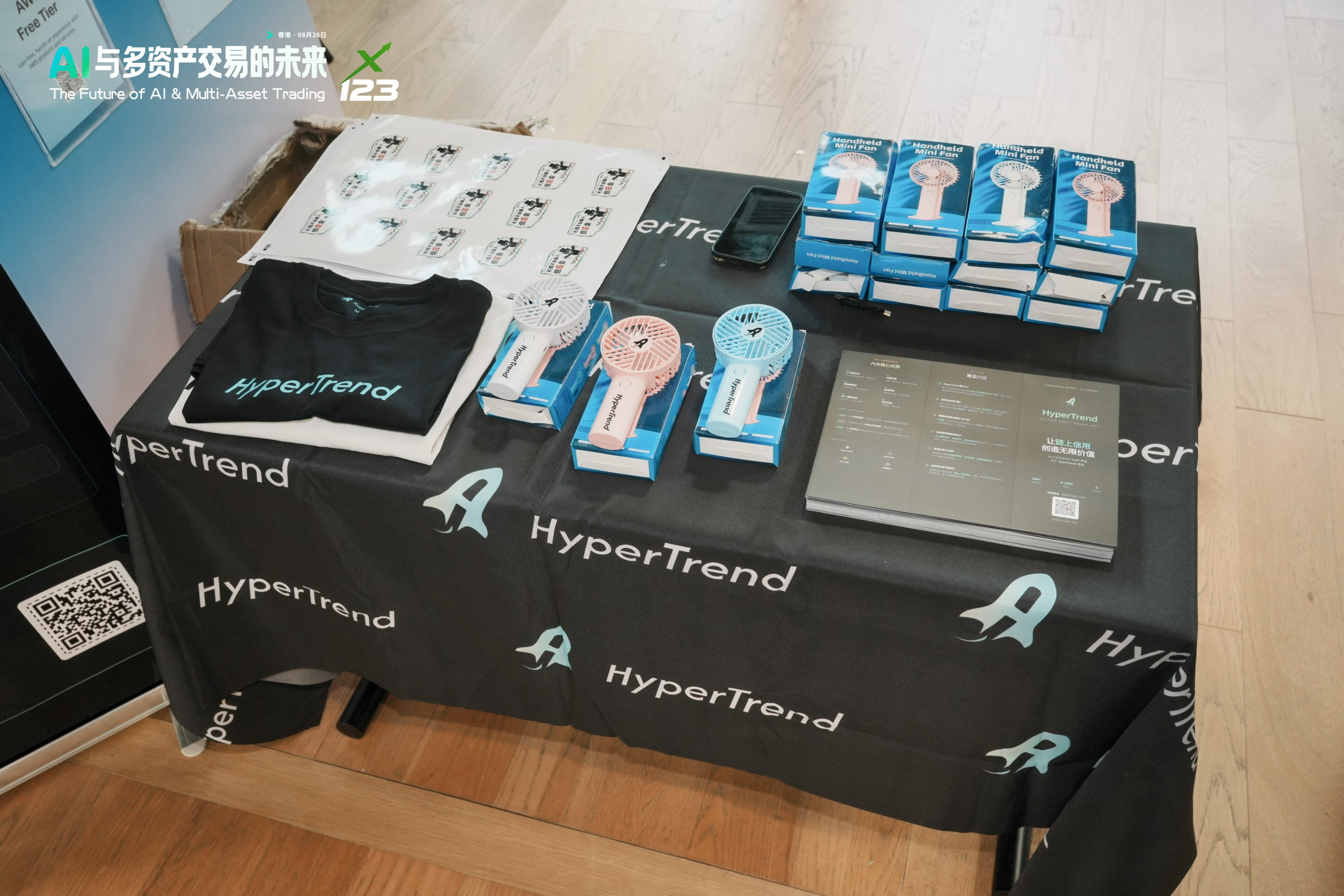
今天,HyperTrend 与行业伙伴相聚香港,共同探讨 AI 与多资产交易的新可能。
CPO Aurien 以「从策略时代到信用时代」为主题,分享了 AI Agent 如何理解交易流程,以及 HyperTrend 如何沉淀链上信用价值。
感谢每一位嘉宾、伙伴和到场朋友。
交流仍在继续。期待再次见面。🇭🇰
#BitcoinAsia


2
74
7天PnL约578万美元。
但可见已实现利润只有155万美元,当前浮盈约65.8万美元。
剩下的收益,更像是旧多头在反弹中被重新定价。
它等来了行情,也累计付出了约21.4万美元资金费。
目前账户还持有9个山寨币多头,以及一笔20 BTC空单。
这场翻身,最后能留下多少?
One wallet printed +$5.78M in weekly PnL.
But visible seven-day closed PnL was only +$1.55M.
Current unrealized PnL adds another +$658K.
Together, that is roughly $2.20M—far below the headline number.
The gap is consistent with older long exposure being repriced sharply higher during the rebound.
The execution history supports that reading.
Across 1,903 visible seven-day fills:
• 1,845 were closing longs
• 58 were opening a $BTC short
• Total notional reached $27.53M
• Closed PnL reached +$1.55M
The largest realized contributors were:
• ETH: +$648K
• AAVE: +$350K
• HYPE: +$125K
This was a week of realizing recovered long exposure, not repeatedly chasing the market with fresh longs.
Part of the profit was locked in.
The remaining book still carries nine altcoin longs, led by $ZEC.
But the rebound came with a holding cost.
The accumulated funding-cost display across the ten current positions shows a net drag of roughly $214K.
$AAVE is the clearest example:
• Current unrealized PnL: +$40.3K
• Accumulated funding cost: -$151.6K
The displayed funding cost is nearly 3.8x the position’s current open profit.
The price eventually moved in the wallet’s favor.
The path there was expensive.
Waiting for a leveraged position to recover consumes funding, locks collateral and forces the account to survive every move before the rebound arrives.
The current portfolio still holds substantial risk:
• Nine altcoin longs
• One -20 BTC short
• Total position value: $3.43M
• BTC short notional: $1.60M
• ZEC unrealized PnL: +$446K
The BTC short provides a large opposing leg.
But that does not make the book automatically neutral.
BTC and altcoins can move at different speeds, and ZEC still contributes roughly 68% of the wallet’s current unrealized profit.
So the $5.78M weekly PnL needs to be read in three layers:
• Profit already realized
• Profit still exposed to the market
• The cost of carrying the positions long enough to recover
The rebound repaired the long book.
Part of the recovery has been realized.
Funding records the price of the wait.
The exit will decide how much of the result remains.
Conviction—or an expensive way to wait?

3
120
期待 8 月 26 日在香港与大家见面。
AI Agents、多资产交易、RWA 与链上基础设施正在把交易带入新的阶段。期待和 123X 以及现场的 builders、traders 一起交流,看看下一波趋势会如何形成。
香港见。🇭🇰
See you in Hong Kong on August 26.
AI is reshaping how we trade, and the multi-asset era is accelerating.
At the 123X Hong Kong event, we’ll explore:
🤖 AI Agents & the future of trading
📈 Multi-asset strategies & execution
🌐 RWA & onchain stock liquidity
⚡ Trading terminals & onchain infrastructure
Open to traders, builders, projects, platforms, and investors across AI, Web3, and fintech.
See the trend. Understand the trend. Enter the trend.
luma.com/2y6q9jxp

2
154
过去180天,平仓累计亏损约29.3万美元,手续费还花了9.24万美元。
现在,一笔尚未平仓的ETH多单,浮盈超过62.1万美元。
一笔大单,直接改写了整个钱包的PnL画像。
但只要没有落袋,这场翻身就还没结束。
看看高PnL榜单背后,还有哪些数字被藏在了总收益里👇
Over the last 180 days, this wallet recorded a $293K realized loss.
It also paid another $92K in fees.
Now one open $ETH long is sitting on more than $621K in unrealized profit.
One position has covered the previous losses on paper—and completely changed how this wallet looks.
So which version is real?
The losing $ETH trader from the longer history?
Or the high-PnL wallet holding one exceptional position?
The answer depends on what happens next.
The current position is large:
• Long 2,100 ETH
• Entry: $2,090.6
• Notional: $5.01M
• Unrealized PnL: +$621K
• Account value: $962K
• 20x cross leverage
• Liquidation price: $1,968.0
The $ETH call has worked.
The position alone now carries more open profit than the wallet lost in realized PnL and fees across the visible 180-day history.
But the profit is still inside the trade.
Until the position is reduced or closed, the wallet’s new high-PnL profile remains tied to the same ETH exposure that created it.
The wallet has not added or reduced the position in the latest visible activity.
No new trade was needed to change the result.
ETH moved, and the same 2,100 ETH long kept rewriting the account.
The deeper history makes this more than a story about one good entry.
Across the visible 180-day history, the wallet generated roughly $257M in notional volume.
Almost all of it came from ETH.
This is an ETH specialist by behavior:
High turnover.
Frequent reversals.
Repeated long and short exposure.
One market, traded again and again.
But specialization did not automatically produce consistent profits.
The recent improvement is real.
Over the last 30 days, visible closed PnL reached about +$121K.
The directional breakdown explains where it came from:
• Closing longs generated about +$310K
• Closing shorts lost about -$189K
The same pattern appears over the latest seven-day window:
• Closing longs generated about +$175K
• Closing shorts lost about -$126K
Visible seven-day closed PnL reached approximately +$49.7K, with another $28.4K paid in fees.
The wallet has not been equally effective on both sides of ETH.
Its recent edge has come from the long side.
Shorting ETH repeatedly gave part of those gains back.
That matters because the current 2,100 ETH long is consistent with the side of the market where the wallet has recently performed best.
This was not simply one isolated lucky fill.
There is a visible pattern behind it.
But the pattern also has a boundary:
It has worked while the wallet stayed long into ETH strength.
We still do not know how well it holds in a different market regime.
This is where leaderboard PnL can mislead.
A single number compresses several different questions:
How much profit has been realized?
How much is still exposed?
Did the result come from many trades or one large position?
Was the wallet profitable in both directions?
How much did turnover and fees consume?
And how much risk is still required to keep the result intact?
For this wallet, the answers are clear enough.
The current profit is largely unrealized.
The result is concentrated in one ETH position.
Recent longs made money.
Recent shorts lost money.
And high turnover created substantial costs.
The current risk is concentrated too.
More than $5M of notional exposure sits in one asset and one direction under cross margin.
The position is about 5.2x the wallet’s account value.
Its liquidation price was roughly 17.5% below ETH at the latest snapshot.
The large open profit gives the wallet room.
It does not remove the need to manage the exit.
From here, three decisions will define the final result:
How much profit does the wallet lock in?
Does it return to shorting ETH—the weaker side of its recent record?
And if ETH reverses, how much of the $621K will it protect?
The entry has already worked.
The direction was right.
The open profit is real.
Now the trade moves into the phase that leaderboards cannot score in advance:
The exit.
How much of the $621K would you lock in here?

1
51