

Biological Performance Optimization Chief Bro Officer @reptidesco @realgorillamind Ambassador Father | Husband
Click here →
- Tweets 9,599
- Following 1,290
- Followers 6,339
- Likes 17,614




Pinned Tweet

Pretty insane SARMs (Shoulder and Arms) day
Putting the vacation carbs to work


30
3
225
16,473


James | 9th Life retweeted

I am putting my cerebrolysin in a picture frame. It’s beautiful

1
1
3
796


James | 9th Life retweeted

Sometimes navigating this space gets a little confusing.
That’s why we’ve created a map everyone can use, whether you’ve just heard about peptides for the first time, or you’re in the trenches on a compound that sounds like it could be a newly discovered planet.
That map is reptides.
(Plus a little bit of soft house music for the Eurobros)

2
2
3
325
Fuck Liq IV
It's time to hydrate with some I.V. Rush baby 🦍
3rd party lab tested
3,760 mg Total Electrolytes Per Serving
0 sugar
Sodium: 1,000mg
Chloride: 2,040mg
Potassium: 550mg
Magnesium: 100mg
Calcium: 50mg
Phosphorus: 20mg
Taurine: 1,000mg
Iodine: 50mcg
Vitamin K2 (MK-7): 50mcg
Anyone researching single, double, or triple agonists should be taking their hydration seriously

Paid partnership (ad)
8
1
40
3,723
Get an additional 10% off your order and grab some I.V. Rush today: gorillamind.com/9LIFE?q=iv-r…
You get a discount, I get a commission, win win.
2
292


James | 9th Life retweeted

Are you wasting money on peptide advice from a TikTok influencer?
Do you think ChatGTP or Grok advice is sketchy at best?
Does “your buddy” from the gym not sound like he has a clue about anything he’s telling you?
Would you like to be able to do your own research from a legitimate source?
Reptides 2.0 is officially live
$100 for lifetime access to the most unbiased peptide research platform on the internet
$90 when you use the link below and code YUKON10 at checkout
What you get:
110+ compounds graded S - F on published evidence
2,491 cited sources
Full compound dossiers & long form research briefs
By Outcome: start from a goal (fat loss, recovery, skin, sleep, etc.)
Ask Reptides: citation backed answers, not influencer guesses
Stack builder / Research Lab
Research journal + data tracker
Bloodwork upload and panel tracking
Recon calculator
Vial scanner + private vial cabinet
COA checker / COA locker
Photo vault, reminders, widgets
In-platform forums and community reports
This is not another peptide tracker
This is actual evidence, plus the tools to actually do your own research
Reptides is not associated with any vendors or take any of their money
So stop guessing on peptides & start doing your own research with Reptides. Use the link below to sing up and code YUKON10 to save $10

Paid partnership (ad)
5
2
34
15,309
James | 9th Life retweeted

We’ve gotten inquiries from media companies such as insider edition wanting testing on Reta done… We agree.
1
1
2
207
James | 9th Life retweeted

Bring a big cooler.
Meal prep is good to go on a plane.
1-2 big Tupperwares fit a days worth of slop. Eat it in portions.
Purple potatoes are amazing cold.
You are not a child. Not every meal has to be yummy in your tummy.
Stay at an Airbnb and order groceries.
How to hit your protein goal while traveling
Fast food (best menu items, imo):
(cal, protein, carb, fat)
- McDonald's Double Quarter Pounder: 740 / 48P / 43C / 42F
- Chipotle double chicken bowl: 860 / 83P / 73C / 28F
- Chick-fil-A 12ct grilled nuggets: 200 / 38P / 2C / 5F
- Panda Express grilled teriyaki chicken: 300 / 36P / 8C / 13F
Airport and gas station:
- Fairlife Core Power Elite: 230 / 42P / 8C / 4F
- Jack Link's jerky (2.85 oz bag): 230 / 28P / 17C / 4F
- Oikos Triple Zero: 90 / 15P / 7C / 0F
- Tuna pouches: 70 / 17P / 0C / 1F
Travel guidelines:
- Buy shakes, milk, and yogurt after airport security
- Carry-on Jerky, protein bars, and protein powder
- Double protein on any bowl or salad
5
2
12
2,893
James | 9th Life retweeted

PEPTIDE MADNESS:
The journey from suburban school girl to biohacker to black market peptide user to living on the streets.

It would not surprise me if in the next few months Eli Lilly pays off a large media company to film/produce a documentary on “underground” and “black market” peptides
Give it 6 months, my bet is we will see this very soon. The mainstream narrative on peptides is about to shift aggressively.
Made with AI
5
1
22
2,243
MOTS-c vs ATX-304 (My n=1)
To start, these compounds are similar, yet very different. Both are marketed as exercise mimetics and activate AMPK. MOTS-c is a peptide your mitochondria already make, while ATX-304 is a research chem heading into Phase 2. I have experimented with both, so I will dive into the science and my n=1 for both below.
(All of this information is for educational/research purposes only, not medical advice, just my n=1 experience)
Origins:
MOTS-c:
- Discovered in 2015 in Pinchas Cohen's lab at USC, so it's a relatively new discovery
- 16 amino acid peptide encoded in your mitochondrial DNA (12S rRNA region), not your nuclear DNA
ATX-304:
- Started life as O304 at Betagenon, a small Swedish biotech out of Umeå
- Cambrian Bio launched Amplifier Therapeutics in 2023, which bought Betagenon
- Oral small molecule, NOT a peptide
Mechanisms of action:
AMPK is the fuel gauge in your cells. When energy runs low (training, fasting) it flips on and tells the cell to pull in glucose, burn fat, and build more mitochondria. It also tells the cell to quit spending energy on building stuff, which comes up again later and is relevant to the mTOR discussion, as these two pathways seem to see-saw a bit.
MOTS-c MOA:
- Gets to AMPK the long way around
- Jams the folate cycle, AICAR builds up, AICAR flips AMPK
- Under metabolic stress it moves into the nucleus and turns on antioxidant response genes
ATX-304 MOA:
- Goes straight at AMPK
- Keeps it locked on by blocking the step that switches it back off (dephosphorylation at Thr172)
- Your cells don't have to run low on energy for it to work. ATP held steady at every concentration Cambrian tested
- The Umeå group later showed it also acts as a mitochondrial uncoupler, burning extra fuel to create demand
The research:
MOTS-c
Mice:
- ↑ Running capacity and physical performance (young, middle-aged, and old)
- ↓ Insulin resistance
- ↓ Diet-induced weight gain
- ↑ Healthspan, even when started late in life
Humans:
- ↑ Muscle MOTS-c ~12x after a workout
- ↑ Blood MOTS-c 1.6x during exercise
- ↓ Levels with age
- No trials of injected MOTS-c yet
ATX-304
Mice:
- ↑ Muscle glucose uptake
- ↓ Body weight and body fat, even while eating more
- ↓ Insulin resistance
- ↑ Fat used as fuel
- ↑ Heart function and exercise capacity in aged mice
Humans:
- ↓ Fasting glucose
- ↓ Insulin resistance
- ↑ Blood flow to small vessels
- ↓ Blood pressure
- ↓ Liver fat
- ↓ Visceral fat
- ↓ Triglycerides
- ↑ Adiponectin
- ↑ Resting metabolic rate (8%)
- Minimal weight loss at 400mg (Phase 2 plans higher doses)
My n=1 observations:
MOTS-c:
- Felt the energy within the first 2 days, and it stayed consistent the whole run
- Higher work capacity ceiling in the gym
- Low level focus boost
- Jump in caffeine sensitivity
- Fat loss felt faster stacked with GLP1
- A1c improved a ton (can't split this one from GLP1), insulin sensitivity is the best it's ever been
- Clean for the first 3-4 months, then a mast cell reaction basically overnight
- Coming off: not much, maybe a slight dip in energy
ATX-304:
- Slight energy boost at lower doses
- Effect builds the longer I run it (O304 has a long half-life, and it took 14 days to reach steady state in the 2018 trial)
- Body temp seemed to increase at higher doses, but I do not have measurable data on this
- I believe I have experienced some slight fatigue as the uncoupling effect kicks in, but the experiment is heavily confounded
- 188 to 181 lbs in the first week back from vacation, after bumping to 100mg+ stacked with SLU-PP-915 pre cardio (a chunk of that is likely post-vacation water)
- Eating more carbs than usual without gaining weight
- Increased bowel movements, up to 7x a day when I started
MOTS-c: 2mg daily AM, subQ (months, goal: energy and accelerated fat loss)
ATX-304: 50mg titrated up to 150mg, oral (ongoing, goal: speed up fat loss)
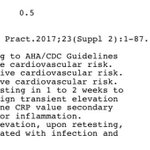
RHR, sleep scores, and labs stayed pretty consistent across both runs. Not much changed. hs-CRP stayed at 0.5 mg/L.
The mast cell reaction (MOTS-c):
First 3-4 months on MOTS-c were completely fine, no issues. Then basically overnight I couldn't tolerate it. Every pin left a welt that stuck around 7+ days.
The explanation that makes the most sense for this is that mast cells sit in your skin loaded with histamine. With repeat pinning, your immune system can quietly build IgE antibodies against the peptide. Those antibodies park on your mast cells and nothing happens for a while. Once you're sensitized, the next pin cross-links them and the mast cells dump histamine. So it can go from zero to welts overnight after months of nothing.
Classic hives fade within a day. Welts that last a week likely mean a slower, delayed-type immune reaction on top of the histamine.
Re-exposure after sensitization can escalate to full body hives, lip/tongue/throat swelling, trouble breathing, dizziness, anaphylaxis. I was lucky and never got past the welts, but I have heard anecdotal reports of people who have had much more extreme reactions.
FDA flagged immunogenicity from peptide aggregates and impurities as a risk for MOTS-c in its compounding review.
Confounders:
- GLP1 running in the background for both
- MOTS-c ran alongside SS-31 and a few other peptides
- My body started rejecting SS-31 too, which is what pushed me to switch to SLU-PP-915 + ATX-304
- ATX-304 runs alongside SLU-PP-915 (10mg), which pushes the same oxidative side through ERR
Things to be mindful of:
- Adverse reactions on MOTS-c are more common than people think
- ATX-304's human data is two small, short trials, and the newest isn't peer reviewed
- ATX-304's GI response is real, especially early and on an empty stomach
- FDA's own reviewers recommended against listing MOTS-c. The PCAC committee voted 7-5 in favor. Nothing changes until FDA does rulemaking on the compounding side
- Running both at once is in some ways double-dipping the same switch
My take:
I'm staying on ATX-304 until my growth phase starts.
AMPK and mTOR pull in opposite directions, so once the goal is building muscle, I want to promote an environment in my body that's as conducive to doing so as possible.
MOTS-c did its job for months. The energy was real and stacked well with a GLP1. If it wasn't for the adverse reactions, I would likely still be on it.

14
3
57
3,627
It would not surprise me if in the next few months Eli Lilly pays off a large media company to film/produce a documentary on “underground” and “black market” peptides
Give it 6 months, my bet is we will see this very soon. The mainstream narrative on peptides is about to shift aggressively.
20
3
111
6,923
James | 9th Life retweeted
According to KTIV, Apex Peptides is connected to the business owners behind Apex Waste Management, which federal agents raided Wednesday, September 23, in North Sioux City, South Dakota.
The U.S. Postal Inspection Service is leading the investigation, with the FBI and IRS Criminal Investigation involved.
KTIV's review of business filings links Apex Peptides, Apex Waste Management and Apex Research to Riley Isaacson and Jared Miller. Agents also searched a home owned by Isaacson's twin brother.
The peptide connection is worth watching, but the reporting does not establish what prompted the searches or whether peptide sales are the focus of the investigation.
4
3
20
4,783
How to hit your protein goal while traveling
Fast food (best menu items, imo):
(cal, protein, carb, fat)
- McDonald's Double Quarter Pounder: 740 / 48P / 43C / 42F
- Chipotle double chicken bowl: 860 / 83P / 73C / 28F
- Chick-fil-A 12ct grilled nuggets: 200 / 38P / 2C / 5F
- Panda Express grilled teriyaki chicken: 300 / 36P / 8C / 13F
Airport and gas station:
- Fairlife Core Power Elite: 230 / 42P / 8C / 4F
- Jack Link's jerky (2.85 oz bag): 230 / 28P / 17C / 4F
- Oikos Triple Zero: 90 / 15P / 7C / 0F
- Tuna pouches: 70 / 17P / 0C / 1F
Travel guidelines:
- Buy shakes, milk, and yogurt after airport security
- Carry-on Jerky, protein bars, and protein powder
- Double protein on any bowl or salad
4
1
32
5,825
Being consistently inconsistent is the ultimate gains killer.
Consistency is key. It's probably the most accepted idea in training and necessary for a solid foundation for progress. What I don't see talked about enough is how many people are consistently inconsistent. Me included, in the past.
This is a very common issue for single guys in their early to mid-twenties. The weekly cycle is almost a template:
- Mon-Thu: locked in.
- Fri-Sun: off the rails.
And in reality, this is how a lot of guys actually live because there is real societal pressure baked into it.
- Companies pushing happy hour.
- A culture of working for the weekend.
- Nightlife.
- Drinking is the default social plan.
But what ends up happening is you don't get 7 days of progress.
You get +4 steps forward and -3 steps back.
Mon +1, Tue +1, Wed +1, Thu +1
Fri -1, Sat -1, Sun -1
Net for the week: +1
Vs. a locked-in week: +7
Do that for a year:
+7 per week x 52 = +364
+1 per week x 52 = +52
7x gap.
In this simple example, "only drinking on the weekend" wipes out about 86% of the progress you could have banked.
And 3 days backwards is already about 43% of your week. Add the extended hangover that persists until Monday and you're flirting with half the week being compromised.
We all know that "I'll just have a couple drinks" is also usually a lie.
Recreational weekend drinking for a lot of guys looks more like 10+ drinks in a night, a McDonald's DoorDash order at 2:30am, shit sleep until noon the next day, and then calling it "balance."
- Bar calories + late-night food. Macros blown.
- Sodium bomb. Wake up looking 6 lbs heavier.
- Dehydration. Headache, vomitting, fake-fat look.
- Sleep architecture gutted. Less deep sleep, less REM, more wakeups.
- Next-morning testosterone can dip. Recovery takes a hit.
- HRV in the toilet. Resting heart rate up.
- Hangover NEAT. Couch locked watching football vs. getting 10k+ steps.
- Saturday training is skipped or heavily impaired.
- Sunday becomes a write-off. Monday you're still lingering in a fog.
- Your liver is prioritizing clearing poison from your body.
- Gut irritation, cravings, brain fog, worse food decisions.
One night out Friday doesn't just affect Friday. It bleeds into Saturday. Go out again Saturday and now you've hit Saturday and Sunday too. Push it hard enough, and Monday gets dragged into the mix.
Your body doesn't magically reset because the calendar says the weekend is over. And this gets noticeably less forgiving as you get older lol.
This is a dangerous trap to fall into.
You don't need 365 perfect days a year to make great progress. You can have a life, enjoy a couple days off the protocol.
But there is a HUGE difference between occasionally breaking the routine and building a routine around breaking it every week.
"Boring" weekends are one of the best force multipliers for progress.
Don't let FOMO kill your gains.


Made with AI
4
13
925


Kinda pisses me off that Victor Conte gets a whole Netflix documentary on him and Patrick Arnold doesn't have one
One of the most important people in the history of the supplement/fitness world, once you look past the BALCO headlines you start to understand how genius and ahead of his time he was
Deep dive coming soon
4
8
993