

Love my homeland.. A concerned citizen who wants to see Pakistan as a moderate, tolerant & pluralistic Republic. Retweets may/maynot b endorsements
Lyallpur (Fsd), Pakistan
- Tweets 49,659
- Following 790
- Followers 26,235
- Likes 17,176


Pinned Tweet

Shared my professional journey, mission of our company Interloop and my views about, businesses, amazing youth of our country & Pakistan in general - 4th edition of Leaders at LUMS.
Visit the link for complete session: youtu.be/tOwN885CITk
@Leadersatlums @LifeAtLUMS


129
84
742
Musadaq Zulqarnain retweeted

This #WorldCottonDay, we’re looking at cotton from the farm onwards.
Interloop’s Regen and Organic Kapas focus on how it is grown, while Looptrace links 43,000 farmers to the supply chain for greater visibility from the source.
#InterloopKapas #Traceability

4
6
296
Musadaq Zulqarnain retweeted
“A country does not become capital-rich by accumulating valuable land. Instead, it becomes capital-rich when yesterday’s savings can keep financing tomorrow’s assets, and continue generating more output and income. This is effectively the difference between saving in plots and building an economy.” An interesting piece by Ammar Khan @rogueonomist
WHY PAKISTAN SAVES IN PLOTS dawn.com/news/2033860
1
16
41
2,149
Musadaq Zulqarnain retweeted

What is the economic logic of selling PKR 1683 per MMBtu Gas for PKR 5000+ to the Industrial sector.
@MusadaqZ
@mukhtarkhurram


5
12
552
Musadaq Zulqarnain retweeted
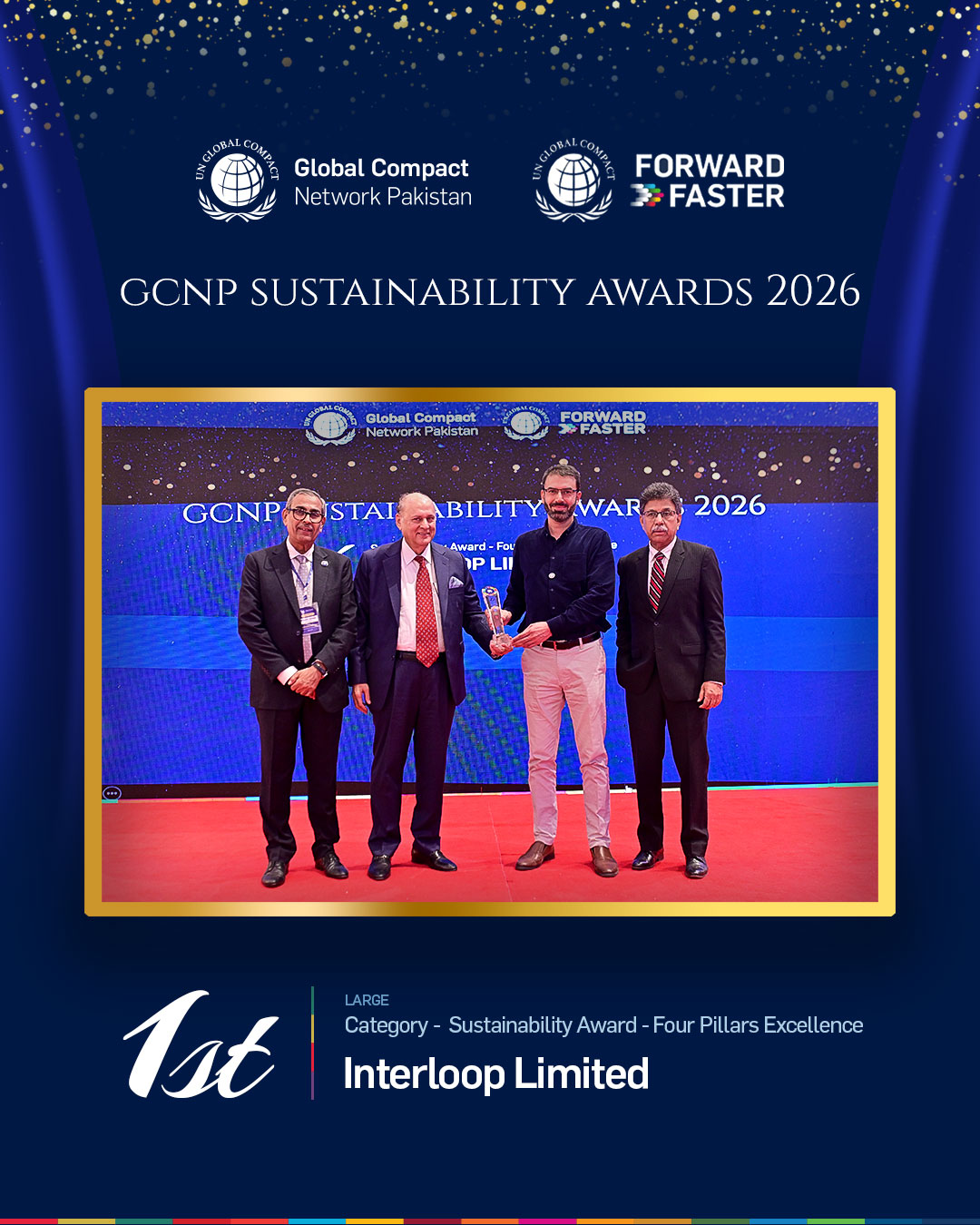
We have won the Sustainability Award - Four Pillar Excellence from @GCNP_Pakistan.
Recognising how Human Rights, Labour, Environment and Anti-Corruption are put into practice across our operations.
@globalcompact


1
2
5
322
Musadaq Zulqarnain retweeted

Congratulations to Interloop Limited on winning 1𝐬𝐭 𝐏𝐥𝐚𝐜𝐞 in the Large Category of the Sustainability Award: Four Pillars Excellence at the 𝐆𝐂𝐍𝐏 𝐒𝐮𝐬𝐭𝐚𝐢𝐧𝐚𝐛𝐢𝐥𝐢𝐭𝐲 𝐀𝐰𝐚𝐫𝐝𝐬 2026! 🏆
1
4
116
An excellent piece by Dr @nadeemhaque
Bankers, accountants, and some economists still regard exchange rate as a policy variable
Each (Ruppee correction) episode gets diagnosed as a currency problem. It is not. It is a reform problem, and the rupee is only the messenger. The question was never whether another “devaluation” is coming. It is whether we reform before markets force the next adjustment on us anyway.
Devaluation Is a Colonial Word. Modern Economics Moved On. Pakistan Did Not.
nadeemulhaque.substack.com/p…
4
8
33
3,348
Musadaq Zulqarnain retweeted
Pakistan’s Brilliant Record in Hockey before we gave up on Hockey
World Cup Winner — 4 times
Pakistan remains the most successful nation in men’s World Cup history, with four titles: 1971, 1978, 1982, 1994 & runner-up in 1975 & 1990
Olympic Games — 8 medals
Gold 3
Silver 3
Bronze 2
Asian Games — 14 medals including 8 Gold
Asia Cup — 3 titles & 3 runners up
1
6
22
1,495
Musadaq Zulqarnain retweeted
More than 1,000 girls have taken part in sport through @InterloopLtd partnership with the @KAFPakistan.
We’re extending that partnership so more girls can play, compete and keep playing.
#ShePlaysSheWins #GirlsInSport

More than 1,000 girls have taken part in sport through our partnership with the @KAFPakistan.
We’re extending that partnership so more girls can play, compete and keep playing.
#ShePlaysSheWins #GirlsInSport


2
2
13
942
Musadaq Zulqarnain retweeted
More than 1,000 girls have taken part in sport through our partnership with the @KAFPakistan.
We’re extending that partnership so more girls can play, compete and keep playing.
#ShePlaysSheWins #GirlsInSport
2
1
842
Musadaq Zulqarnain retweeted
Honourable and Respected Prime Minister Muhammad Shehbaz Sharif Sahib, @PakPMO,
1. With utmost respect, there should be one industrial gas sale price, the section 8 price set at OGRA’s prescribed price, to protect exports, investment and employment.
2. SNGPL’s FY2025-26 FRR petition puts its average prescribed price at Rs 1,683/MMBtu (about US$6), before OGRA’s scrutiny. That already includes about Rs 120.5 billion of RLNG diverted mainly to winter household demand, about 16 cargoes.
3. Yet the effective captive price was Rs 5,523/MMBtu in May and Rs 5,247/MMBtu in June, 3.3 and 3.1 times that prescribed price. (Slides attached as a ready reference.)
4. The levy is punitive by design. Under section 4 of the Off the Grid (Captive Power Plants) Levy Act, 2025, it is benchmarked to the NEPRA B3 industrial tariff, and the statutory margin rises from 5% to 10%, then 15%, and now 20%.
5. That electricity B3 tariff comes from a grid in a utility death spiral. Solar has cut daytime sales, so fixed costs fall on fewer units - tariff keeps rising. It is already loaded with high fixed costs, losses and cross-subsidies, and is regionally uncompetitive before the margin is applied.
6. The Captive levy fails on its own arithmetics. Corrected inputs to Levy Act’s formula produce no positive differential from February 2025 to February 2026 i.e. the levy should be zero. The notified rate is an artificial recovery. (See attached Infographics)
7. The grid’s reliability indices are high: SAIFI, frequency of failure, and SAIDI, the duration, are both high. Even when supply is available, industry is exposed to voltage dips, swells and harmonics.
8. Sir, process and captive take gas from the same network and cost the same to serve. Two industrial gas tariff cannot be justified.
9. Industry’s captive gas engine, in single cycle, follows the load and picks up the evening ramp in minutes, so a large, expensive BESS is not required. Gas is the transition fuel that lets industry integrate renewables and meet climate tests such as CBAM.
10. In cogeneration, up to 70-80% energy utilization, and line losses are negligible. Grid electricity carries 20–25% AT&C losses and still needs a separate boiler. For details, please see the note of 6 September 2026:
x.com/AsimRiaz1978/status/20…
11. The captive levy is not set by OGRA’s cost of service, or by gas-market fundamentals for TPA gas. It is set off the power-sector tariff, and the statutory margin is now 20%.
12. Raising the gas price starts a volume-price spiral on the gas network, as we witness in the FRRs of both SNGPL and SSGC. Lost sales push the gas price up, and the higher price drives away more sales. Significant captive load did not move to the grid. It shut down or moved away from both the gas and power grid.
13. The load that did move to the grid was forced across by a punitive industrial gas tariff. It was not new demand. A policy meant to shift demand from gas to the electric grid has extinguished demand rather than shifted it.
Prayers:
Two decisions are respectfully sought.
1. One industrial sale price under section 8 of the OGRA Ordinance, 2002, for process and captive use alike, at about Rs 1,700/MMBtu. Sir, this is OGRA’s prescribed price. It already includes the RLNG diversion. It is not a subsidy to industry.
2. Withdrawal of the levy under section 3 of the Off the Grid (Captive Power Plants) Levy Act, 2025. It is not a cost of gas. Under section 5, the proceeds go to reducing power tariffs, so the levy places a power-sector cost on industrial gas.
Industry should pay for the energy it consumes, not for the inefficiencies of the Gas and Power Sector.
Respectfully submitted for your kind consideration. A time-bound decision is sought.
@AliPervaiz450
@Financegovpk
@betterpakistan
@sifcpakistan
@jam_kamal
@Gohar_Ejaz1
@BilalAKayani
@Rashidlangrial
@81ShahbazRana
@SkmMustafa
@KhaleeqKiani
@MusadaqZ
@shahzadsaleem
@mukhtarkhurram
@nadeemhaque
@AliKhizar
@Asad_Ashah


Honourable Prime Minister of Pakistan @PakPMO,
Pakistan’s rapid energy transition has moved ahead of its policy framework.
Industrial baseload in (especially in Gas Sector) is being forced to carry the cost of seasonal cooling and heating peaks. That is not reform; it is economic amputation.
It is like sacrificing a healthy limb to reduce body fat. Sir, the real fat lies in underutilized capacity payments, planning and governance failures, the Sui return-on-asset business model, cross-subsidies, bureaucratic inefficiencies, high UFG, RLNG diversion and actualisation distortions, circular debt, weak cost causation and distorted price signals.
Reform should remove these structural inefficiencies, not transfer their cost to productive industry.
Solar has become Pakistan’s single largest source of electricity, contributing around 35% of total generation. Cumulative solar PV module imports have reached nearly 60 GW, of which an estimated 50 GW is installed, generating around 54 TWh annually. @jackprandelli, the original map required correction, which I have updated.
Solarisation has reduced daytime grid demand, but it has not removed fixed capacity costs or the evening peak. With nearly 73% of power-system costs fixed, these costs are now being recovered from fewer grid units, increasing the burden on remaining consumers.
The deeper issue is cost causation.
LNG cargoes imported to meet evening and midnight residential cooling load should not be socialised into industrial tariffs without dispatch data, cargo-wise reconciliation and sector-wise cost-causation review. Under Pakistan’s pooled power-generation system, the cost of hydropower, nuclear, coal, indigenous gas, RLNG and other sources is blended into the Energy Purchase Price and fuel-cost adjustments. This hides who created the cost and who ultimately pays for it.
Industry then carries a double burden.
On the gas side, industrial captive consumers face high captive-gas tariffs with over PKR 1,800/MMBtu embedded cross-subsidy, blended recovery of indigenous gas and RLNG costs, and the punitive Off-Grid Captive Levy. The effective delivered gas price can change with the allocation mix between indigenous gas and RLNG, weakening tariff transparency and OGRA tariff finality.
On the power side, if industry is pushed onto the grid, it also pays capacity charges and pooled imported-fuel costs, including RLNG used for evening and late-night cooling demand that industry did not create.
In effect, productive industry is being made to absorb stranded costs in both the gas and power sectors.
Pakistan needs competitive gas markets, removal of cross-subsidies from industrial gas tariffs, and a grid that wins industrial demand through affordability and reliability, not coercion.
@akleghari
@AliPervaiz450
@Financegovpk
@MIshaqDar50
@betterpakistan
@sifcpakistan
@jam_kamal
@Gohar_Ejaz1
@BilalAKayani
@Rashidlangrial
@81ShahbazRana
@SkmMustafa
@KhaleeqKiani
@APTMAofficial
@AptmaUncut
@FPCCIOfficial
@MusadaqZ
@shahzadsaleem
@mukhtarkhurram
@nadeemhaque
@AliKhizar
@Asad_Ashah
@nadeemhaque
@rehanjawed


13
18
10,249
Musadaq Zulqarnain retweeted
3.5 MW of new solar takes Interloop’s total capacity to 21 MW.
Over the past year, these installations helped avoid 7,450 tonnes of CO₂ emissions.
#RenewableEnergy

1
10
431
Musadaq Zulqarnain retweeted
With 780 differently-abled colleagues across our teams, being able to connect matters every day.
This #InternationalSignLanguagesDay, supervisors joined @connect_hear sign language sessions to make everyday communication easier.
#Inclusion #Interloop

2
7
359
Musadaq Zulqarnain retweeted
Interloop has produced Alzheimer Socks since 2015, helping raise €4M+ for research at @amsterdamumc.
This #WorldAlzheimersDay, that support continues to help understand Alzheimer's better and detect it earlier.
#AlzheimerSocks #Interloop

2
8
397
Spot on

If your political views are forcing you to make an issue out of Jemima Khan’s second marriage, for whatever reason, that’s just messed up.
Here’s a woman at 52 giving herself a second chance at love and happiness. She looks happy, in love, and beautiful. And it’s not easy the second time around.
You carry the fear of failure, heartbreak, and loss. You know there’s no guarantee, no safety net. You know people are watching, and some are quietly waiting for you to fail again so they can say, “See? It was always her.”
Learn to be happy for other people. Life has a way of bringing that kindness back to you.
1
17
3,124
We must demand performance evaluation of our public sector. However at the same time we have to do whatever we can for our country & its people
شکوۂ ظلمت شب سے تو کہیں بہتر تھا
اپنے حصے کی کوئی شمع جلاتے جاتے

Sir, 300,000 students study at #TCF, but 7M children are under education sceretary Punjab.
It’s not an either or question, but if you want to have real impact and transformation of education, will you work on a system that has 7M kids or .3M.
Transformation of #Pakistan is transformation of the public sector, no NGO financing replaces the need for us demanding performance evaluation of our public sector.
3
12
99
3,963
By the grace of Allah @InterloopLtd just opened 40th @TCFPak school - providing thousands of Pakistani children access to quality education & transforming lives
Our 40th school with @TCFPak just opened.
5,500+ students now learn across the network: 23 primary, 14 secondary, 3 higher secondary schools.
#InternationalLiteracyDay #Education #CSR

51
91
666
34,097
A thoughtful initiative by @KashfFoundation. Women’s economic empowerment becomes more sustainable with access to affordable healthcare. Protecting health is indeed protecting livelihoods and the economic gains women work so hard to build. Well done!
@RoshanehZafar

A woman can build a business with a loan—but one health shock can wipe out years of economic progress.
Healthcare is therefore not separate from women’s economic empowerment; it is fundamental to it. Kashf takes a tiered, affordable approach: maternal & reproductive health education for women, men & mothers-in-law; free telehealth with referral pathways; and affordable family health insurance, in partnership with Jubilee Life, with access to 350+ hospitals across Pakistan.
The evidence is striking: 70% of telehealth patients are women & children, while women account for 70%+ of health insurance claims. This suggests that when healthcare is affordable and does not compete with scarce family resources, women are more likely to access it.
Economic empowerment must not only help women build—it must protect the gains they make. @KashfFoundation @JubileeLife
#WomensEconomicEmpowerment #FinancialInclusion #Healthcare #GenderEquality #Kashf #Pakistan


14
1,271