

cofounder at Trajectory (@trajectorylabs) | prev @stanford, @apple
SF
- Tweets 293
- Following 890
- Followers 2,137
- Likes 7,261




Pinned Tweet

I first met @rronak_ and @MichaelElabd when we were all freshman at Stanford. Today, 8 years later, we’re announcing that we’ve started Trajectory, a research lab and product company building the platform for continual learning.
I believe that Continual Learning demands a fundamentally new interface for how we build products. That's a research challenge and a product challenge in equal measure, so we've assembled a team to meet both: researchers from DeepMind, OpenAI, Apple, Meta Superintelligence, Amazon AGI, and Scale AI, and product talent from Stripe and Figma.
We’re also partnering with the best AI native companies @Clay, @Harvey, @Decagon, @Mercor, and @RogoAI to power their agentic experiences, and push the boundaries of what agents look like in the real world. Please reach out if you’re excited to build with us!

Today, @MichaelElabd, @QuantumArjun, and I are excited to announce Trajectory.
We are a research lab and product company building the platform for Continual Learning.
Our platform unlocks the signal already sitting in product usage, so companies can continuously post-train large-scale agentic models that outperform the frontier. @trajectorylabs
We’ve raised $15M from @Conviction, @BessemerVP, @radicalvcfund, @jeffdean, @drfeifei and more.
We’re partnering with some of the best AI-native companies: @ClayRunHQ @Harvey, @DecagonAI, @mercor, @RogoAI to power their agentic systems, some of which we are already in production with.
We’ve brought together a world class research team from DeepMind, OpenAI, Apple, Meta Superintelligence, Amazon AGI, Scale AI, and an elite product team from Stripe and Figma.
AI will never again start on day one. Every correction, every retry, every edit will make products smarter. This is Continual Learning.

26
3
97
27,464
I got nerd sniped by all the Opus 5.5 videos yesterday and this is the result 😅

There’s a good chance your open source model is costing more than the frontier.
Cheap tokens ≠ cheap tasks.
Here, we introduce Intelligence Density, and Density Aware Training, our post-training technique to achieve less wasted compute, better learning, all with no knobs to tune.
Enabled by default in every Trajectory model.

4
42
3,814
We’re so back?

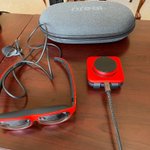
$META just unveiled $1,299 VR glasses weighing only 100g by moving the battery and compute into an external pack.
Bigger shift is that Muse becomes the interface because Zuck says you can “just talk to it” while any flat surface can become a keyboard.

16
1,168
Trajectory is at @HackTheNorth, come say hi!!
We’ve got some cool merch in store for whoever can come up with the wackiest benchmark ideas

6
3
64
3,134
Arjun Karanam retweeted

At Trajectory, we're constantly implementing and building upon the latest research ideas on the path to continual learning.
We wish we had the time to share all of them, but here's a quick glimpse on our explorations with PiSSA, and choosing the right trainable geometries for agentic RL.

12
15
213
67,134
the startup experience of getting to will anything into existence never gets old 😍
At Trajectory, we care about storytelling. The storytelling about continual learning, the storytelling about the research breakthroughs it’ll take to get there, and the storytelling about the product that we need to will into existence.
Brand is part of how we tell it. Here’s a behind-the-scenes look at the work we did with @metalab to craft ours

9
1
132
15,969
Arjun Karanam retweeted

As a kid, I always wished Pokémon battles in the games could play out like they do in the anime.
So I built a real-time Pokémon battle experience with @fal H3 Max.
choose a move, the game calculates the outcome, and AI generates the animation on the fly. Paralysis, fainting, and Pokémon is hurt are reflected on screen.
Project:github.com/xflare-bot/pokemo…

374
476
6,392
1,775,223
😍 it’s so cool to see the future unfold in realtime

Today, we're sharing new research on Solaris, our first Interface World Model.
Solaris is a new kind of operating system that generates interactive interfaces frame by frame, in real time, with no code. We find that Solaris outperforms frontier LLMs when generating new interfaces, across structural similarity and information retention. Read more and request early access at the link below.

1
14
1,251
Arjun Karanam retweeted

Anyone can simulate the future. But the simulation only matters if it’s trustworthy.
At Simile, we train two types of models: simulation models and confidence models. Our first research blog post explores the origin of our proprietary confidence model, which predicts the accuracy of our population simulations and, in turn, makes them actionable.
simile.com/blog/confidence?v…
21
49
501
173,969


I think the best companies are built around ambitions rather than fixed products - ours is to close the experience gap, and build the tools that enable true continual learning.
But what can every company do today to get a little closer to that reality?
At Sequoia’s Own Your Own Intelligence event, we shared our four wishes for every company building toward this future

Intelligence and Experience are orthogonal vectors
Terence Tao is perhaps the world’s smartest person, but drop him into an accounting firm or onto a construction site and on day one he’s not going to be very productive
@trajectorylabs calls this The Experience Gap, and they have a way to close it
@QuantumArjun explained how at our Sovereign AI event:
00:00 Introduction
00:12 Building the platform for continual learning
01:33 The experience gap: models have IQ but no tenure
02:52 Traceability → model spec → better models and harnesses
05:27 Four wishes for the agent ecosystem
06:34 Wish 1: Trace the whole tree — and capture the corrections
08:03 Wish 2: Evals from real traffic, graded in the real harness
09:26 Wish 3: Let the agents cook, and make tool responses informative
10:34 Wish 4: Get comfortable on open weights, experiment with routers
11:51 Why owning your intelligence shouldn't be consulted away
13:15 Demo: import a benchmark, train a model, deploy it
14:28 Q&A: What's the trainable object — weights, harness, or context?
16:08 Q&A: Continual learning without training on customer data
17:13 Q&A: Episodic memory and the hierarchy of feedback
19:37 Q&A: Where continual learning matters most

6
3
42
9,265
Loved giving this talk! The labs are giving us Terrence Tao in your pocket (which is great!), but Terrence Tao's first day at an accounting firm might not go great...
But Terrence Tao w/ 30 years of experience at an accounting firm? That's another story

@KJHMiao and I held a post-training fireside chat with the @trajectorylabs team to discuss their vision for continual learning.
I particularly liked the distinction between "experience" and "IQ". Another strong reason why so many firms these days are emphasizing the importance of AI that you own!
00:00 Intro
00:34 Where the continual learning vision came from
07:03 Why a platform instead of forward-deployed engineers
14:23 Where the name Trajectory came from
19:53 Labs optimize for IQ, we optimize for experience
25:14 Continual learning without touching the model
32:06 Hot take: the most underrated part of post-training
36:45 AI natives vs tech natives vs enterprises
42:58 The magic moment: wake up and it's smarter
45:09 Three possible worlds

1
37
7,590
Super excited to try this, genuinely believe general-purpose personal agents (ok quite a mouthful), are the next AI form factor
In the long run, I think chat will eventually feel a bit like the browser did in the early web: the interface arrived first, but eventually became just the window for much cooler stuff behind the scenes
wouldn’t be surprised if we saw similar products from other labs quite soon

You can work with Bots like you would a teammate. Give them a task, shut your computer, and reach them from anywhere.

1
1
6
1,205
Absolutely fire, lowkey might just send this our potential customers' way before some of our own materials
Want world class research capabilities, but don’t have the resources of a big lab?
At our recent Sovereign AI event, @gabepereyra shared @harvey ’s “moneyball” approach.
Here’s the playbook:
00:00 Introduction
00:37 Building a research lab on a budget
02:28 Legal Agent Bench, contracting, and the diligence dataset
03:57 Domain experts guiding synthetic data generation
05:23 Why Harvey open sourced its datasets
06:55 Working with the neo labs – and why more than one
08:20 Post-training in-house: building "Associate 1"
09:44 The model serving matrix: 60 countries, fallbacks, SLAs
11:05 Deciding what stays in production
12:29 Simple open source switches and model routing
13:55 Moneyball: "If we win on this budget, we change the game"
14:53 Q&A: Training with sensitive data
17:16 Q&A: Competing for research talent
18:46 Q&A: Designing rubrics that actually challenge frontier models
20:19 Q&A: Where the pipeline breaks — data, research, or infra
22:59 Q&A: The tension in open sourcing a benchmark
25:02 Q&A: Biggest remaining open problems
27:10 Q&A: Competing with horizontal products

1
1
61
20,214
Arjun Karanam retweeted
Continual learning is a bet that the retraining loop will get cheaper over time. With larger models, you can maybe run this loop once every few weeks. But with smaller models, you can run it nightly, per customer. And it keeps recursing: a model per company, then a model per client that company serves, then per matter. We’re getting closer to intelligence cheap enough to meter.
On the path to this, we received early access to, and post-trained @nvidia's Nemotron 3.5 Lightning on @harvey LAB. One click on the Trajectory platform, no new engineering. 0% to 8.3%, above Opus 4.6 at 6.6%.

7
33
561
141,473


Arjun Karanam retweeted
We're excited to sign the call for Open Weights.
We believe the best way to create something enduring is to start with the future you believe is coming, then work backwards.
We think the future is one where every product has its own intelligence, shaped by its users, its workflows, and everything it learns after it’s deployed.
We’re building the experience layer for that future, and the products to bring that control into everyone's hands.
However, in almost every path we can imagine to that future, open weights play a major role. Not because every model will be open, but because they give builders ownership over one of the most important layers of the stack. The more capable open models become, the more ambitious the products built on top of them can be. We’re excited to do our part to help make that future happen.

6
5
72
17,851
I’m so so so pumped for this future. The policy questions are fascinating, but the bigger story is what an open-weight world makes possible: products we can barely imagine today.
A mental parallel for me: for fifteen years, Apple’s laptops were limited by chips built by someone else. Then Apple made its own. The M1 gave them the freedom to build a machine no other laptop company could, and the industry is still catching up.
I think AI weights will become that same layer. With a closed API, the most important part of your product still belongs to someone else. With open weights, you can shape the model around the product, keep improving it from real use, and build products...magical products, that simply weren’t possible before

For my first post, I’m sharing a letter @NVIDIA signed on why open models matter.
AI will transform every industry, power every company, and be built by every country.
Open models strengthen safety and cybersecurity, accelerate innovation and diffusion, and enable sovereignty.
The world needs both frontier closed models and frontier open models.
images.nvidia.com/pdf/Open-W…


2
1
22
2,185
Arjun Karanam retweeted

we gave @colossusmag a look at what @mvernal @pranavreddy @igarciacamargo me & team @conviction are trying to do — find and arm the most extraordinary founders at a moment when technology molds a malleable future
feels like a mission! but yes, acting with belief is also a wager

In 2018, Sarah Guo became the youngest general partner in Greylock's 60-year history. She was 28. Four years later, she quit to launch Conviction, a firm staked entirely on AI.
Before ChatGPT shipped, she seeded Baseten and Harvey; each is now worth over $11 billion. In Conviction's first year, she wrote early checks into Sierra, Cognition, and Mistral; those three companies are now worth, together, $54 billion.
Andrej Karpathy worked out of Conviction's office until Anthropic hired him in May. Guo has been close to Jensen Huang for over a decade. Her first two calls after starting the firm were to Sam Altman and Nat Friedman.
And yet the investor closest to the AI frontier is betting against its biggest companies.
The two big frontier labs, worth close to a trillion dollars apiece, no longer just want to build the models. They also want to build every product and company on top of them, leaving nothing for anyone else.
The market is paying as though they might succeed. Of the $300 billion in venture capital deployed in the first quarter of 2026, the biggest quarter in the history of the trade, 65% went to only four companies: Anthropic, OpenAI, xAI, and Waymo.
Guo is betting the labs can't build everything, and she spends her days making sure of it. She won Harvey its first client. She flew across the country to take a single Baseten candidate to a four-hour lunch. On one wedding anniversary, she spent the whole weekend on back-to-back calls, keeping two founders on the line so they couldn't speak to rival firms. Twice a year, she flies the world's brightest young founders to San Francisco and inducts them into the fight.
In the months @domcooke spent reporting this piece, @saranormous had her fourth child, walked the Met Gala in 45 pounds of chainmail, and still answered her founders' texts within minutes.
Guo's parents arrived from China in 1987 with $50, built a company, and took it public at $1.2 billion. Then it went bankrupt. Guo grew up inside that startup. She built its first website, did her homework in a cubicle, and slept over for bug bashes. She loved it.
If two labs build everything, no one gets to do that again.
Welcome to Sarah's Wager. Read it below.

51
32
623
176,695
An analogy we love using is the intelligence vs experience axes of LLM ability. The labs are great at pushing models further and further along the axis of raw IQ - there’s no need to state how remarkable model improvements have been over the past few years,
An orthogonal axis though is experience - a model that actually knows the ins and outs of your company, and learns from experience. That’s what’s really valued in the economy. Terrence Tao is great, but Terrence Tao 30 years on learning my accounting flows? Sign me up.
Maybe a cop out response to Dwarkesh’s video, but I think the solution to get here is all of the above: scaling context windows so that you can get to longer sessions with an agent, dreaming and simulating environments to overcome sample inefficiency during training, and leveraging advancements on top of OPSD to actually credit sign properly. Combine all that together with an interface where anyone can teach their models like they do a human, and you get a peak into what the future of continual learning looks like

What does the next training paradigm look like?
0:00:00 – The big research bet the labs are making
0:02:12 – Grindability is just as important as verifiability
0:06:10 – Will RLVR alone generalize?
0:08:41 – Getting the learning back to the weights
0:15:22 – Dreaming
0:17:23 – What 2027 looks like
Also on YouTube, pod feed, and Substack.

2
23
2,452