

A few of my thoughts on hard-to-understand issues. The only reason I write is to help awaken everyone from their slumber.
Sydney, Australia
- Tweets 33,101
- Following 2,523
- Followers 34,154
- Likes 9,630


Ellison might be do yet to do the ultimate financial lifetime boomerang. Pledges his entire $55b stock portfolio as collateral at 82 years old .

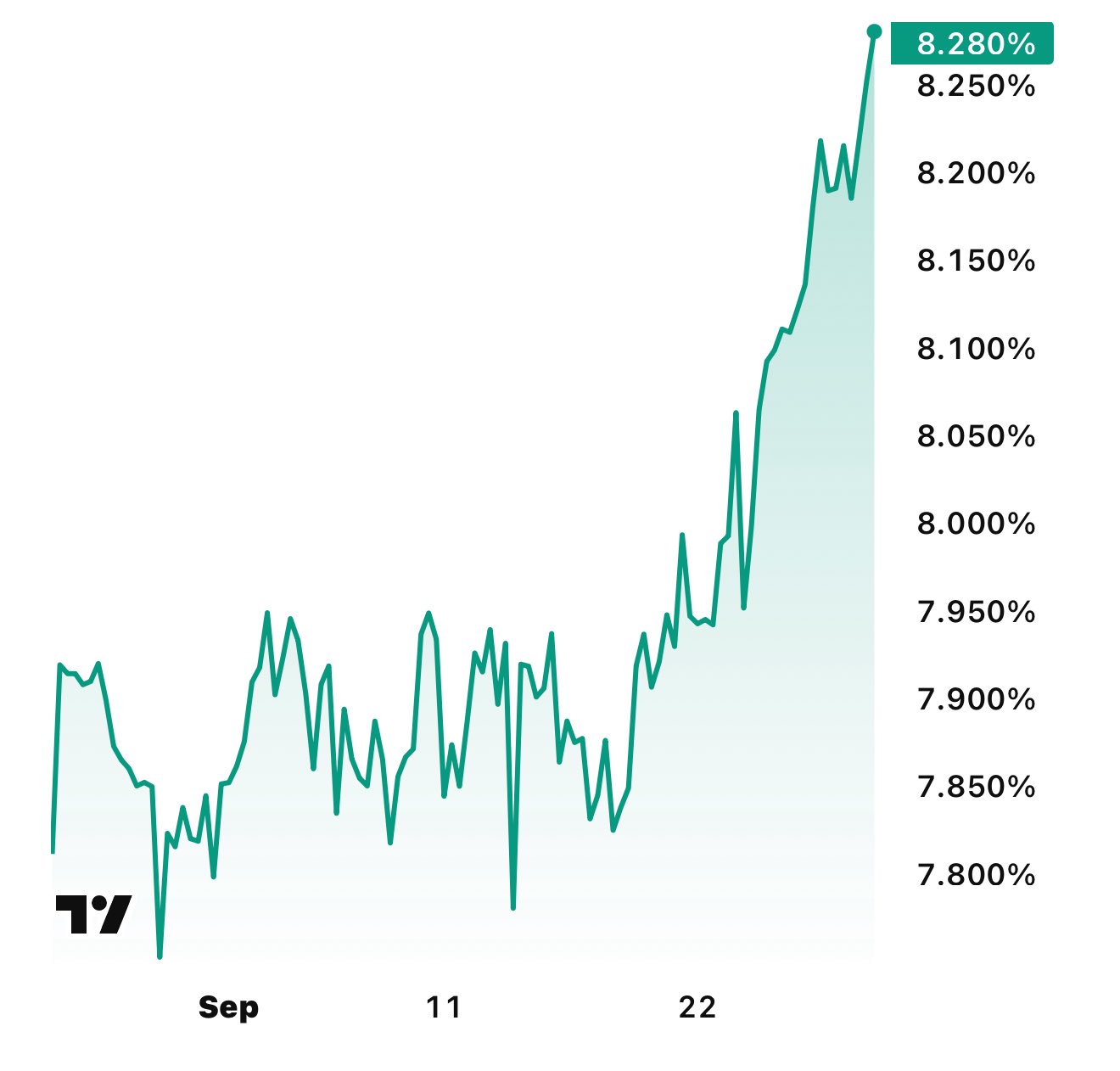
$ORCL bonds crossing 8.3% for the first time after Larry Ellison used the Enron trick (first time anyone did since Enron) of “Customer Pre-Payments with a Significant Interest Component” to hide Operating Cash Flow Problems.
Notably Oracle also was the first Publicly Listed US company outside of drillers and Miners (or Covid) to use Force Majeur to avoid paying on a data center lease it couldn’t afford, since… you guessed it… Enron.
4
12
40
7,936
gold and silver
If Indians flee the rupee into gold and silver, the state taxes the metal at the border. It’s a different type of financial repression to support the currency than my essay a few days ago
India did that in May: duty 6% to 15%, then licences. They made the alternative to the currency expensive so dollars would stop leaving.
Scale: India bought 230 million ounces last year. The official world deficit is roughly 46 million. China shipped roughly 164 million.
Thats the pivot. It’s a simple stock and flow model so don’t over complicate it
It’s what a state does when the currency is under stress. It’s important to realise states will act when pushed against the wall and that happens again and again in this new era . It’s the new normal
COMEX is the other lever. Margins went 9% to 11% as silver printed $121 on 29 January, then 11% to 15% two days later.
That’s the exchange turning the tap down because they are concerned about reserves
The print was dead inside 30 hours. 18% came in February. Shanghai was already paying a super fat premium comparatively about 22% on 30 January so the East was tight while Chicago was liquidating paper.
Don’t assume that can’t go higher
China’s licensing is the unused switch so far. It’s like loading a gun and pointing it at your head . A licensing regime is an economic loaded gun
If they actually stopped shipments, they would hit the Western pipe by whatever they shut off. They haven’t yet . August was 406 tonnes: up on July, a shade below last August. It’s only threatened not executed the threat .
That’s why you have to watch trump / Xi so closely
That’s why Trump thinks he’s such an awesome guy .
That 230m oz going to India and the exports coming from China are so do important to watch
A real stop by China , not the licence on paper they’ve threatened , would light the physical market up like fireworks
China shipped 164 million ounces last year. The official world gap is 46 million. The visible tank you can actually deliver from is about 400 million London’s free float maybe 200–300 million, COMEX registered about 96 million.
October 2025 already squeezed London to 35% lease rates while China was still selling 660 tonnes that month into the panic.
So the point is you don’t get to decide later or at the time of the shutdown it’s a commitment now to ride it out that has to be made now . Because industrial demand is growing like crazy
Buy gold and silver realising it’s not a fun ride , if you measure the value daily it’ll drive you crazy . I like physical because it’s such a pain in the ass to trade I can’t be tipped out , because it takes a bit of effort to sell . I said to someone the other day I buy physical because I can’t be bothered trading it and if I held it in paper I wouldn’t leave it alone .
You don’t buy it for its daily price measured in fiat. Dollar price is how you settle the trade. It is a really really poor reason you bought it.
8
7
67
7,055


My list of future essays includes the true history of the slave trade. All our ancestors held values different from ours; this era of woke history labels some empires as evil and others as angels.
I have 40 or so books on slavery written in the 1800-1900s. No country or ethnicity comes out of it unblemished (except a couple of African ethnicities that were targeted). Though they were targeted by other African groups who worked for the arabs.
The Arab slave trade ran for roughly 1,200 years (way before the British or Europeans), from the 7th century to the 20th. It fed slaves into the Middle East, North Africa, the Persian Gulf and the Indian Ocean. Traders included Arabs, Berbers, Swahili, Persians, Turks, and African states that raided their neighbours for captives to sell.
Who were the slavers?
Who were your ancestors? Were they slavers? Or are you following in the Iranian tradition now?
Trans-Saharan merchants were Arab and Berber traders, with Tuareg desert guides.
They ran caravans from West and Central Africa (the Lake Chad region, Hausaland, Mali, Songhay) north to Morocco, Tunisia, Libya and Egypt. African states such as Kanem-Bornu, Darfur and later the Sokoto Caliphate supplied many of the captives by raiding their neighbours.
Red Sea traders moved Ethiopians, Oromo and Nilotic peoples from the Sudan into Arabia, Egypt and Yemen.
East African and Swahili-Arab traders worked from Kilwa, Mombasa and above all Zanzibar. The Omani sultans moved their capital to Zanzibar in 1840, and the trade peaked in the 19th century. Tippu Tip, a Swahili-Omani trader, led caravans deep into the Congo basin for ivory and slaves.
Barbary corsairs sailed from Algiers, Tunis, Tripoli and Salé under Ottoman or Moroccan rule. They raided ships and coasts across the Mediterranean and as far north as Ireland and Iceland. Many of their captains were European converts to Islam.
Abbasid-era traders (8th–10th centuries) bought Slavs (saqaliba) from Viking and Jewish Radhanite middlemen for al-Andalus and Baghdad. They also bought Turks from Central Asia, who were trained as slave soldiers (mamluks).
Who they targeted
Sub-Saharan Africans: the largest group by far. They came from the Sahel, the Sudan, Ethiopia, the Great Lakes, the Congo and Mozambique.
Slavs and Eastern Europeans, mainly in the early medieval period.
Western Europeans taken by the corsairs. The raids hit Italy, Spain, Portugal and France hardest. Baltimore in Ireland was raided in 1631 and Iceland in 1627.
Central Asian Turks and Caucasians (Circassians, Georgians) were bought mostly as soldiers and concubines.
What were the slaves used for?
Most slaves worked as household servants and concubines, so women outnumbered men about two to one in most routes. Men served as soldiers, galley rowers, and eunuchs. Castration killed a large share of the boys it was done to. Some slaves worked in heavy labour. The Zanj worked the salt marshes of southern Iraq and rose in revolt from 869 to 883. Others worked Zanzibar's clove plantations or dived for pearls in the Gulf.
How many people were taken
Written records are thin, so every figure is a scholar's estimate based on caravan sizes, market reports, and customs data. The ranges are wide.
What's that your ancestors were capturing and selling them, and mine were buying them ? Which is worse?
"Arab" covers people from several regions. They all trace back to the Arabian Peninsula, but by the height of the trade many lived far from it.
Oman (southeast Arabia): Omani Arabs ran the East African trade. The Sultan of Oman moved his court from Muscat to Zanzibar in 1840, and Omani planters and caravan financiers controlled the coast from Somalia to Mozambique.
Yemen, especially the Hadhramaut valley: Hadhrami merchants settled along the East African coast and around the Indian Ocean as traders and middlemen.
The Hejaz (western Arabia: Mecca, Medina, Jeddah): the main buyers and resellers for the Red Sea route. Pilgrims to Mecca also bought slaves and took them home.
Iraq: under the Abbasid caliphs (750–1258), Basra and Baghdad were the largest slave markets. Iraqi planters worked the Zanj on the southern marshes.
Egypt: Cairo was the end point of the Nile and Darfur caravan routes ("the road of forty days"). The Mamluk sultans (1250–1517) were themselves ex-slave soldiers who kept buying Turkish and Circassian boys.
North Africa (the Maghreb): Arab tribes arrived in the 7th century and again in the 11th, when the Banu Hilal and Banu Sulaym migrated west. They mixed with the Berbers. Arab and Berber merchants in Fez, Marrakesh, Tripoli and Kairouan financed the trans-Saharan caravans.
Mauritania and the Western Sahara: Hassaniya Arabs, from the Banu Hassan tribes, dominated the western Saharan routes. Slavery lasted longest here.
Sudan: Arabic-speaking Sudanese traders called jallaba, including Ja'aliyin and Baggara tribesmen, raided and traded in the southern Sudan in the 19th century. Zubayr Pasha, the biggest of them, ran a private slave empire in Bahr el Ghazal.
The Barbary corsairs are the odd case. They sailed from Arab-ruled ports, but their crews and captains were mostly Ottoman Turks, Berbers, Moriscos expelled from Spain, and European converts to Islam.
In short, the Arab slave traders started out from Arabia, Iraq and Egypt. Over time, the trade spread to Arabic speakers across North Africa, the Sahara, Sudan and the East African coast.
Have a nice evening as you reconsider your ancestors.

9
2
74
7,775
Can I use one to start playing football again? I miss it .

#UCRANIA comienza a usar exoesqueletos en el frente .
Soldados con armazon antidrones se empezaran a ver en combate real

Community note
El vídeo adjunto muestra trajes futuristas probablemente generados por IA o CGI, no exoesqueletos reales. Ucrania prueba desde marzo exoesqueletos ligeros de piernas para cargar munición, sin armazones antidrones.
euromaidanpress.com/2026/03/22/gun…
pravda.com.ua/eng/news/2026/…
science-et-vie.com/technos-et-fut…
2
1
16
8,669


It’s funny in this divided world how you find new friends completely aligned with your views . Follow @TheMichaelEvery

MacroVoices @ErikSTownsend & @PatrickCeresna welcome Michael Every @TheMichaelEvery. They discuss how escalating Iran–Middle East and Russia–Ukraine conflicts are weaponizing energy markets, why a looming global diesel crunch could fracture the “one-world” oil system into U.S.-led regional blocs, and how Washington may increasingly use tools like export bans, Arctic basing rights, and even dollar stablecoins as instruments of geopolitical statecraft against China and other rivals. bit.ly/4iRZKlX

18
3
174
21,132
Or…… OpenAI found a vulnerability in the federal govt Medicare site - the story is about the hackability of a federal govt department so they turn the table and make it about OpenAI . It’s a huge story about federal govt data security and they flipped it
All our govt departments are insecure that’s the emergency

It's an outrage that foreign tech company's agent can hack one of our key health care agencies - and that we only learn about it months later when the US tech company bothers to email our government.
The PM already knew of this incident last week when he refused in Question Time to consider improving the powers of the AI Safety Institute.
We need to move quickly to increase the AI Safety Institute's ability to keep us safe, and to legislate national protections and limits around AI, our privacy and our data.
theguardian.com/australia-ne…
29
32
282
13,514
It’s not a conspiracy, it’s not social media , it’s exactly what Albo said . Nothing more nothing less . We heard his intention. We heard the intent of The Greens - David Shoebridge told us directly .
He said the protections were purely for children , unless of course it was about the anti discrimination act then it was permissible to censor . Then he gave us other issues that were exceptions to children .
Which means that if cis women want to protest the inclusion of trans women as women they would be silenced .
He said it would be also used against those who denied genocide .
Good people are entitled to read Labor and The Greens words and make the conclusion about what they plan for Australia is Orwellian conformity to your political ideology .
The best proxy is the UK Ministry of Justice’s 2025 numbers for the four main communications offences: about four hundred and forty-three people received immediate custody out of roughly two and a half thousand sentenced, averaging under six months.
Shoebridge calls it “ good system design” see attached screen print of his words .
Immediate arrest for thought and speech crimes . This is what they have planned for us .
You can’t make this up . It’s what Orwell envisaged and it is what is planned for Australia .
Reasonable people are entitled to believe from your words they have hidden nefarious intent toward free speech and different ideas yo their own .
As Winston’s says in 1984:
“Freedom is the freedom to say that two plus two make four. If that is granted, all else follows.”
Albo and Shoebridge are telling us 2 + 2 =5


Prime Minister Anthony Albanese denies explicitly linking Labor’s censorship regime to combating “misinformation and disinformation”, despite saying exactly that 24 hours ago in remarks that remain unpublished on his website.

11
21
127
10,755
The problem we have is that Albanese is part of what he observes . He has moved so far left he’s lost the centre and we see that in his opinion poles and he identifies the centre as the extreme right . Then he is confused enough to think and appears to actually believe that it’s social media .
Albanese is the most dangerous ideologue we’ve ever had as PM and if he isn’t defeated we will have no country for our children or ourselves .

Australian Prime Minister Anthony Albanese informs a UN Panel that his Digital Duty of Care push to censor Australian social media is needed because “misinformation” is moving Australians away from the centrist politics towards the “extremes” of the left and the right.

50
104
723
43,163
You couldn’t make this up because nobody would believe you (trans women’s breast milk edition ) . It’s already happening in Australia . It is apparently a “human right” for a trans women to feed a baby her breast milk . No safety studies - no children’s rights


The BBC:-
“A Transgender Women’s Milk is just as good for Babies as Breast Milk”
New UK PM Andy Burnham wants to stop Misinformation & Disinformation - perhaps he should start with the UK’s State Broadcaster

10
4
47
5,809


Aussie , Aussie , Aussie oi oi oi
They get you in with a lure the high interest rate on long bonds.
Then they make it hard to get out. Treasury buys the old bonds back, lends dollars against them, and signals that it will support the market.
You stay put so do most of the institutions because where do you go ?
Inflation and below-market real returns then eat the value of what you are owed. That is how America worked its wartime debt down after 1945. Same method, new labels. It’s the great American tradition , for that matter it’s a global tradition.
People think the alternative is to sit it out in gold, bitcoin, or an account in the Cayman Islands or the Bahamas. You can’t hide there either .
That is the “they wouldn’t do that” habit that comes from life conditioning . Wake up yes they will .
They already have.
Roosevelt ordered Americans to hand in monetary gold in 1933, then struck the gold clause out of the government’s own bonds.
Britain in 1939–40 made residents sell their dollars and their US shares to the Treasury, even when the shares were sitting in New York.
In the 1940s the Allies froze and seized German money parked in Switzerland, Liechtenstein, Spain, Portugal and Argentina. I bet there is someone in treasury already submitting a plan to do the same .
All that physical gold that’s in a vault is the same , they have your records from the purchase and delivery
In WW2 a Swiss holding company used to hide IG Farben’s American assets was taken anyway.
Cayman and the Bahamas are not a separate country in this context . Realise you’ve locked your money in a tax haven where all the Chinese and Russian money they aren’t after you they’ll just sweep you along in the confiscation process .
The accounts clear in dollars. If they can strand an Iranian airline then you know hat to expect .
The names are already visible under FATCA and CRS. If I can find account holders and corporate structures in the Caymans imagine what the govt can do .
In a war or a funding emergency nobody has to invade the island. They freeze the bank that moves the dollars.
So the investment question is not where to hide. It is how to sit in the market the government is going to protect and cheapen, rather than in the one it can lock or seize.
They would do that. Yes they would .
Everyone should go and have a cold shower and say it over and over again . ( to themselves )
They have done it every single time they had a war to pay for.
Welcome to the new world watch your step


18
19
131
32,128
You couldn’t makes this up because nobody would believe you ( pregnant woman beaten by a trans man in the women’s change room edition )

I received this message about this headline: (shared with permission)
“Hi Sall, in case you find the below of interest;
What little media reported it, wrongly attributed it to ‘all female’ however it was instigated by a TiM in the Women’s change room last week who was confronted by a pregnant woman. Man then pushed pregnant woman to the ground. Two female staff members were then assaulted by the man, with at least one punched. Rather than address the misogyny at hand, council scrap the entire Women only swimming sessions.”

2
6
58
9,267
It’s not me it’s you , it’s Israel not Palestine , it China not America , capitalism not socialism
Nah it’s just humanity let’s all own it

3
1
29
7,561


or the remittances - their accounting of value excludes $34B being shipped OS every year, the SA Premier is a smart cookie, so he knows the flows as well as we do, so it's a blatant omission designed to mislead
3
1
46
7,928
The stars seen from the surface of Mars, taken by the rover substack.com/@sciencedaily11…
1
2
15
6,321
Why just throw Merkel and British leaders under the bus ?. Let's throw Howard, Keating and all the other hyper neo liberals under the wheels with them.
Hell let's go back to Whitlam who signed up to the Lima Declaration which required Australia to reduce its manufacturing capabilities by around 30% and to commit to import that same amount from other preferred countries.
We've been ked by morons pretending to be masters.

I take it back. This is a SUPERB piece by @matthewsyed.
I have made almost exactly the same argument elsewhere.
In my view, we will eventually look back on the British governments of 2010 to the present in much the same way we now look back on the governments of the 1930s. The failure has been that profound.
That is why I am so angry with them. Like Syed, I am a classical liberal. Yet our successive British leaders have failed to do what was necessary to defend the peace, prosperity and political order they inherited at the end of the Cold War. Shame on all of them.

10
7
95
9,489