Built on Earth....designed for a future beyond it
Every Starship flight brings humanity one step closer to becoming a multiplanetary civilization
The most powerful rocket humanity has ever built.....made to carry us beyond Earth


171
282
2,181
467,439


We’re sending TPUs to space (yes, really).
After years of research, we’re launching a satellite to evaluate if and how Google Tensor Processing Units (TPUs) hold up in orbit.
The test mission, as part of our latest moonshot — Project Suncatcher — is designed to gather data exploring how we can one day host machine learning infrastructure in space.

ALT White text on a black background with photos of a TPU and a rocket orbiting Earth. The text reads: “Meet Project Suncatcher, our moonshot to test whether we can host AI infrastructure in space.”


ALT An image showing circuit boards, overlaid with text that reads: “We partnered with Planet to send a prototype satellite carrying four TPUs into orbit. We’ll be looking to see how well the TPUs withstand the harsh conditions of space to assess whether we can eventually host machine learning in orbit.”
182
448
3,350
588,387

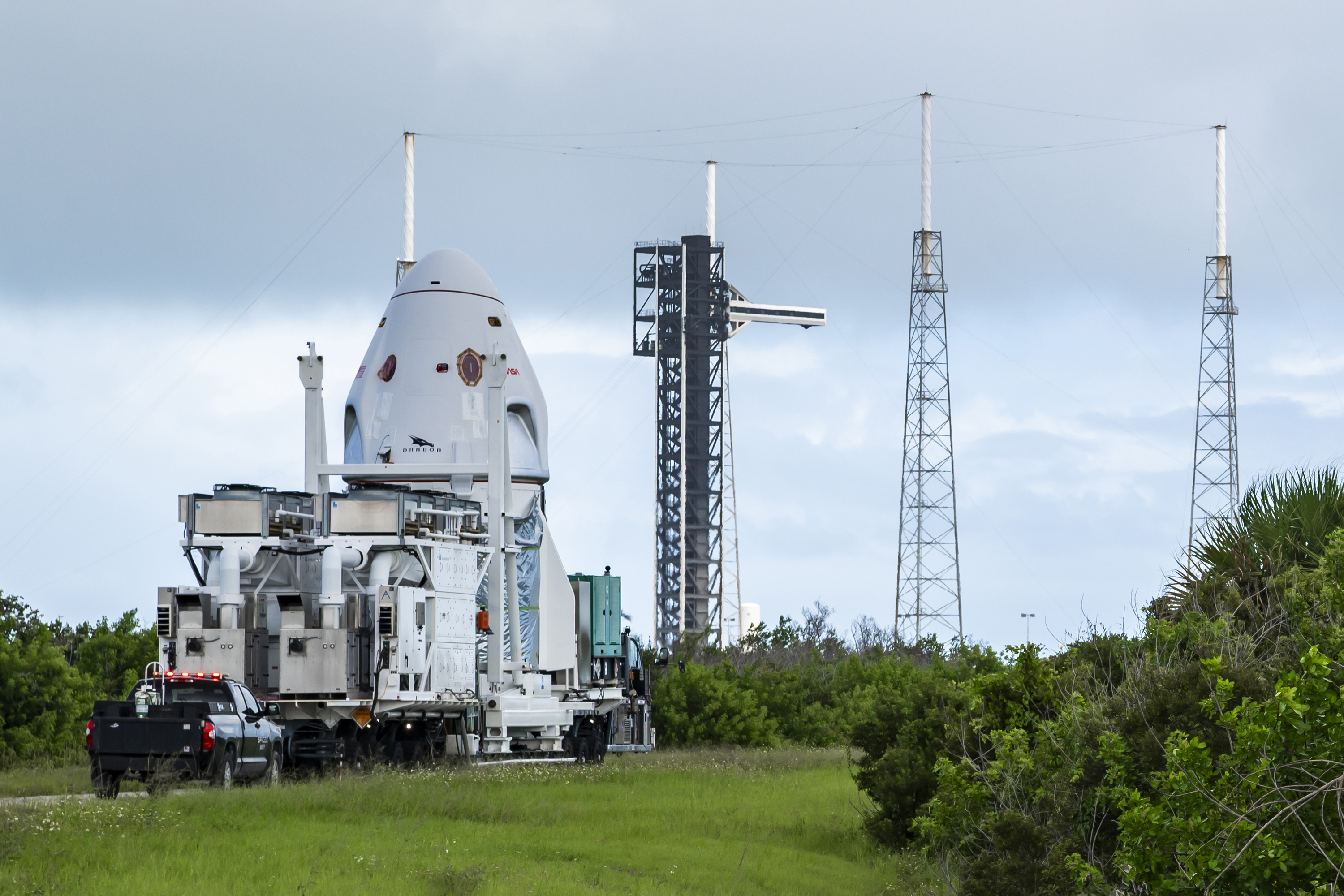
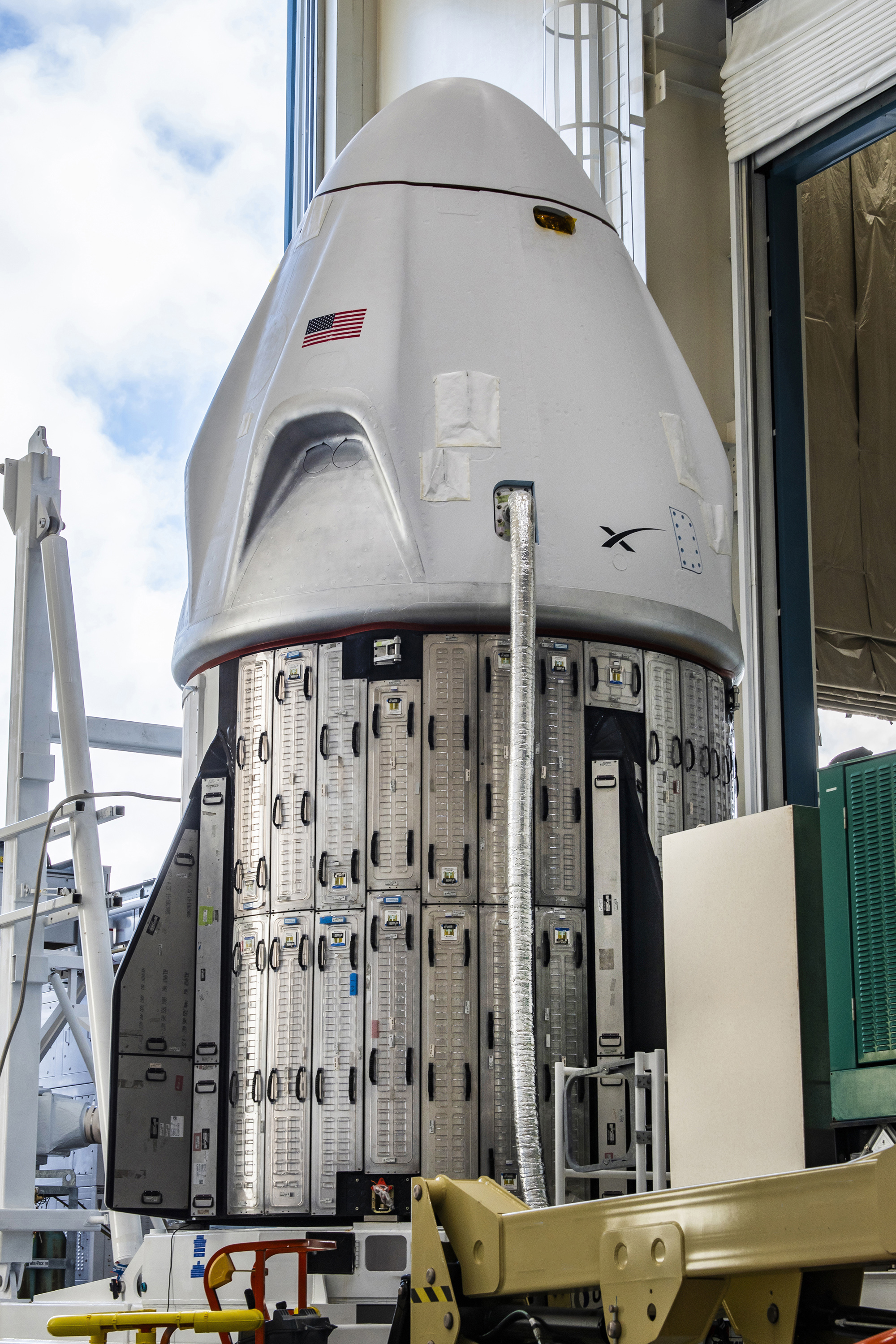
Dragon arrives at pad 40 ahead of the upcoming Crew-13 launch to the @Space_Station → spacex.com/launches/crew13


213
669
6,724
765,273


Elon Musk retweeted

Behind the scenes at the @WhiteHouse #StateDinner with President @realDonaldTrump, First Lady @MelaniaTrump, President Xi, and Madame Peng—With guests in the beautiful East Room…

393
1,511
7,476
591,086
Elon Musk retweeted

UPDATE: AIs have achieved the highest *possible* score on the Mensa Norway IQ test - 151
3 years ago: cognitively impaired human (64 IQ)
2 years ago: average human
1 year ago: genius human
Today: literally off the charts
Next year?


In ONE year, the smartest AI jumped ***40 IQ points*** from 96 to 136 IQ on Mensa Norway.
In ONE year, AI went from an average human to a higher IQ than almost ALL humans.
And one year from now...?
...Do you see it yet? What's about to happen?

214
449
3,211
639,643

SpaceX will win AI.
Might sound like an absurd claim right now, but stay with me.
For over a year, I’ve argued that frontier capability gains eventually stop mattering economically once “good-enough AI” is crossed in the agentic era.
And models themselves stop being a unique edge.
A even more absurd-sounding claim, but keep reading...
What is “good-enough AI”?
Agentic AI capable of performing nearly all computer work reliably, reaching or exceeding human parity at the same work.
Once most frontier labs cross that threshold, two things happen.
1. Commoditization
Once frontier companies cross it, open-source models eventually do too, particularly from China.
Through distillation, anyone can download one, attach their brand, and become an AI provider.
Models become a commodity rather than a unique edge.
2. Welcome to real-world economics.
For four years, AI has operated under a future-capability premium that real-world economics could never sustain indefinitely.
Once AI is good enough for most work and massively distributed through commoditized models, hundreds of providers compete primarily on cost and speed.
And even as model efficiency and intelligence density improve, the way to win ultimately becomes scaling compute.
The competition becomes:
Who can scale compute fastest, at the greatest scale, with the cheapest energy and highest utilization?
That leaves only a few players with credible paths through the energy constraint with these two main:
– SpaceX’s orbital bet
– China’s national energy scaling and abundance
SpaceX’s potential solution is the most radical.
If it wins, it would produce more energy than anyone combined at near-zero cost, giving it energy dominance.
China obviously keeps competing, but is temporarily limited by its chip constraints, giving SpaceX a short window to build before China reaches its full energy potential.
3. This becomes even more important once AI becomes recursive.
Even frontier models rapidly accelerating toward recursive AI eventually face a hard limit.
The bottleneck won't be building cost-effective models that undercut Chinese open models. Their AIs eventually spawn smaller, highly efficient models that are better.
The actual hard limit becomes energy.
While everyone competes to serve users, they’re also competing to feed their AIs’ recursive improvement with compute.
Every compute delay increasingly becomes a major setback against competitors.
And once terrestrial data-center expansion starts hitting its wall of energy, infrastructure, and policy limits, with populist movements in the West massively slowing it, the challenge becomes building at scale.
That pushes the industry toward one novel solution:
Orbital compute.
And if SpaceX solves it, it now controls the biggest constraint everyone else faces.
That is the key to how SpaceX wins.
4. But how does that translate to winning the model race?
It can then win the agentic market early with “workhorse models” 90% as good as the frontier at 10× lower cost.
But here is the actual core edge:
Use compute rent revenue to subsidize its own models.
Competitor growth directly funds Grok’s cheap prices, to earn more market share.
5. And that creates an even bigger advantage.
Beyond the obvious market-share benefits, this generates immense real-world data to help close the frontier gap.
Ultimately, LLMs still come down to better data + more compute.
Every dollar generated from competitors can therefore be turned back into compute and data.
So we get the ideal flywheel:
SpaceX’s energy advantage
→ compute-rent revenue
→ cheaper workhorse models
→ market-share gains
→ massive real-world data
→ endless scaling of compute + data
→ its own bigger recursive loop
→ frontier catch-up.
SpaceX therefore doesn’t need to win the model race now.
It needs to win the compute race.
And the compute race ultimately comes down to energy.
SpaceX solving orbital compute will be the reason it ultimately wins AI.

1. We will keep accelerating. Our AI efforts are only 3 years old, vs 6 and 10 years old for Anthropic and OpenAI. If our second derivative remains strong, SpaceX will reach pole position in about 6 months.
2. Once you far exceed the caliber of intelligence needed for a class of tasks, additional intelligence is pointless. You don’t need (and it would be cruel to put) Newton-level intelligence in your toaster!
3. Hardware is hard. Bringing massive compute online rapidly is incredibly difficult. SpaceX has demonstrated exceptional ability in this regard and will only get better.
46
72
649
55,730


It was moving

Legacy media REFUSED to show you a SINGLE SECOND of President Trump's speech and historic state dinner with Xi Jinping tonight at the White House
So here's the ENTIRE thing, from start to finish, with translations for Xi's speech
DO NOT LET LEGACY MEDIA KEEP YOU IN THE DARK

1,409
7,776
59,635
3,788,073

xAI launched ~3 years ago
Since then:
Colossus 1 + Colossus 2 ≈ 670k GPUs
Grok Imagine
Grok Voice
Grok Build
Grok Bot
Grok 4.7
Grok didn’t just catch a leaderboard for a week.
models, agents, apps, compute under one roof... and they aren't slowing down
1. We will keep accelerating. Our AI efforts are only 3 years old, vs 6 and 10 years old for Anthropic and OpenAI. If our second derivative remains strong, SpaceX will reach pole position in about 6 months.
2. Once you far exceed the caliber of intelligence needed for a class of tasks, additional intelligence is pointless. You don’t need (and it would be cruel to put) Newton-level intelligence in your toaster!
3. Hardware is hard. Bringing massive compute online rapidly is incredibly difficult. SpaceX has demonstrated exceptional ability in this regard and will only get better.
73
103
2,177
824,599

The second derivative will be obvious once they rewrite the RL software stack, imo.
1. We will keep accelerating. Our AI efforts are only 3 years old, vs 6 and 10 years old for Anthropic and OpenAI. If our second derivative remains strong, SpaceX will reach pole position in about 6 months.
2. Once you far exceed the caliber of intelligence needed for a class of tasks, additional intelligence is pointless. You don’t need (and it would be cruel to put) Newton-level intelligence in your toaster!
3. Hardware is hard. Bringing massive compute online rapidly is incredibly difficult. SpaceX has demonstrated exceptional ability in this regard and will only get better.
21
26
596
73,959


The NGOs end up increasing the number of homeless people they manage, because that’s the only way to increase their revenue! Incentives drive outcomes.
“Homeless” is a propaganda word used to describe people on the street who are mentally ill or severely addicted to drugs. The word implies that this is someone who fell a little behind on their mortgage payment and they’re one job offer away from getting back on their feet, which is obviously false if you’ve ever tried talking to a “homeless” person in SF, LA, NY, Austin or anywhere else.
The honest reality is that we need to bring back asylums for extreme mental illness or drug addiction for those who are a serious danger to themselves or others.

Incentives determine outcomes
If you give an NGO a certain number of dollars per homeless person, they will never solve homelessness
SF spends more than $1b/yr (up 5x) and the homeless population has only grown
NGO fraud is so insane, man.

2,232
7,874
39,115
2,173,285