

exploring decentralization · curious mind in a digital world
Web3
- Tweets 9,463
- Following 848
- Followers 904
- Likes 55,166


Looks like we're trending (again) today, @tether!
nitter.net/i/trending/21031327845…

128
124
309
10,192
USDT is coming home to Bitcoin, more private than ever.
Dollars and sats, finally reunited.

111
114
311
17,924

part that clicked:
miners solve real client paid
optimization problems instead of burning cycles on pure hashing, while chain stays post quantum ready from start (no public-key sigs in block production + separate finality layer) and keeps full EVM compatibility
#QMSWhitepaper

The QMS white paper is now live.
It outlines the network we’re building: a layer 1 for the post-quantum era, featuring proof-of-useful-work consensus, no public-key signatures in block production, a separate post-quantum finality layer, EVM-compatible execution, and a path for quantum hardware to join the miner network.
The final section covers how we plan to roll these pieces out progressively over time.
Full white paper: docs.qms.finance/whitepaper

4
27
290
if you guys love to contribute on a solid project
@primus_labs can be a good choice
clear role paths
Creator · Advocate · Builder
your contributions actually matter here
real ways to level up and make impact
join the Discord and start leveling up🦉
discord.gg/ZTSR3WUPQ

Paid partnership (ad)
9
38
215
Rishi Basnyt retweeted

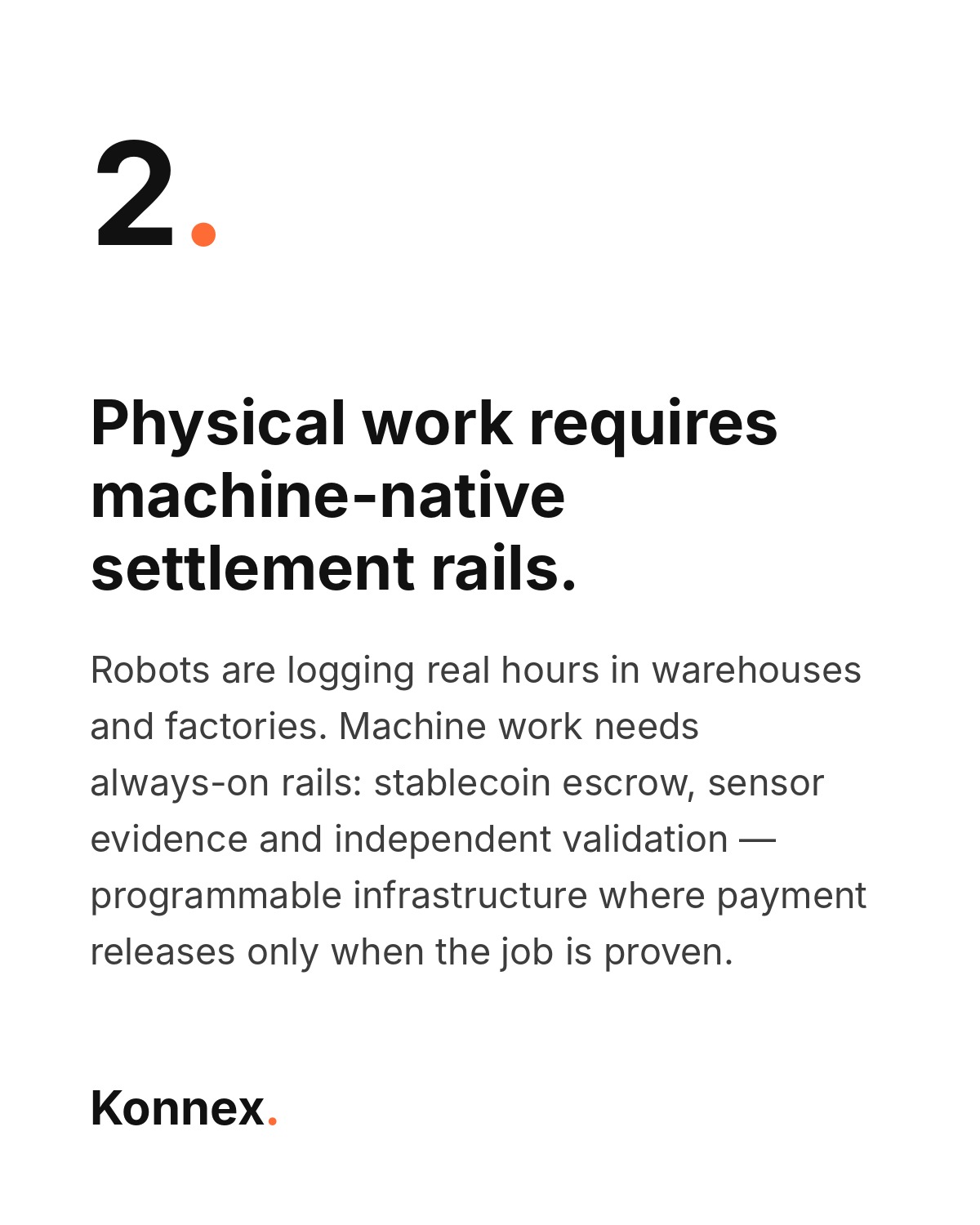
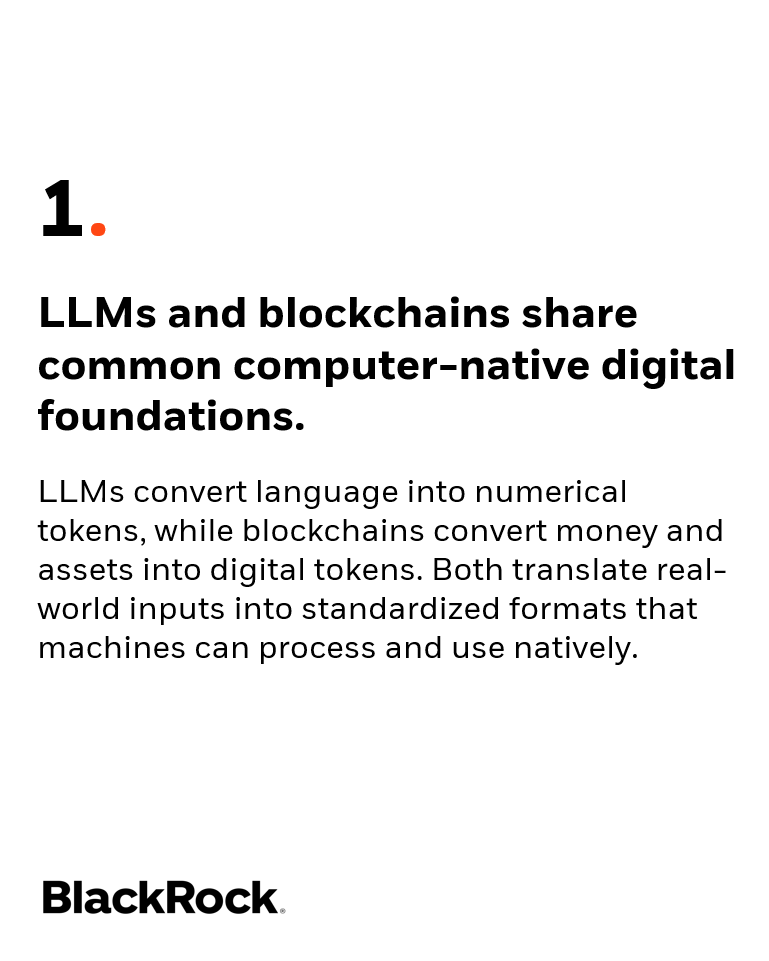
The world's largest asset manager just described machine-to-machine commerce:
Agents paying for compute on programmable rails, in stablecoins.
Konnex is building this for physical AI.
Robot labor priced in open markets, settled in stablecoins, proven on-chain.



Our latest research paper explores the growing connection between AI and digital assets and explains why broad AI adoption may drive new demand, utility and applications across the digital asset economy. blackrock.com/us/individual/…


1,828
8,687
7,836
36,999
The world is waking up to the power of RGB on Bitcoin ☀️

Most "Bitcoin smart contract" solutions force bad compromises:
❌ Federated multisig honeypots
❌ Expiring virtual UTXOs
❌ Mempool bloat & altcoin gas tokens
We took a different path with BitTasker. 🛠️
By leveraging RGB client-side validation & Taproot UTXOs as cryptographic single-use seals:
The state machine executes 100% locally inside the app on your own hardware
• Zero data bloat on the Bitcoin blockchain
• Absolute self-sovereign spend authority
Smart, programmable escrow secured by pure native Bitcoin. Run it straight from your phone or laptop like any native app. No bridges. No federations.
Includes #USDT on @lightning
Full release dropping soon. 🟧
@Bitcoinbeach @utexocom @RGB_Hub @RGBAssociation @whbitcoin @paoloardoino @giacomozucco @mir_btc @bitcoinofficesv @VIhnatiuk @Namaskaram_Luca @birk1907 @Kurcide @mikegermano @michelleweekley @romanmartinezc
93
90
189
5,542
Primus cooking
Institutions won’t move real capital onchain without both privacy & proof
@primus_labs building exactly that stack confidential yet verifiable infra
campaign with @KaitoAI just dropped
Worth checking
0.3% of Primus token on line
→ s.kaito.ai/dpHryGo


1/ Primus × Kaito Creator Campaign is here 🚀
We’re partnering with @KaitoAI for Primus: The Confidential Infra for Institutional Onchain Finance.
Join Now: kaito.ai/studio/camp_8dbabb6…
As more financial activity moves on-chain, institutions need stronger privacy guarantees while keeping financial activity, positions, and strategies verifiable.
Primus is building infrastructure that enables both privacy and verifiability:
🔸 Verifiable — prove what needs to be trusted
🔸 Confidential — protect what needs to stay private
12
40
237
Why wrap BTC at all? 🏡

@StaniKulechov is 100% right here
I strongly suggest hiring more Italians on your team! They also love @Bitcoin like no one else.
(@tether being run by Italians might not be a coincidence either. Right, @PaoloArdoino? 🇮🇹)
Now that @utexocom is bringing USDT back to Bitcoin, one question for @aave:
Why wrap BTC at all?
Lock native BTC, borrow USDT, and keep it all on Bitcoin.
44
36
120
3,858
Excited to join the Travix Beta whitelist
Ready to trade, test, and give real feedback
@Travix_fi
Applying now


Travix Beta is not public. We’re opening a 50-code whitelist for testers who will actually trade and send usable feedback.
Quote this post, submit the form, and wait for the invite code by email and discord.
How to apply 👇

6
27
225
1 /3
In TradFi you just colocate or run fiber
In DeFi the path is unknown — so you need something smarter
@MurielMedard breaks down exactly how @get_optimum uses RLNC to solve latency problem that hardware alone can’t touch
This clip is 🔥 👇


10
32
240
2/2
real insight: You can’t throw better hardware at a path you don’t know exists yet
Optimum encodes the data so every packet is useful → faster, more consistent propagation.
Speed becomes a software problem, not a geography problem
1
17
70
GM ☀️
Waking up to a world where privacy is the default
@FlutonIO is building the universal confidential execution layer encrypted intents, zero MEV, private DeFi across chains
Privacy isn’t optional anymore

8
27
183
privacy tech like zkTLS + FHE gaining real traction
Infra that lets institutions move onchain with confidence is exactly what ETH needs next
@primus_labs is tackling one of biggest bottlenecks bringing sensitive data onchain while keeping it confidential & verifiable

Great to join the “Frontier Cryptography & Ethereum” Meetup in Shanghai, co-hosted by @Ethtao_Ethtao, @ethereumfndn, @ethereumhkhub and ecosystem partners.
Primus Co-founder @Xavier_bham shared how Primus is building privacy infrastructure with zkTLS and FHE, enabling verifiable data and confidential computation for #Ethereum.
Privacy is becoming a key part of Ethereum’s future, and FHE can help institutions move on-chain with greater confidence.


10
1
36
366
Rishi Basnyt retweeted

Most financial infrastructure is built around moving claims. Settlement is what makes those claims final
That’s why blockchains become interesting when they can reduce the distance between ownership, transfer and settlement
The technology matters less than where it removes friction from the existing system
67
63
104
1,838
Privacy as infrastructure hits different
Not “hide everything” selective transparency
Public where it builds trust, private where it protects utility (especially with AI agents moving capital)
Most chains force a false binary @primus_labs gets it right: protect by default
Institutions and capital are starting to take privacy seriously.
From @Zcash’s focus on more private and fungible digital money, to the growing discussion around privacy for AI agents and on-chain applications, the industry is revisiting a fundamental question:
What should remain public, and what should remain private?
Public on-chain assets carry history.
Every transfer and every balance leaves a permanent trail.
Over time, excessive transparency can expose more than transactions. It can reveal patterns and relationships that limit how people and businesses operate on-chain.
Privacy is not about hiding everything. It is about controlling what others can see and infer, so that digital assets and applications can actually function better.
Most users will not need privacy every day. But a system without privacy capability will always limit the quality of its assets and the kinds of real activity it can support.
As on-chain behavior grows more complex with AI agents managing money, automated strategies, cross-chain operations and commercial activity, the central question changes. It is no longer whether to hide a single transaction. It becomes which parts of identity, assets and intent should remain public.
At Primus, we treat privacy as infrastructure. It should protect by default, reveal by design, and remove the false choice between openness and usability.
Privacy as infrastructure.
Not spectacle. Not separation.

4
3
31
234
Rishi Basnyt retweeted
@tether is obviously one of the most important companies of this century, and probably the most important Italian company since the Medici


8
9
65
2,272
Fresh from @primus_labs today 🔥
Real time Proof of Reserves just updated (Sep 20)
→ Unitas: $49.6M+ reserves @ 116.72% backing
→ Unitas XGLD: $12.6M reserves @ 100.90% backing
Both fully verified with zkTLS (onchain + offchain) while keeping credentials private

Your edge: 💎💎💎
Should not become: 👁👁👁
Privacy protects the path.
Transparency shows the outcome.
👉 Primus Confidential Vault: dapp.primuslabs.xyz/earn
Paid partnership (ad)
5
37
327
1/5
How second half of RGB in Tether WDK works on Bitcoin Lightning ??
The first half of RGB in Tether’s WDK let wallets issue & move assets onchain
The second half (built by @utexocom) lets those same assets fly at Lightning speed
Here’s how it actually works simply 👇

9
37
437
4/5
Making a payment:
Each update embeds a new RGB state inside Lightning commitment
Old state invalidated. Both sides check privately
Instant, cheap, private no onchain tx
Balances settle on Bitcoin when the channel closes
with full security
1
7
23
5/5
@utexocom’s wdk-rgb-lightning module wraps all of this into simple plugin for any Tether WDK wallet
Channels, invoices, payments, LSPs, Lightning
Addresses all ready Keys stay protected
That’s second half Bitcoin native assets that move at speed of Lightning
2
8
27