

Cape Coral, Florida USA
- Tweets 22,453
- Following 6,019
- Followers 2,158
- Likes 42,433


SharkFL239 retweeted

Did you know this?👇👇👇
Andrew Breitbart supposedly died of natural causes by collapsing on March 1, 2012, at the age of 43, after threatening to release "damaging videos" on Barack Obama, suggesting Obama was never properly vetted in the 2008 election.
Breitbart stated that "The videos will greatly affect the 2012 election and I will release them just before November."
A couple of weeks later, the coroner who worked on his body mysteriously died from poisoning.

117
1,160
2,390
23,658
SharkFL239 retweeted

Truly unbelievable—Here’s another behind the scenes of last nights State Dinner at the @WhiteHouse…

1,094
4,986
24,301
1,263,129
SharkFL239 retweeted

🤔In 1986, the federal government built a system called SAVE. It stood for Systematic Alien Verification for Entitlements. Its job was simple: when a noncitizen applied for public benefits, the government could check whether they were legally in the country.
It worked. It was quiet. Nobody talked about it. For 39 years.
In March 2025, the President signed an executive order expanding it. The order told DHS to use the same system the one that's been running since 1986 to verify the citizenship of registered voters and people registering to vote. It told the Social Security Administration to share its records with DHS for that purpose.
Two months later, DHS launched the modified version. Two changes. First, it now checks Social Security numbers against SSA databases. Second, it allows state and local authorities to run bulk searches not one person at a time, but entire voter rolls at once.
Today September 25, 2026 the Supreme Court of the United States issued a ruling on whether that expansion can continue.
The case is DHS v. League of Women Voters. Per curiam. No. 26A308.
Now step back and look at the pattern.
The system was built in 1986. It ran for 39 years doing one thing. Then an executive order expanded what it could do using the same infrastructure, the same databases, the same legal framework to do something much bigger.
No new law was needed. No new agency was created. No new database was built. The system was already there. The records were already there. The connections between DHS, DOJ, the State Department, and SSA were already there.
All they did was turn the dial.
This is the same pattern that shows up everywhere in the enforcement architecture.
The Alien Terrorist Removal Court was created in 1996 and never used. Last week it was activated for the first time.
Section 338 tariff authority existed for decades and had never been tested. This year it was activated.
IEEPA had never been used for tariffs at this scale. It was activated for tariffs.
IEEPA had never been used for the power grid. It was activated for the grid.
The OFAC sanctions architecture was built after September 11, 2001. Twenty-five years later it's running the largest simultaneous enforcement operation in modern history.
The tools were already on the shelf. The databases were already connected. The legal authorities were already written. The infrastructure was already built.
Every time someone asks "how did they do this so fast?" the answer is the same. They didn't do it fast. They built it decades ago. They just turned it on.
SAVE was built in 1986 for benefit verification. In 2025, one executive order turned it into a voter roll auditing system with bulk search capability across every state in the country.
The building was already there. They just opened a new door.
That's what the Supreme Court is deciding today. Not whether the building exists it's existed for 40 years. Whether the new door stays open.
I am the guy on the couch, and you have been debriefed.

BREAKING: The Supreme Court allowed the Trump administration to resume its expanded voter citizenship verification program, which lets states use Social Security records to check voters' citizenship. Justices Sotomayor, Kagan, and Jackson dissented.

31
423
1,021
31,508
SharkFL239 retweeted

🚨 LET’S GO! President Trump’s administration has denied 440,000 THOUSAND foreigner asylum claims — WaPo
And all 440K have been ordered REMOVED from the US
I voted for this 🔥
Immigration judges serve under DOJ and have been PURGED of anti-mass deportation judges — which helps speed up the process
Trump immigration judge asylum approval has PLUMMETED to 5%, when it was 50% under Biden
Clear the backlog and send them black 👏🏻

192
1,278
6,328
103,748
The founder of Domino's sold him the Detroit Tigers for $85 million.
Thirty-seven years earlier, that same ball club had handed him a $3,000 check, sent him to the minors, and let him go with a wrecked knee.
He never played a single day in the major leagues.
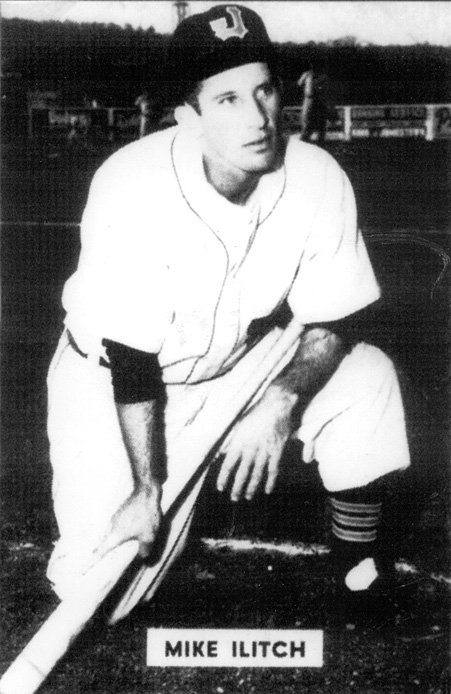
Mike Ilitch was 29 years old.
May 8, 1959. Garden City, Michigan.
He and his wife Marian counted out $10,000 onto the counter of a strip-mall storefront. It was every dollar they had saved since the wedding.
Four years earlier he had been an infielder.
Now he was buying an oven.
His father Sotir came over from Macedonia and made his living as a tool and die maker in Detroit.
Mike went to Cooley High. All-city. Then four years in the Marine Corps.
The Tigers signed him out of the service for a $3,000 bonus.
He played second base in their system from 1952 to 1955.
He was good. He was close.
Then his knee went.
Halfway through his twenties, and the only thing he had ever been excellent at was finished in an afternoon.
So he went and sold door to door.
Four years of it. Strangers' porches, all over Detroit, saving every dollar he made.
Everyone told him the same thing when he said he was opening a restaurant.
"You've never run anything."
"Restaurants close. You know the numbers on that."
"You're a ballplayer. Go get a real job."
"You have a wife now. Take the paycheck."
He didn't listen.
Here's what Ilitch knew that everyone else missed:
In 1959, pizza was sold as an evening. You sat down, you ordered, you waited, you were served.
But he had spent four years standing on porches at dinnertime.
He had watched what people are like at six o'clock. Coats still on. Kids yelling in the kitchen. Somebody asking what's for dinner.
They were not looking for an evening.
They were looking to be done.
So he built the whole thing around carryout.
No dining room to run. No delivery fleet to insure. You walked in, you paid, you walked out with dinner.
In 1979 he put two pizzas in one box and made it the whole identity of the company.
Pizza! Pizza!
It worked for thirty-five straight years.
By 1995, Little Caesars had roughly 4,800 stores worldwide and sat among the biggest pizza chains on earth.
But here's the part nobody talks about.
It came apart in his hands.
Franchisees sued the company. Sales fell and stores closed.
The Kmart partnership that had put Little Caesars inside big-box stores across America unwound as Kmart itself collapsed.
The chain that had grown for three and a half decades started shrinking, and it did not stop.
From about 4,800 stores down to roughly 2,300.
More than half of what he had built, gone.
And he was in his seventies.
He had four Stanley Cups and a baseball team by then. He was one of the wealthiest men in Michigan.
Nobody would have said a word if he had let it die quietly.
He went back to work instead.
That's when everything changed.
He stopped trying to beat Domino's at delivery and stopped trying to beat Pizza Hut at dinner.
He went back to the person standing at the counter in a hurry.
A large pepperoni pizza. Five dollars. Already made. Already hot. No phone call, no order, no wait.
Hot-N-Ready.
They tested it in 1997 and built the entire 2001 turnaround around it.
They cut back delivery. They fixed the stores and retrained the operators.
Eighteen months later the sales numbers turned. In 2002 same-store sales jumped 11 percent.
By 2007 the company had put together seven straight years of growth.
But Ilitch wasn't done.
Back in 1982 he had bought the Detroit Red Wings for $8 million.
Fans called them the Dead Wings. An arena built for thousands, sitting mostly empty.
He spent. He hired. He fired coaches when he had to.
Four Stanley Cups. 1997. 1998. 2002. 2008.
And in 1992, he bought the Detroit Tigers for $85 million.
Read that again. The organization that signed him for $3,000 and released him with a bad knee in 1955 — he bought it outright.
He bought it from Tom Monaghan.
(See Part 2 👇)


1
1
138
... from Tom Monaghan. The founder of Domino's
The man who owned the company that had spent thirty years beating him in pizza handed him the team he had failed to make as a kid.
Then he put $185 million of his own money into building Comerica Park.
He bought the crumbling Fox Theatre in a downtown everyone else had written off, restored it, and moved his headquarters into a city that was losing people every year.
And in 1994, he did the thing almost nobody found out about.
On August 31 of that year, Rosa Parks was assaulted and robbed inside her own home in Detroit. She was 81 years old.
Judge Damon Keith started looking for somewhere safer for her to live.
Ilitch read about it in the newspaper. He picked up the phone, called the judge, and said he would cover her housing for as long as she needed it.
The checks came from Little Caesars Enterprises. He paid for more than a decade, until she died in 2005.
He never told anyone. The public did not find out until Judge Keith mentioned it to a Detroit television station the week after Ilitch died.
Today Little Caesars is the third-largest pizza chain in America.
Roughly $4.93 billion in U.S. sales in 2024, across more than 4,200 American stores.
Domino's is first. Pizza Hut is second.
The two companies that owned the entire category in 1959 are still looking over their shoulder at a carryout counter that started in a strip mall.
Mike Ilitch died on February 10, 2017. He was 87 years old and worth an estimated $6.1 billion.
All because a 29-year-old with a ruined knee and $10,000 decided the last door open to him was the only one he needed.
He turned the end of the only career he ever wanted into the start of the one that mattered.
He turned four years of knocking on strangers' doors into the insight the entire business was built on.
He proved that being let go is information about someone else's plans, not a verdict on yours.
What are YOU treating as an ending that's the start of something else?
What did the thing you lost teach you that you have never once put to use?
What would you build if you accepted that the door you wanted most is closed for good?
Ilitch was released with a bad knee before he ever reached the majors.
He spent four years on strangers' porches saving the money.
He and Marian put every dollar they had into one storefront.
He built one of the biggest chains in the country and then watched half of it close.
He was in his seventies when he had to go back in and rebuild it.
And he bought the team that let him go.
Because he understood something most people don't.
Being let go tells you what somebody else decided on one particular day. It tells you nothing about what you can build.
The years that feel like a detour are usually where you pick up the one thing nobody else in your industry knows.
Nobody is coming to hand your business back to you when it breaks. Not at any age, and not at any level of success.
What you do when you are certain no one will ever find out is the only honest measure of who you are.
Stop reading a closed door as a closed life. Start thinking like Ilitch. Use what the failure taught you. Build the thing only you would think to build. Go back in when it falls apart.
And never let anyone tell you that the end of one thing is the end of you.
Sometimes the people who count you out are just the first ones to be wrong.
Sometimes the best thing you ever build is the one you only started because the first plan died.
Because when you stop waiting to be chosen, the people who passed on you end up doing business with you on your terms.
Don't quit.
@christopherillitch


50


SharkFL239 retweeted

I know a guy who used to work at the national weather service, and he pointed out to me that over the last couple of decades, the NOAA and NWS have morphed to some of their forecasting and communication protocols to be far more “dramatic” because they get more views, and therefore more funding…. As a boater, this is terrifying to me, because like all other people who go out to sea, I rely on accurate weather forecasting for my safety. Also, there are real consequences such behavior. I have friends in the tourism business on Block Island for example, which is like 90% dependent on tourism. Last year, thanks to an overly pessimistic (meaning, dramatic) forecast, all the ferry passengers stayed away on one of the most important summer weekends, resulting in a giant hit to their business…. The weather turned out to be beautiful, but there were no customers. Block Island by the way, is also the same place that bought into the Climate scam, and installed giant offshore windmills, which by the way, not only are rusting into the sea (one windy day last year when I drove my boat past them, only two of the five were turning), but have completely messed up the local fishery. So forgive me if I’m not willing to believe that the Super El Niño he’s going to kill us all.
1
1
4
80
SharkFL239 retweeted

Japan, Korea, and China Wore Purple In Acknowledgment of God’s New Order
This week South Korea’s president and First Lady, and Japan’s prime minister arrived in America wearing purple. Today, China’s president Xi is wearing purple along with President Trump at the White House.
The nations of the world understand the symbolism of purple and its importance, especially within the old order.
Purple is the marriage of red and blue.
Red represents blood, war, sacrifice, and the earthly throne - what is of man.
Blue represents what is above: sky, the firmament, God’s jurisdiction, and His governance, law, and order - what is of God.
Purple brings these two realms together. Historically, it has been worn by emperors, royalty, and the Church to represent authority over the earthy realm while claiming heavenly authority. It became the color associated with the joining of what we would refer to as "church and state".
Japan and Korea arriving on American soil in purple therefore carries a clear symbolic message: the governing powers of these nations are acknowledging the new order God has established through Trump as the interim King of that order.
Chinese President Xi arrived in America as a sovereign guest. His later appearance in purple alongside Trump represents solidarity with the newly appointed King of the new order. China, which was positioned to become the new world power within the old order, is now aligning with God’s new order.
Tonight, the technology and banking powers are joining President Trump and President Xi at the White House State Dinner. Their presence at the table with the interim King, and the major power of the old order now aligning with God’s new order, shows the monetary power structures of the old order being brought under God’s new jurisdiction.
With those monetary power structures submitting to God’s order, the old debt-based system can now be retired and replaced, transitioning these same powers into the operators of the new asset-backed monetary system.


192
1,305
5,186
325,519
SharkFL239 retweeted

Mary Poppins, but instead of Julie Andrews, it’s Lindsay Clancy.

Made with AI
291
959
8,264
470,243
SharkFL239 retweeted

This is why that Indian family lives in that big house with two children, and you don’t.

706,457 tech workers laid off since 2022.
670,693 H-1B visas issued to Indian nationals in the same period.
The pipeline never slowed down- even as Americans lost their jobs by the hundreds of thousands and were permanently displaced.

46
588
2,877
38,250
SharkFL239 retweeted

I'm not sure what's going on inside the White House or at RNC headquarters - but it's time for a "Come to Jesus Moment."
The midterms are becoming one of the biggest excrement shows in modern political history. It's either a result of sabotage or gross incompetence. Or Both.
For the RNC chair to go on national television and suggest the message for voters is that the GOP just needs more time is laughable. They've had 2 years. But instead of delivering the president's agenda, the Republican Party has squandered their time and our goodwill.
Congressional Republicans need to get their heads out of their hindquarters and realize that the voters are enraged.
It's clear that Establishment Republicans are intentionally slow-marching the president's agenda through the Senate.
And it's also clear that President Trump's advisors don't have a clue what middle class and working class Americans are dealing with right now.
And it's almost as if the administration has decided to completely write off Gen-Z voters.
There's a complete and utter disconnect between the White House and America First voters.
I actually interviewed a Republican congressional candidate who said the answer to higher beef prices was to eat more turkey. Completely clueless.
The GOP sycophants are more interested in lining their own pockets and getting exclusive invitations to Mar-a-Lago than they are doing what's best for the country.
And what is best for the country is for Congress and the White House to deliver President Trump's agenda.
If RNC headquarters needs some help understanding exactly what our message should be to voters, I'll be more than happy to send them a free copy of my new book, "The Golden Age."
It clearly outlines what Donald Trump has done for our nation through Executive Orders over the past 2 years. All Congress had to do was codify his agenda.
But while the Communists are storming the gates of Mayberry, Republicans are sipping Chardonnay at Mar-a-Lago.
The GOP has let down President Trump and they've let down voters. But there is still time to fix what is broken.
The Grand Old Party just needs a swift kick in their "Blessed Assurance." Get it together, people. Or else, we'll all be slurping borscht in a DNC-run gulag.
641
999
3,297
276,596
SharkFL239 retweeted

If Greg Abbot is such a great Governor for Texas, why has he allowed thousands of new mosques to be built in his State during his tenure? Over 50 new mosques and Islamic facilities in the Dallas-Fort Worth area alone within a recent 2-year period. Is this because his top donor is a Pakistani businessman?? Javaid Anwar is Muslim. The Pakistani-American oil mogul is well known for his extensive philanthropic contributions to Islamic community initiatives and serves as the chief patron for the Houston Iftar—one of the largest annual Ramadan celebrations in the United States.
America is being sold out by our Governor's & State officials who allow the proliferation of Islam & Mosques into our communities
102
409
1,145
9,767


SharkFL239 retweeted

Hi Stephen here's an easy one that will generate endless fraud cases for you guys.
The suburbs outside of Cincinnati, OH are loaded with chameleon carrier trucking companies, many of them linked to overseas organized crime gangs responsible for cargo theft, human trafficking, and drug smuggling. Over 4,000 companies in this screenshot alone.


48
671
2,252
35,673
SUNDANCE: Suggestion to Prosecute a 'Russiagate' Conspiracy @DOJCrimDiv @AGToddBlanche theconservativetreehouse.com…
@TheLastRefuge2

15
SharkFL239 retweeted

Over 700,000 American tech workers were laid off since 2022.
Nearly 700,000 H-1B visas were issued to Indian nationals in the same timeframe.
The H-1B program is a scam that directly hurts the American worker.
It’s time to pass my American Tech Workforce Act and end this mess.
706,457 tech workers laid off since 2022.
670,693 H-1B visas issued to Indian nationals in the same period.
The pipeline never slowed down- even as Americans lost their jobs by the hundreds of thousands and were permanently displaced.
347
1,309
4,968
138,305
SharkFL239 retweeted

The look on Xi JinPing’s face today when the flyover happened was great. He looked so pissed off.
China should be held accountable for disrespecting President Trump and our country. For stealing an election. For murdering 1.2 million Americans.
For helping Iran kill American service members.
I’m glad he was surrounded by our military might today as a power move by Trump. I bet the noise was extremely loud, but you can tell President Trump was trying to make a statement.
The hospitality is way more than Xi deserves.
Can you imagine how much patience President Trump has had to master to deal with so many terrible world leaders?
It’s remarkable he’s able to be so graceful.

2,470
2,586
21,365
1,141,263
SharkFL239 retweeted

🚨Folks, what billions of people have believed for thousands of years may be about to become the greatest scientific discovery in human history...
Scientists just started drilling into a 515 foot boat-shaped mound near Mount Ararat in Turkey and a robot is going inside to see what's down there.
Here's what's hard to ignore. The Bible describes Noah's Ark as exactly 515 feet long. This mound is exactly 515 feet long. Genesis says the Ark came to rest on the mountains of Ararat.
This site is on the mountains of Ararat. Ground penetrating radar already mapped organized corridors and chambers underground. The drill bit shattered on what they think is petrified wood.
Now they're sending a robot called the Gopher inside to capture footage of whatever is in those rooms.
This is a government approved, university supervised expedition with official Turkish permits. Whatever they find, the world is about to see it...
What do you think of this?

193
792
3,321
63,505
SharkFL239 retweeted

They taught you Truman dropped two bombs to “save American lives.”
They never taught you he was already a high-ranking Freemason who got coronated 33rd Degree Scottish Rite on October 19, 1945, ten weeks after Hiroshima and Nagasaki.
Nagasaki wasn’t just another industrial city. It was the heart of Japanese Christianity. Urakami Cathedral, the largest church in East Asia, sat almost on top of ground zero. Thousands of Japanese Catholics died in one flash. History books skip that part.
Truman had been Grand Master of Missouri while still a senator. The Craft was not a hobby. Then, right after the second mushroom cloud, the Supreme Council handed him the 33rd.
Standard textbooks mention the shipyards and the estimated invasion casualties. They do not mention the lodge or the cathedral.
It raises the question: would they still have pinned that 33rd on him if he hadn’t just vaporized Japan’s largest Christian community?

338
3,231
8,406
199,515