"3D & Rendering" by @adrianmg

Every single time I ask AI to write any mesh rendering code, it uses super fat 100% fp32 vertex data. I asked to shave down to 20 bytes (similar to HypeHype layout). But we could go much smaller with mesh shaders with more advanced compression. But adds a lot of ALU to decode.

8
1
82
You just need the mesh import to handle this. With [-8,+8] you can have up to 16x tiling inside one triangle. That's enough. You don't want super massive triangles. If UV islands go above/below the range, the mesh import offsets them into the range. Sometimes it has to create an additional UV seam. This is extremely uncommon.
1
Leander Herzog retweeted

Arlene Shechet: She Said She Said / Pace Gallery, New York piped.video/dOB9kwD8Rjs?si=KxkP… Pace Gallery presents Arlene Shechet: She Said She Said at its 508 and 510 West 25th Street spaces from September 11 to October 24. The exhibition is the artist’s first New York show with the gallery since 2020 and follows her 2024 Storm King presentation Girl Group. It features new monumental sculptures in aluminum and Cor-Ten steel together with smaller ceramic works. Shechet describes her approach as “drawing through sculpture,” examining lightness, precarity, color, and construction. Visible traces of making—cuts, folds, seams, and welds—connect the metal and clay pieces.
1

Miettinen Jesse - Embrace FX retweeted

BCON26 sale is here! #DamageControl bundle 25% cheaper for limited time during Blender Conference!
Use coupon code dcon26 in Superhive.
Limited to 20 codes. #b3d

4
66


Leander Herzog retweeted

will be there on etherscan xx

He sculpts code in the landscapes of the internet, creating (im)possible connections 😍. Here is 0xfff @0xShiroi , another of my favorites. Check out the Transaction Sculptures (2018–2026), they are pretty amazing. privateviews.artlogic.net/2/…
And if you are in New York (I am not 😡😡😡, lucky you), go to @drmiminguyen on the 25th luma.com/wgdvkt2x

1
1
4

VIKINGS ARE INVADING AGAIN. THIS TIME, THEY’RE ELECTRIC.
August BEV share:
🇳🇴 Norway 98.7%
🇩🇰 Denmark 85.9%
🇫🇮 Finland 51.6%
🇸🇪 Sweden 45.5%
Norway was the experiment. Denmark is the warning. The Nordics are showing what happens when EV adoption hits the steep part of the S-curve.
ICE doesn't slowly fade away. The market can flip remarkably fast.⚡via @electric_nick_
mobility.dk/nyheder/danmark-…

10
51
260
Mercedes just doubled their EV sales with the new 800V generation (GLA, GLB, GLC, CLA, C-class). BMWs new 800V platform is even bigger for them. In the popular X3 class, the electric iX3 only had 10% share. The new "Neue Klasse" iX3 has 50% share among X3 sales now. That's 5x.
1
German EVs have traditionally been lagging in tech, but their latest platforms are top tier. 2x faster charging than Tesla and higher range too. Mercedes has similar efficiency as Tesla nowadays. Massive single generation leap for them. And VWs new small/cheap MEB+ cars have 54k orders already. They are going to skyrocket to top places in EU car sales lists in many countries.

Bungie has shared plans to expand Marathon with new gameplay experiences alongside its existing PvEvP mode.
Check out the roadmap: 80.lv/articles/bungie-unveil…

1
7
✌︎ frederik ✌︎ retweeted

One of the biggest mistakes you can make as a freelancer is stop marketing your services or pitching just because your calendar is full.
•Always look for clients
•Subcontract
•Let go of low-paying clients
I didn't do this when freelancing and failed. Don't be like me.
5
1
27


I can almost smell all the grease and oil. More info here: fab.com/listings/7d38715d-8f…
#UE5 #3DArt #HardSurface

1
8

Is flattening a 3D character mesh directly against the camera lens the ultimate hack for 2D anime rendering in Blender?
Indie anime creator 炭猫べべ / Sumineko_BeBe demonstrated a technique where the 3D model is dynamically squashed flat relative to the camera view.
Unlike an orthographic camera—which flattens everything globally and ruins 3D environment depth—this camera-flattening setup lets you keep a full perspective camera for background parallax while rendering character meshes with a clean, orthographic-like 2D look.
Have you tried using camera-space mesh flattening for NPR anime renders, or do you still prefer tweaking perspective focal lengths?
#b3d #indie_anime #3DAnimation #AnimeDev

1
16

La verdad, con Opus 5.5 sobre la mesa para tareas de 3D no le veo ningún sentido a utilizar Astra.
Astra literalmente puede volar los créditos de una semana en un par de horas y Opus aguanta mucho más con resultados iguales o mejores y pudiendo iterar muchísimo más
4
2
45
Indeed, but as soon as we get something as opus 5.5 or Astra will be more than enough imho
And anyway, update to another mother is extremly easy anyway
1
2
Another player enters the game

$META LAUNCHES AI GAME-BUILDING TOOLS
Meta is launching Horizon Create and Horizon Studio, letting users build complete 2D or 3D games from AI prompts on mobile or in a browser.
Games can then be published across Facebook and Instagram, where users can jump from a clip directly into a multiplayer session without downloading a separate app.
Meta says the tools can generate gameplay systems, difficulty, art direction and multiplayer features, while still letting creators manually refine the experience.
The rollout is part of Meta’s broader shift to make Horizon a mobile-first platform rather than primarily a VR product.

Obsidian will preserve its creative identity after joining Bethesda, according to Bethesda president Jill Braff.
Read about what's next for the studio and the new Fallout project: 80.lv/articles/obsidian-will…

8

Here's a couple of methods I use for cleaning up topology, after applying a boolean to a surface. #B3D #Blender #Blender3D

8
163
Zak Wood (zakwood96.bsky.social 🦋) retweeted

Still pushing to the goal on Kofi, Thank you all for the support so far

1
15
23


Check out this cool game, created by @habibicode, that will put your geography skills to the test as you draw border lines from memory.
Play it here: 80.lv/articles/in-this-game-…

1
2
14

Nueva actualización de Opus 5.5 en Houdini modelando 3D
Aún hay cosas que quiero cambiar, pero pronto empiezo UVs y Lookdev.
Vaya sangría de créditos no os voy a engañar 🤣


1
47
Pierrick Picaut retweeted

'26 3D Animation Reel
Been putting this together from the work I've made so far :). Still a work in progress, but I'm finally letting myself show it.
More to come ♪~ ᕕ(ᐛ)ᕗ.
😎May+Max+Dummy Rig:@TOAnimate_
🔥P2MBig+Female+Regular:@pierrick_picaut
#b3d #3danimation

1
2
10


Check out this impressive 3D model, made by Tk_Armakar, that looks like an oil painting.
See more of their artwork: 80.lv/articles/check-out-thi…

ALT Woman with short hair lighting a cigarette in colorful lighting by a window.
21


Loic Anquetil explains why, with rust, studying the physical complexity of the material comes before anything else, shows that Substance 3D Designer is not as complicated as you might think, and demonstrates how his exploratory approach helped him create a diverse set of realistic rust materials.
"For this collection, instead of working in my usual controlled, analytical way, I tried to be more experimental. I mixed noises instinctively, plugged nodes together just to see what would happen, and stopped overthinking. Sometimes the result was terrible. Sometimes it was incredible. Some of those experiments are now part of my daily workflow."
Read full interview: 80.lv/articles/desirable-pat…

2
18

Coucou je drop ça ici prcq pourquoi pas, je le finirai sûrement jamais mais je l’aime bien
OG @jhonatanlechar

2
1
11


Befriend corrupted alien creatures and link them into a living production network in this freshly revealed top-down action RPG.
It combines biological automation, free exploration, and tower defense: 80.lv/articles/befriend-corr…

1
2
27
Rachel Day retweeted

One of my favorite pvp games is having its crossplay beta this weekend from the 25th-27th and I not only got to speak to someone on the team but run a custom match with some actual demons in @PlayArkheron check out the full video now!
piped.video/watch?v=XCliDvGb…

2
2
10
Another Silent Hill spin-off, SILENT HILL: Townfall, is out 4 years after Konami announced it.
And an update patch is already in the works since there are performance issues: 80.lv/articles/one-more-spin…

13


Soyun Kang spoke about the creation process behind the Mido Cafe project, explaining the approach to hard-surface and organic props, texturing a vintage fridge with rust effects, and using directional light as the key light source.
“First, I used actual photos as references to create dummy models of the walls, ceiling, windows, and floor. Then, to match the scale, I brought an 180 cm tall human model and compared prop scales to fit the actual size. After that, I precisely adjusted the ceiling height and the size of doors and windows.”
Read the full interview: 80.lv/articles/recreating-th…

4
31

Ryan Gander
One Hundred Things Twice

ALT Images courtesy of Salzburger Kunstverein, Salzburg. Photos by kunst-dokumentation.com.
1
1
11


Leander Herzog retweeted

Sophie Taeuber-Arp, Poèmes sans prénoms (Poems without First Names), 1941.


21
143


I've been animating character classes for No Rest for the Wicked. 🔥
Let me introduce you to:
Barbarian ⚔️
Frost Mage ❄️
Plague Bearer 💀
Enjoy !
#norestforthewicked #moonstudios #classsystem #sneakpeek

112
282
4,586


.@TuxedoPato animated this mecha centaur girl as she settles down to sleep, keeping her spear by her side.
Watch her wake up: 80.lv/articles/watch-robotic…

13
197
Ezequiel Pini (Six N. Five) retweeted

Increíbles obras de @sixnfive un gran placer haber aportado mi granito de arena.

1
4


David Ariew retweeted

@OTOY Octane 2027 is a game changer 🔥🔥🔥

The whole Octane look you love, at game engine speed.
True motion blur, depth of field, no effects skipped.
Massive improvements on our real-time path tracing mode for Octane 2027, coming up soon on the next alpha.

6
9
143
Learn how to create Wuthering Waves-inspired hair with stylized shadows and highlights using Goo Engine or Blender, with @Weytant_V's guide.
Read: 80.lv/articles/how-to-create…

122
1,420
Want to own a piece of this work? Drop an offer on OpenSea!
Only 73 were ever minted ⏳
👇 Check it out:
opensea.io/item/base/0x132ca…


4
2
21

Remedy are one of the best when it comes to Atmospheric Lighting, or just lighting in general
#controlResonant


3
5
100

"People aren't ready, this is gonna change everything"
You know what people weren't ready for? Fucking mammoths. Tigers eating them. Monkeys ripping their arms off. The black plague. The ice age. Smallpox. Vikings pulling up on the beach. Drinking water that gives you diarrhea until you die. Getting a scratch and losing your whole leg. The Mongols. The Spanish Inquisition.
One volcano can send us back to the dark ages and these safety guys are gonna be shocked. Oh the robots didn't kill us? It was a volcano? Imagine their disappointment as the hot ash rains down on them.
A solar flare is gonna explode your phone in your pocket your legs are gonna be covered in battery acid and your bank account will stop working. You're afraid of a computer program doing math?
"Things are moving too fast" homie you live on a rock that periodically deletes everything. You are one the most luckiest entities in a 100 light year radius living during a golden era. Cheer up.
My ancestors crossed an ocean in a wooden box because they ran out of fucking potatoes.
"The social disruption will be enormous!"
Nigga World War 2? World War 2? Hop in the people carrier we're landing on the beach.
Are these people out of their fucking minds? Do they not know what we've survived already?
A couple decades of air conditioning and people suddenly think oh this is the natural condition of mankind. No. We used to have eight kids because seven didn't make it. You're gonna be fine. Man the fuck up.
Accelerate.

924
2,902
20,259
This was such an amazing turnout! Thanks to everyone who minted "Built Together" - we reached 52,666 pieces!
Now go ahead and share them with your friends so everyone in Web3 holds at least one!
Thanks @rarible for the support 💛


FREE MINT 🚨
Built Together by @peekcell is now live.
A tribute to the creators, collectors, supporters and friends who’ve helped shape the Based Minis journey.
Built together. Collected together.
Mint yours for FREE 👇
built-together.rarible.com/

4
3
32
If It Takes Two were about cats: check out this co-op adventure game where you play as two cats exploring a medieval castle and causing mischief.
Wishlist here: 80.lv/articles/this-co-op-ad…

1
3
38


So satisfying to spin the crankshaft and see how everything works.
Ideal for racing and tuning projects!
Check it out on Fab → fab.com/listings/7d38715d-8f…
#UE5 #3DArt #HardSurface

1
13
Get hundreds of jaw-dropping Unreal Engine assets optimized for your game environments and cinematic scenes with this bundle from @Meshingunstudio.
It includes industrial environments, gothic asset packs, and more: 80.lv/articles/get-hundreds-…


1
61

I'm excited to be showing my latest series, Tabellen, at @ResponsiveDream in Barcelona this weekend!
The work will also be released on Friday at 16:00 UTC as a generative edition of 128. Explore, view minted works, or mint your own at: tabellen.rudxane.xyz/
👇

4
22
80

Procedural mesh fracturing in Blender usually means slow calculations, messy topology, or relying on heavy third-party add-ons.
Environment and technical artist Jolan Huijskes built a custom Geometry Nodes fracturing solution that splits 3D models into clean, procedural stone blocks and cracked surface tiles in real time—and he's releasing the nodes for free.
By leveraging Blender's Manifold booleans and accumulating cuts across individual mesh islands, the setup generates realistic stone cracks and edge damage without tanking viewport performance.
Do you rely on Geometry Nodes for procedural destruction and asset variation, or do you still prefer destructible physics tools and manual sculpting?
#b3d #GeometryNodes #Blender3D #TechArt #EnvironmentArt

5
78
758

Valve quietly added pet chickens to Counter-Strike 2, which players can hatch from eggs, raise, collect, and even interact with.
Here's what we know so far: 80.lv/articles/you-can-now-h…
Video by @TDM_Jesus

5
107

On Monday, September 28: a full day of game dev talks, from ECS and Unreal profiling to AI workflows, CI, VCS, and debugging.
Join speakers from @Meta, @awscloud, @Hytale, @Fools_Theory, and more online for free at @jetbrains GameDev Day 2026: jb.gg/jbgdday26

7
100 gram VR glasses intrigue me. Move all the heavy stuff to your pocket. I will test wearing them when they arrive to local stores. I've not been a big VR far so far.

Meta's new VR glasses weigh 100 grams because there's nothing computing inside them. No chip, no battery, not even a tracking coprocessor. All of it lives in a puck in your pocket, connected through a fiber optic cable.
That one decision is the whole product.
Apple went halfway with Vision Pro. They moved the battery to an external pack but kept the M2 and R1 chips on your face, and the headset landed at over 600 grams. Weight became the most common complaint in reviews. Meta went the rest of the distance and amputated the computer entirely.
Once the silicon leaves the frame, everything else falls out of the physics. Nothing generates heat near your eyes, so there are no fans, and the magnesium shell alone handles cooling. No battery means no ballast on your nose. What's left is sensors, two micro-OLED panels, and pancake lenses. 100 grams versus 515 for a Quest 3.
The fiber optic tether is the part people will skip past. Driving dual 5K displays at 120Hz takes more bandwidth than thin copper handles well. Fiber moves that data through a strand that bends like a shoelace.
There's a real tradeoff, and Meta took it on purpose. The field of view is narrower than a Quest. They're betting people want a cinema and a workspace more than peripheral immersion.
Vision Pro is a computer you wear. Meta VR Glasses are a display you wear. The computer went back in your pocket, where it's lived since 2007.
4
32


Watch Aniket Rawat recreate a 2D anime bus scene in Blender in this time-lapse video.
Check out his anime-style 3D art tutorials: 80.lv/articles/watch-3d-arti…

3
14
151
This graph is 100% BS. GPT-4 and o1 were not better than a human. I used them, they sucked. o3 was the first usable one, but it required lots of babysitting from the developer. But "AI alone" was still at zero at that point. AI alone is finally a thing with Astra/Fable.


15
2
182


Honey wake up, @TBSF_YT made all their Sonic the Hedgehog Blender rigs free.
All 7 of them, including the latest: 80.lv/articles/tbsf-makes-al…

1
80
666

Scott Jardine has released True Lens, a film emulation tool for Unreal Engine 5 cinematics that brings a range of photographic effects into a single, artist-friendly Blueprint.
Get it here: 80.lv/articles/try-this-film…

2
34
336
YouTube Studio expands its features with A/B testing for video cuts, dynamic thumbnails, personalized feedback, and more.
See what's new: 80.lv/articles/youtube-adds-…

1
5
Blizzard says it will "very aggressively" punish gold buyers in World of Warcraft: Forever, with permanent account bans on the table.
"We've been probably too lenient": 80.lv/articles/blizzard-admi…

1
15


I would like to see maglev trains inside vacuum tubes: 1000km/h = faster than a plane. 20x less environmental impact = cheaper tickets. Less waiting vs airports. 10x faster than a car. Vacuum helps cooling super-conducting magnets. Why not?


41
1
105

Sebastian Aaltonen retweeted

How do you print a blank line?
std::cout << '\n'; // C++11
std::println(""); // C++23
std::println(); // C++26
C++23 added println but forgot to let you call it with no arguments
23
9
270
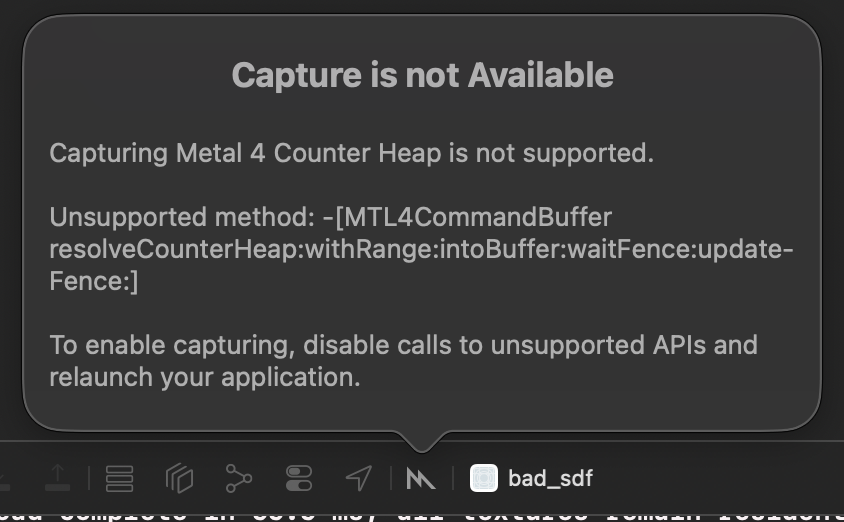
Codex Astra Ultra doing the Metal porting (according to my porting document) went surprisingly well. But I forgot to explain everything...
Example: it added a shader Y-flip macro. And used it in 36 shaders. The best practice is to Y-flip by negative viewport. No shader changes.

2
2
102

Maglev train in a vacuum tube can travel at 1000km/h. That's faster than a plane. And it has 20x less environmental impact. And wait times could be a fraction of airport wait times. You get 10x faster to destination versus car. And there's no traffic jams. That's the reason.
2
2

Obligatory plea for help, so I can get some human support.
All demo videos I post are made and recorded by me. In any other case, I’ll give credit, but never reupload someone else’s.

Looks like the report on the rejection got updated, and it shows less abstract reasons now.
Large share of recent content copied and re-uploaded from other accounts as my own? No idea how they are counting that when I post most demos recorded by me, and my own opinions.
And I can’t even begin to think how I am doing spam and inauthentic engagement. This one makes no sense at all.
I don’t even feel like posting much right now if it is to be considered spam anyway.
Can a human take a look at this @XCreators?

23