
Buenos Aires, Argentina
- Tweets 96
- Following 193
- Followers 126
- Likes 475


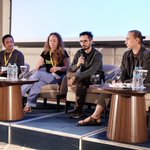


Seguimos organizando actividades con el Centro de Criptografía y Sistemas Distribuidos.

The Research Center for Cryptography and Distributed Systems just kicked off a new study group, a continuation of their seminar on Coding Theory, Low-Degree Testing, and PIOPs, starting with a session on STARKs.
We hosted it at our office, with Lambdaworks team taking part in the discussion.
ccsd.uba.ar/

1
62
Pablo Deymonnaz retweeted

The Research Center for Cryptography and Distributed Systems just kicked off a new study group, a continuation of their seminar on Coding Theory, Low-Degree Testing, and PIOPs, starting with a session on STARKs.
We hosted it at our office, with Lambdaworks team taking part in the discussion.
ccsd.uba.ar/
2
9
899
Felicitaciones @WillyDuran65 por el nuevo período de Decanato en FCEN.
Renovamos la expectativa por trabajar juntos como hemos hecho.
Éxitos!

I want to congratulate @WillyDuran65 on his new term as dean of the Faculty of Exact and Natural Sciences of the University of Buenos Aires.
Willy thanked Francisco Strambini and me, and he also thanked @class_lambda for its contributions and its relationship with the university. I value that a lot.
Most people on X have a somewhat wrong image of what Lambda is. Many believe we’re a devshop that works in crypto, when we have dozens of successful products in different industries and most of our core members are mathematicians, physicists, mechanical engineers, chemical engineers, civil engineers and industrial engineers and yes obviously computer scientists and computer engineers.
Lambda is and has always been deep tech.
If you want to build SaaS (something that we also do), you don’t need to understand what a Koopman operator is, finite element method or what Riemann zeta function is. But if you want to build companies at the frontier of science and engineering, you need people who understand things deeply and can work on hard problems.
That’s why Lambda’s relationship with the University of Buenos Aires, with the Faculty of Engineering and particularly with the Faculty of Exact and Natural Sciences is so important and strategic.
For me, the relationship with the university has always been strange and very personal. I’m a college dropout who, more than 15 years later, came back to reform the same degree program I had dropped out of. It’s a strange circle. I left the university without a degree, but part of the university is still shaping the way I think. I spent more than 20 years in the private sector learning how to build companies, products and technology.
Now I’m using everything I learned to build a new degree program at the University of Buenos Aires. I want to create an elite of builders who want to innovate. Not an elite based on money, family or status. An elite based on knowledge, work and the ability to turn science and engineering into companies and good public policies.
For me, this is not about proving that I never needed the university. It’s the opposite, it’s about giving back, closing a circle and helping create the education that I believe the next generation of builders needs.
If we want to create a better world, we need to create companies that are at the frontier of science and engineering and that work with universities and the public sector.
We also need to destroy this idea, that part of the left has, that companies go to public universities only to steal their knowledge or to destroy them. Real deep tech companies need strong universities. A deep-tech company has nothing to gain from a weak university.
But this works both ways. Universities also need a big and capable private sector with the ability to innovate, turn knowledge into products and give back to the universities that made that innovation possible.
Universities have the right environment to do research that is long term and doesn’t depend on the results of the next quarter. This is something that part of the right in Argentina doesn't understand. Companies need the public universtiy that is the one creating the most amount of professionals for our country and doing the best international research. The University needs money to be able to give freedom to researchers to work on difficult problems. Then companies have the ability to turn that research and knowledge into products, jobs and new industries. They have different roles, but they need each other. This shouldn't be an ideological debate but a practical one.
Willy and I have our differences, as all good friend have, but we also have a very strong bond. We believe in science. We believe the state should invest in it. We believe this is better for the country, for universities and for companies. It’s a win-win.
That’s why I value my relationship with Willy so highly. Even with our differences, we agree on what we want.
Thanks Willy and I hope you keep doing an amazing job.

1
2
287
Pablo Deymonnaz retweeted
New blog post out: what we learned running a 1024-validator devnet
In this post, we go through what running our largest Lean Ethereum devnet so far taught us about where the bottlenecks are, and how we can move forward.

2
3
11
1,513
Pablo Deymonnaz retweeted

👉Nos reunimos con estudiantes que recibieron becas para desarrollar sus tesis de licenciatura gracias al aporte de @class_lambda , una empresa fundada por graduados de @UBAonline que apuesta por la investigación y el desarrollo de nuevas tecnologías.
👨🔬👩🔬Estas becas acompañan a quienes están dando sus primeros pasos en la investigación y permiten impulsar proyectos en áreas como bioinformática, matemática aplicada, computación, inteligencia artificial y ciencia de datos, mostrando todo lo que puede surgir cuando la universidad y el sector productivo trabajan en conjunto.
En el encuentro, estuvieron presentes autoridades de la Facultad e integrantes de LambdaClass.
Gracias por apoyar a las y los estudiantes de Exactas y contribuir al desarrollo de nuevos proyectos de investigación.

2
49
3,579
Pablo Deymonnaz retweeted
Ethlambda (@ethlambda_lean) is a post-quantum Ethereum consensus client built on one principle: less is more.
Less than 10k lines of Lean code. One active devnet. One clear roadmap. Everything in the open.
Progress page is live.

1
2
16
838
Un resumen de lo que fue nuestra participación en el Interop de Ethereum de la semana pasada.

The recap from @ethereum covered Soldøgn from the ecosystem's side. Here's ours: what our first interop looked like from inside the team, and what we're taking home from a week above the Arctic Circle.
Huge thanks to @ethereumfndn for the week.

1
39
Pablo Deymonnaz retweeted

Our first interop, and what a week. The team shipped on every devnet from day one, launched on benchmarkoor, contributed to ePBS, BALs, and EIP-8037 breakout rooms, and also FOCIL, targeting to participate on its first devnet.
Huge thanks to every team that made us feel at home above the Artic Circle.
Full recap from our side coming later this week.


Last week, Ethereum core contributors gathered in Svalbard for the Soldøgn interop: a week long event focused on hardening Glamsterdam implementations to scale Ethereum securely ☀️
Read the full recap, including their candidate post-fork gas limit, below:

2
10
33
2,947
Pablo Deymonnaz retweeted

I'm very proud to announce that @ethrex_client is now one of the fastest @ethereum clients, right behind @Nethermind, which still leads by a small margin.
A little over a year ago, we set out to provide the market with an smaller, simpler and reliable alternative to reth. I believe we've achieved exactly what we set out to do.
We just pushed a PR that improved performance by 25% in the last few hours. The image shows numbers from the last 6 hours of @ethPandaOps mainnet testing.
We built all this with the top notch talent at @class_lambda in just one year, without any AI assistance. Last week we incorporated @claudeai into our workflow, and we believe it will significantly enhance our decision making and accelerate results further.
@alignedlayer is developing, with our help and @3miLabs, a new RISC-V zkVM that I believe will be simple, well-documented, and one of the fastest on the market.
Thanks to the @ethereumfndn for its help and support but particularly to all the partners and employees of @class_lambda that have been working very hard for this to happen.
If you can, please give the dinosaur Ethrex a star on GitHub and join the Telegram!

10
24
123
21,317
Pablo Deymonnaz retweeted

→ Un objetivo directo: mostrar lo que ya se construye en las aulas, compartir programas educativos y conectar talento con el ecosistema global.
Durante cuatro días, La Rural reunió a docentes, investigadores, estudiantes y referentes Web3.


1
1
6
1,905
Pablo Deymonnaz retweeted
Community is not a group of people clapping in agreement. It’s the opposite. It’s a group of different people with conflicting interests trying to find the best outcome for everyone. The fact that there is strong debate in CT is good.
I’ve been thinking a lot about what has happened to @ethereum over the last two years: the slowdown in execution, the loss of confidence, and the shrinking influence across the industry. Things have improved recently, and Buenos Aires Devconnect was miles ahead of Bangkok Devcon, but the core problem remains unresolved. The initiatives proposed so far are voluntaristic and depend on a few individuals rather than structural changes. I just launched my blog and I’m writing a longer essay with concrete examples and a more philosophical angle. This is the first draft of the core thesis.
At the center of everything there is a contradiction: harmony vs competence.
The leadership thesis, and @VitalikButerin, is simple: power corrupts, so the only safeguard is preventing anyone from gaining power. I understand the concern. But the solution is where we diverge.
At one point many important people of Ethereum even stopped tweeting. Their answer has been to prioritize harmony above all else. That’s why the protocol barely changed after the Merge and why the gas limit stayed low. If nothing can change, no new actors can emerge. The mission became: avoid disruption, avoid conflict, avoid the rise of a new corrupt leader.
From there you get alignment politics instead of open debate. Advancement through proximity and approval rather than measurable execution. The mechanism becomes social, not technical. It’s the opposite of what made Linux succeed. Linux thrived because Linus Torvalds only cared about code quality and the best ideas winning.
This has a tragic consequence: when you suppress discussion and reward alignment out of fear of new leaders emerging, you destroy the conditions for new blood to arise. Innovation slows down to preserve harmony.
Progress requires conflict, science advances through disagreement, engineering through iteration, and markets through competition. Ideas and people HAVE to collide to find the best idea possible. Systems that suppress conflict stagnate because hierarchy replaces merit. @ameensol has been saying something similar but I don't agree with his take about the fact that this is related with socialism. To me the core problem is the destruction of the feedback loop between decisions taken by leaders and the outcomes they get.
Ethereum cannot remain global, open, and relevant while avoiding debate. Harmony without productive conflict becomes centralization. Avoid conflict and you avoid improvement; avoid debate and you avoid new talent.
Vitalik wrote on March 1st, 2025: "What Ethereum needs is a lot of young blood who share the cypherpunk vision. All OGs are jaded. It’s on the next generation now." He’s right. But the reason this is happening is because of the incentive structure created by the leadership itself.
Like in Brave New World, systems built to numb conflict only work if there is no outside competition. Ethereum no longer lives in a world without rivals. The crisis at the end of last year and start of this year happened because Solana was winning market share. Ethereum has to adapt to this reality.
The idea that power corrupts is true, but it is also historically used by leaders to gatekeep, prevent renewal, and retain power.
The funny thing is that I agree with Reth and @paradigm on the roadmap priorities. In that sense, I’m closer to their views than to the historical EF leadership. I always believed that if Ethereum doesn't acclerate we will lose. The difference is that I believe these debates must happen inside Ethereum rather than in another L1, openly, and we need to push for structural change.
Pointing these things out has a cost. One of the latest defenses against our arguments has been claiming we seek attention or that we are troublemakers. Some of the people we used to talk with also stopped answering. Gladly many, if not most actors, started telling us that we are right but they can't say things openly because this has a cost for them too.
This only proves the point: there is a culture of preventing debate to maintain the status quo. Anyone who knows us knows we defend what we believe, right or wrong, not for attention or financial motivation. We’ve worked across multiple industries without issue and with long-term clients. We care about productivity and delivery, period.
When people join Lambda they read @RayDalio's ideas. Dalio believes the highest performing organizations run on idea meritocracy driven by radical truth and radical transparency. Everyone speaks openly, nothing is hidden, the best ideas win regardless of hierarchy. Mistakes and disagreements are embraced because being challenged is the path to improvement. Suppressing truth out of fear of social consequences is the greatest tragedy that prevents excellence. I believe Ethereum is suffering from exactly this.
At @class_lambda we believe in @ethereum as the unbiased verifiable computer. We believe this mission is bigger than any person. And we will fight for what we think is right. If you want to be a global protocol and you want new cypherpunk blood then accept the fact that they will criticize you and debate openly rather than avoiding it.

Vitalik Buterin: "if I did not go to an in-person event for one and a half years and I only read twitter every day… that would almost certainly lead me to rage quit and retire and publish a hundred tweets saying why I think the whole crypto space is evil and deserves to burn."
🧵 let's unpack this with direct quotes from his fireside chat with Roger Dingledine from @torproject at @FundingCommons in Buenos Aires


33
29
161
34,223
Pablo Deymonnaz retweeted

La UBA en Devconnect
Invitados por los amigos de @SEEDLatam y con la colaboración de @ingenieriauba y @Exactas_UBA tuvimos dos charlas de lujo:
@pablodeymo presentó las novedades del primer Centro de Criptografía y Sistemas Distribuidos de la Universidad.

1
7
20
1,489

Pablo Deymonnaz retweeted
Today at @EFDevcon, @pablodeymo presented the Cryptography and Distributed Systems Research Center in a special session with @UBAInvestiga. A national initiative designed to unlock the talent we have in Argentina. Proud to be contributing to it.


4
8
26
4,421
Pablo Deymonnaz retweeted
4/ At 2 PM @pablodeymo unveils the Cryptography & Distributed Systems Research Center, alongside @UBAInvestiga.

1
1
2
176
Pablo Deymonnaz retweeted
Este jueves estaremos participando en
@EFDevcon con dos charlas imperdibles de investigadores de la @ingenieriauba y @Exactas_UBA
Para obtener entradas sin cargo y descuentos, podés escribirnos por DM o seguir el enlace en Historias en nuestro IG: instagram.com/ubainvestigaci…

1
5
8
1,250
Pablo Deymonnaz retweeted
Agradecemos la invitación y trabajo conjunto a:
@EFDevcon @SEEDLatam @dfslezak @pablodeymo @fede_intern @WillyDuran65


2
2
653
Pablo Deymonnaz retweeted
Junto al Centro de Criptografía y Sistemas Distribuidos y la UBA, formaremos parte de Devconnect ARG 2025, el evento internacional que reunirá a la comunidad de Ethereum en Buenos Aires.
Del 17 al 22 de noviembre en La Rural.
🧪 Hacemos #CienciaEnLaUBA

5
36
22,295
Pablo Deymonnaz retweeted
It was only a matter of time before @crecimientoar drew attention from Argentine media. Instead of talking about @EFDevcon they are talking about what's going on with Crecimiento. On Tuesday night, one of the country’s most influential political shows (@estoesblender @tomasrebord) explained the situation to the public.
Argentina is particularly sensitive to this topic. The $LIBRA case left a lasting impact, whenever crypto appears in mainstream media, many assume there is something suspicious behind it. This was not the case before LIBRA.
What happened with Crecimiento
- They built a movement and later formed a foundation to gain institutional credibility. We invested in many companies that came from that environment and collaborated with many people related to Crecimiento. A lot of valuable work was done, even if we had disagreements on some parts.
- From that foundation, they incubated a private, for profit company. Many people in their ecosystem didn't even know about it.
- They used the movement’s name and credibility to raise funds for that private company.
- This kind of lobbying and influence seeking is not legal in Argentina.
- They attempted to push for regulatory changes that would financially benefit them.
- They planned to issue a token and launch additional investment rounds during Devconnect.
- Multiple people raised these concerns directly and told them to stop. They chose to continue.
Why it matters
This situation now makes it harder to bring ministers, senators, universities, and business leaders into legitimate crypto and technology initiatives.
A national crypto movement in Argentina cannot be led by two foreign founders seeking to profit from regulatory changes. Argentina has strong nationalist elements across both right and left, ignoring that reality is a political and strategic error.
Instead of trying to silence criticism for explaining this to the English speaking world, the right question is: why did they continue down this path despite repeated warnings?
Some people think exposing problems creates more problems. It's the opposite. Problems don't go away by just hiding them under the rug.
I am not speaking to the press, but several journalists contacted me before and after I raised this issue in X. This matter is not going away, there will be more developments.


Crecimiento is a movement with one mission: make Argentina the best place in the world to innovate, create and build.
From the beginning, the Crecimiento Foundation team has worked side by side with the ecosystem and public institutions, connecting communities, talent, entrepreneurs, and experts, to co-create long-term conditions for innovation and growth in Argentina.
During this time, we’ve launched builder programs supporting hundreds of startups, helped them raise millions of dollars, and collaborated with regulators who drafted Argentina’s tokenization sandbox.
The Crecimiento Foundation has brought hundreds of builders and developers together through the Aleph Hub, a free coworking space for builders, founders and communities. The Aleph Hub hosted month-long events, workshops, meetups, hackathons and bootcamps attracting more than 10,000 attendees.
Over the past 18 months, our team has publicly collaborated with experts, entrepreneurs, and regulators to explore how a Digital Special Economic Zone (DSEZ) could help Argentina attract talent, capital, and technology, much like other countries that have successfully built modern innovation hubs.
Special Economic Zones are public by nature. Governments create them, and the private sector contributes by providing technology, services, and infrastructure that help these initiatives succeed. Specifically, the operator of a Special Economic Zone is the entity in charge of the overall development of the necessary infrastructure, under regulators audit and public overview.
As the evolution of our work, we’re now incubating an independent company to both build and run digital infrastructure for digital zones. It would provide a platform layer, including tools like digital registries, onboarding systems and compliance tools for governments and digital zones. The new company’s mission is to become the best digital zone operator in the world. Hopefully this will help power special economic zones in the region, including Argentina.
This will be a separate entity, with its own leadership and governance, designed to operate autonomously. Crecimiento will remain a nonprofit movement dedicated to education, community, and policy dialogue led by the Foundation. To be clear, Crecimiento Foundation does not raise capital, and there is no token or token sale.
The creation of a new company responds to a simple reality: operating digital infrastructure at scale requires private investment, specialized teams, and long-term operational structures. This is how it works everywhere in the world - from service providers of DMCC in the UAE to Estonia’s e-Residency.
As we did for the last 18 months, we’ll continue educating and debating about zones: what they are, how they work, and how they can benefit Argentina. We’ll share more international examples, explain the frameworks that make them successful, and open a public debate so that local community, institutions, and experts can help shape this path together.
Transparency and collaboration have guided us from the start and will continue to guide everything we do.
Crecimiento is here for the long term, committed to building trust, opportunity, and progress - one step at a time.
We’ll keep building Argentina’s future. Together.

38
51
402
120,510
Orgulloso de participar de esta iniciativa con dos facultades hermanas.
Felicitaciones Fede por el logro.
Yesterday was an important day for me and for @class_lambda.
Twenty years ago I entered @UBAonline, the largest Spanish-speaking university in the world, with a community of more than 350,000 people, and consistently ranked among the top 100 universities globally.
Because of work travel and my professional life, after four years I had to stop studying. I became a college dropout, but I always loved the university and its chaotic public system. I came from a private French high school, so moving into a massive public university was a great experience, I had to learn to work with people very different from those I grew up with.
A few years ago I was invited to collaborate with @ingenieriauba. Together with professors and the community we designed the new Computer Engineering curriculum. I also helped create a Computational Thinking course for the 6,000 engineering students. I am deeply thankful to the community for asking me to contribute and for being open to new ideas.
Yesterday we inaugurated the Cryptography and Distributed Systems Research Center together with @class_lambda, @ingenieriauba and @Exactas_UBA. Work has already begun on ZK and Ethereum.
I want to personally thank:
- @WillyDuran65, Dean of @Exactas_UBA
- Alejandro Martínez, Dean of @ingenieriauba
- Raúl Bertero, Vice-Dean of @ingenieriauba
- @SebaCiva, Secretary of Research / Science & Technology at @UBAInvestiga
- @felipevegaterra, Director of @CBCUBA, where more than 100,000 students study, including those taking the Computational Thinking course I created
- @nethan_eth, head of @EFDevcon & Devconnect at @ethereumfndn
- @arantxazapico, cryptographer and researcher at @ethereumfndn
- @DrFrenchmen, cryptographer and researcher at @3miLabs
I also want to thank the current government for sending representatives, the opposition parties, as well as members of the banking sector, regulators, important senators, legislators, the business community and the cybersecurity community.
The support of the @ethereumfndn has been crucial in building a community of cryptography researchers in Argentina and LATAM. They have always been open, and they created the pathway for us to join @ethereum. We are deeply thankful to @VitalikButerin and to the EF in general for all the work they do in developing countries.
Finally, I want to thank my @ergodicgroup and @class_lambda teams, who have been working non-stop with me for the last decade. Also my partner @rj_aligned @diego_aligned @mauro_aligned at @alignedlayer that have been crucial in all this.
Thanks everyone!


2
3
19
3,033